


"When you combine ignorance and leverage, you get some pretty interesting results."
— Warren Buffett

“Summer Wind” is a poignant musical metaphor about a fleeting summer romance and a love lost to the changing seasons, famously recorded by Frank Sinatra in 1966. The lyrics use the warm breeze as a symbol for an unpredictable, fickle force that first brings two lovers together and later calls one away.
No, I have not gone completely mad or become even more romantic after a much too short break in lovely Puglia.
Rather, “Summer Wind” has been circling in my head as a reminder of how quickly things can be carried into our lives by one gust—only to be swept away again by the next.
The exorbitant returns of Leopold Aschenbrenner’s Situational Awareness fund, for example …
I know. Naughty.
But after a lengthy career spent studying markets—and behavioural finance in particular—there is something depressingly familiar about the story. A previously obscure fund produces spectacular returns, attracts an equally spectacular amount of capital and attention, and then loses 67% in a single month as excessive leverage turns against it. Click here to read up on the details, or use the infographic below for an easy explanation.
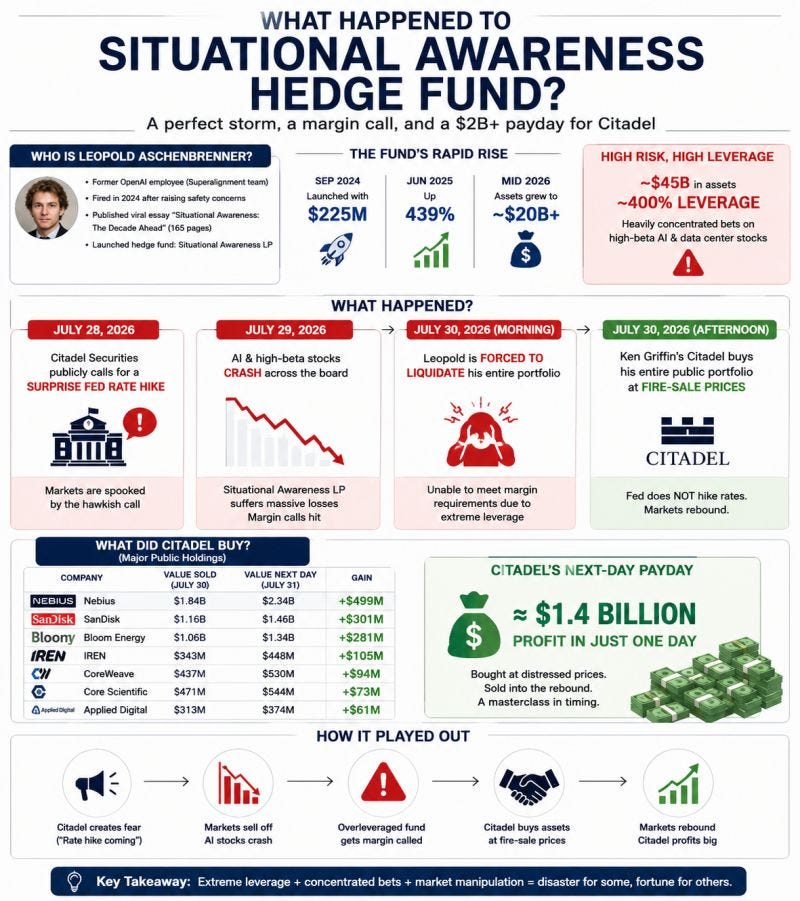
Been there, seen that. The names change; the wind does not.
Nor did I choose the Buffett quote solely for its wit. It also seemed appropriate in light of some recent “action” by the investment vehicle he built.
Back in early June, Alphabet announced an $80 billion equity-capital raise, including a $10 billion private placement to Berkshire Hathaway. Apparently, even the house of Buffett—now run by Greg Abel—was not entirely immune to a brief attack of AI FOMO.
As my friend Le Shrub suggests on his fantastic Substack, we may therefore have witnessed both a Buffett Meme Top™ and a Situational Meme Bottom™:
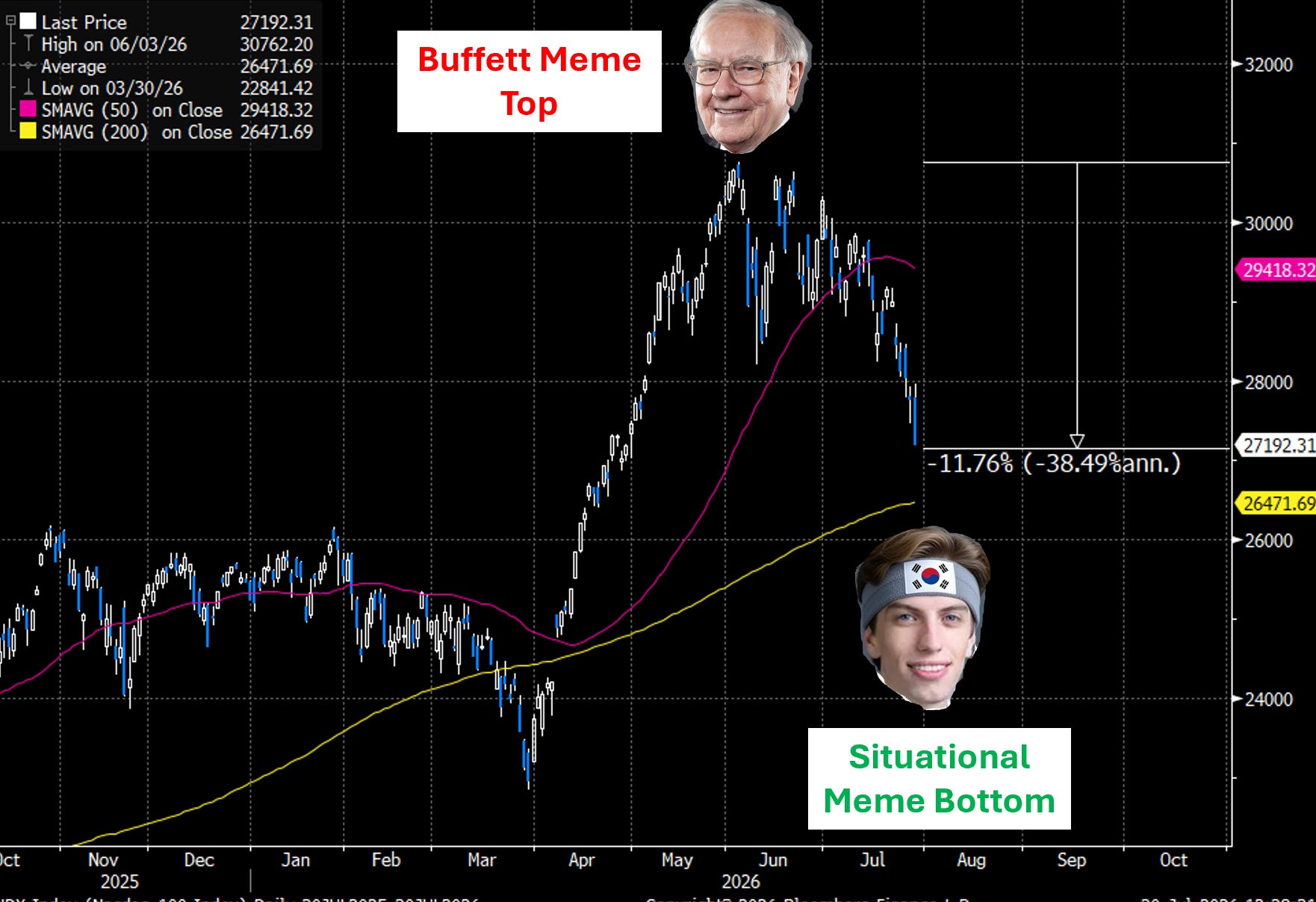
Actually, Le Shrub is not technically my friend, as he does not know me. But should he ever wish to rectify that unfortunate oversight, I remain open to discussions.
In any case, make sure to check out his Substack—and subscribe—here:

And so, after that lengthy introduction, and with the month of July just having concluded, it is time for our usual end-of-month issue of the Quotedian, looking at monthly and year-to-date statistic and throwing in one or the other chart along the way.
Off we go!
Equities
Going against the playbook, where stocks are usually up in (all years AND mid-term election years),
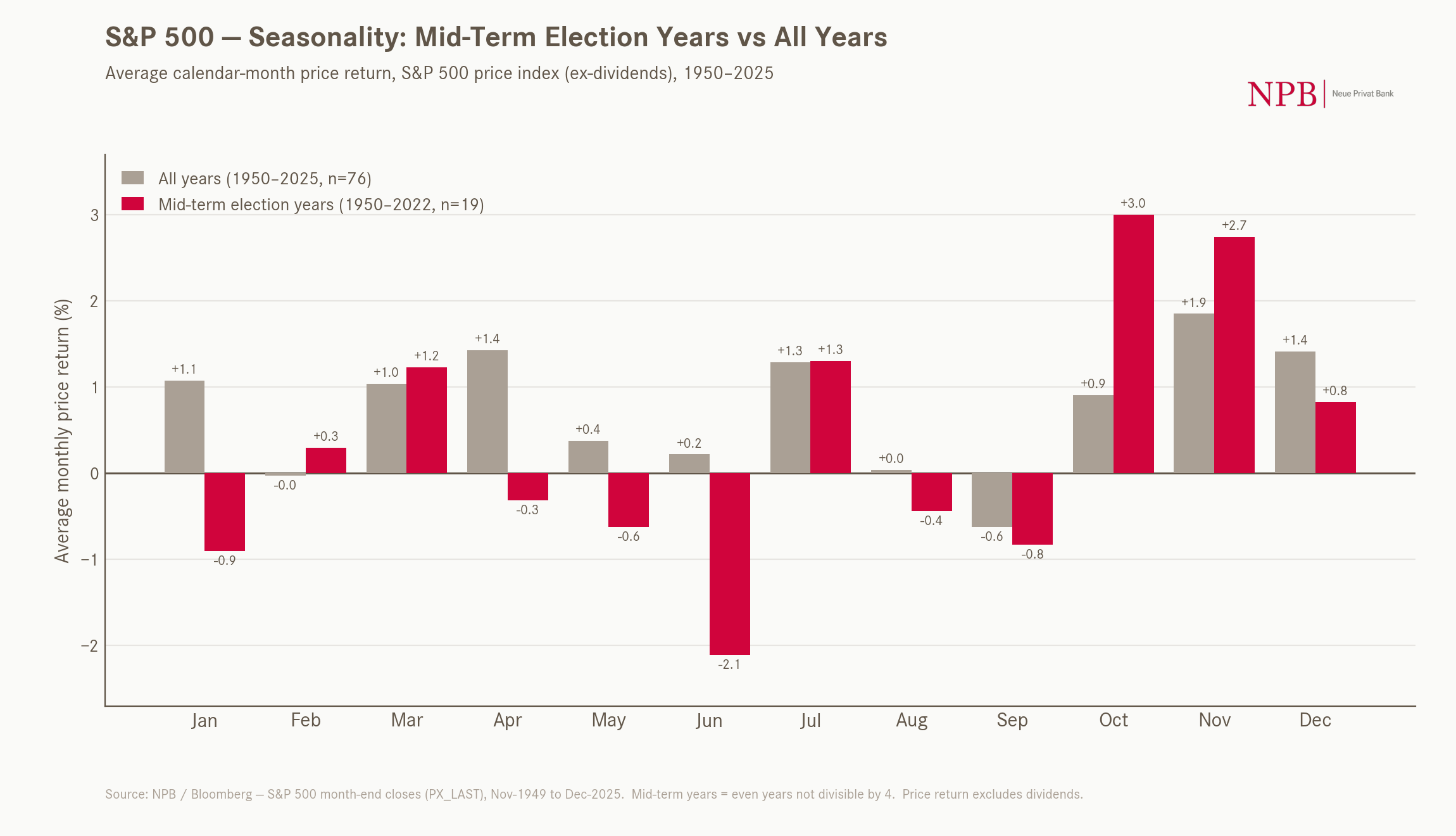
July of 2026 was one of those months where the exception confirms the rule 😉:
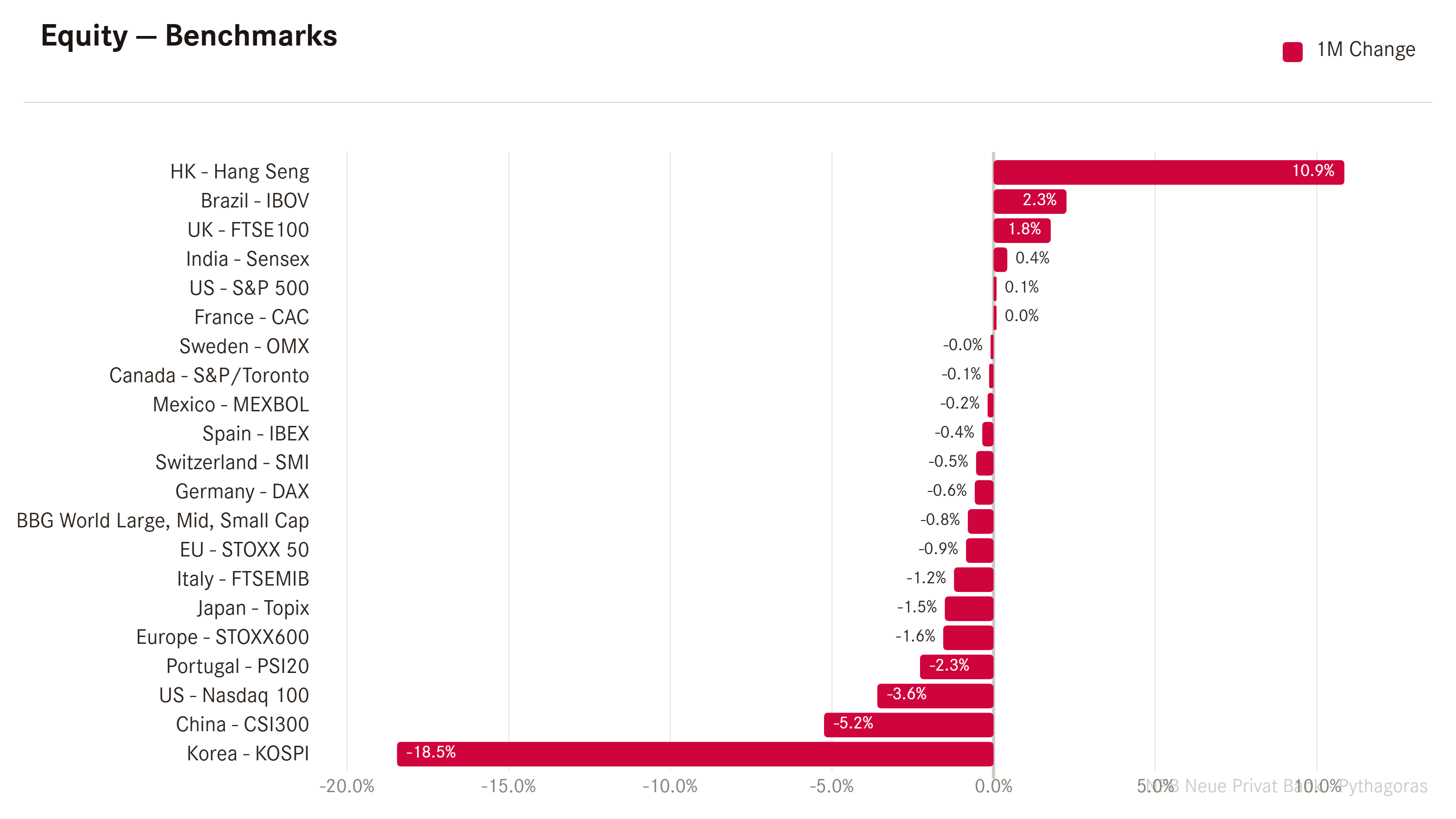
It has to be pointed out, however, that, with the exception of the KOSPI (now officially a MEME market), losses were muted, and some markets even eked out gains.
Checking in on year-to-date returns, we note that early investors into the KOSPI are still up 50%+ this year, despite July’s nearly 20% drop:
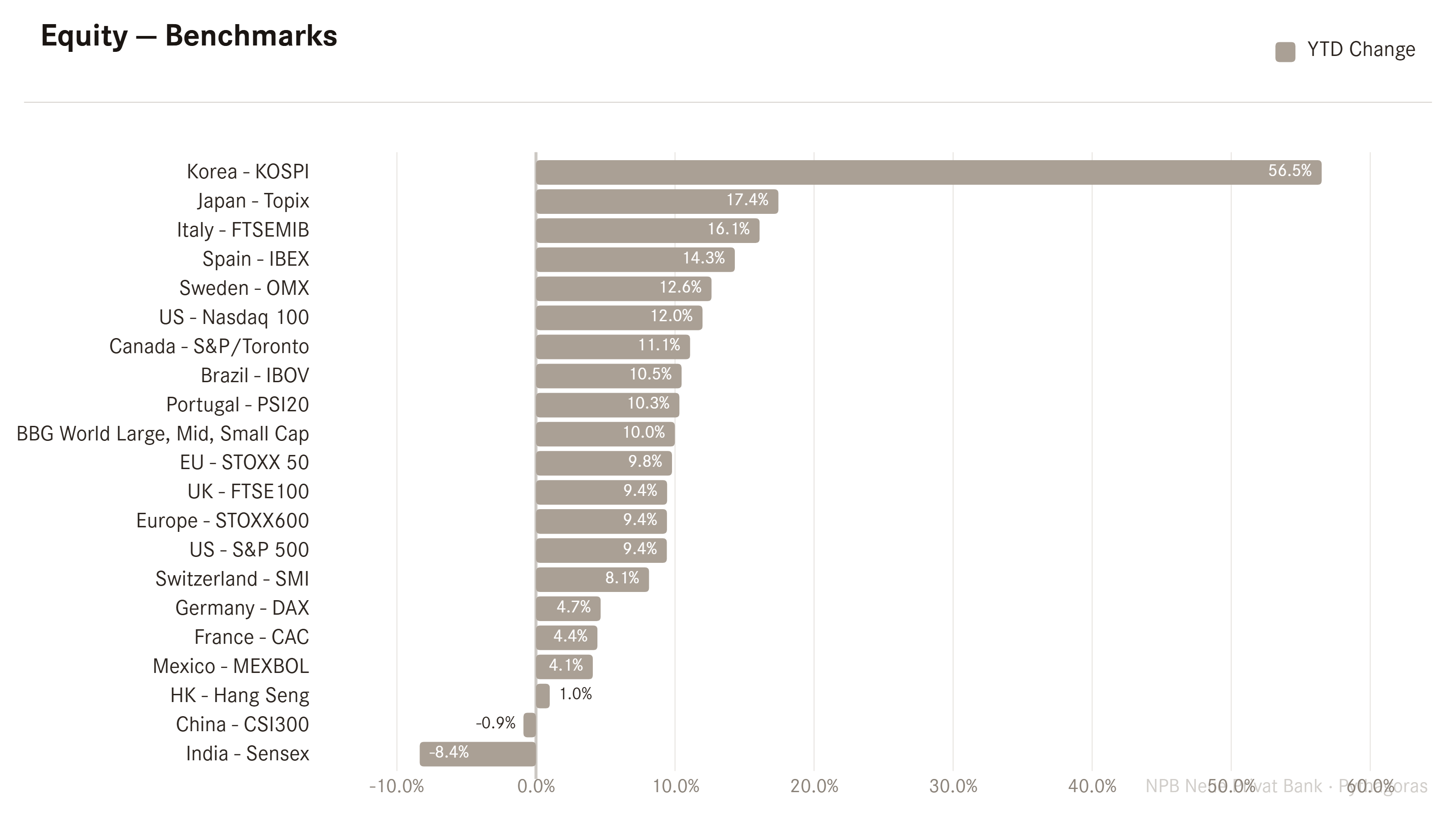
Japan, Italy and World Champions Spain are also on top of the leaderboard, whilst India and Mainland China continue to make up the tail end.
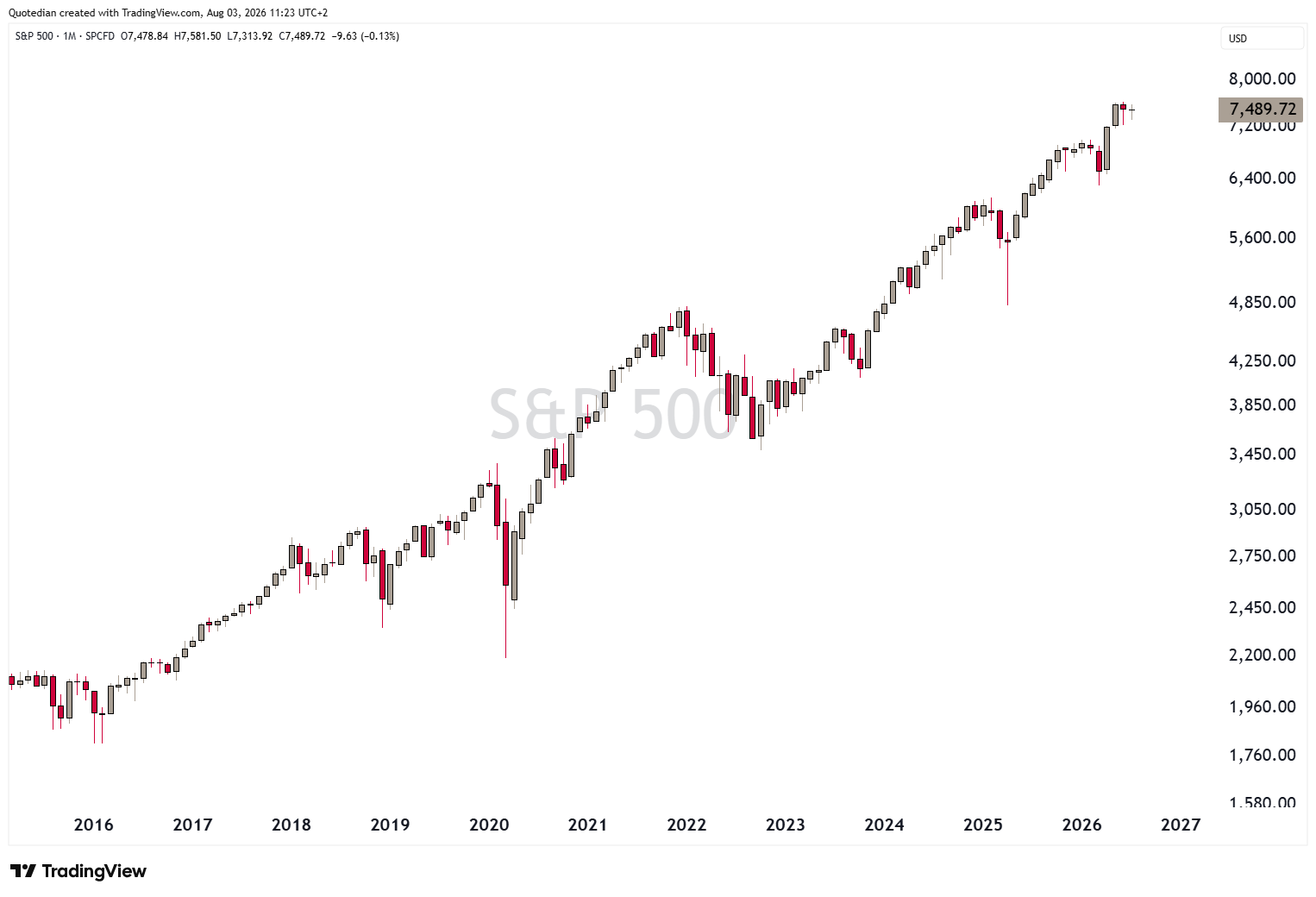
The monthly chart of the S&P 500 reveals the ‘pause’ the index has been in for the past two months:
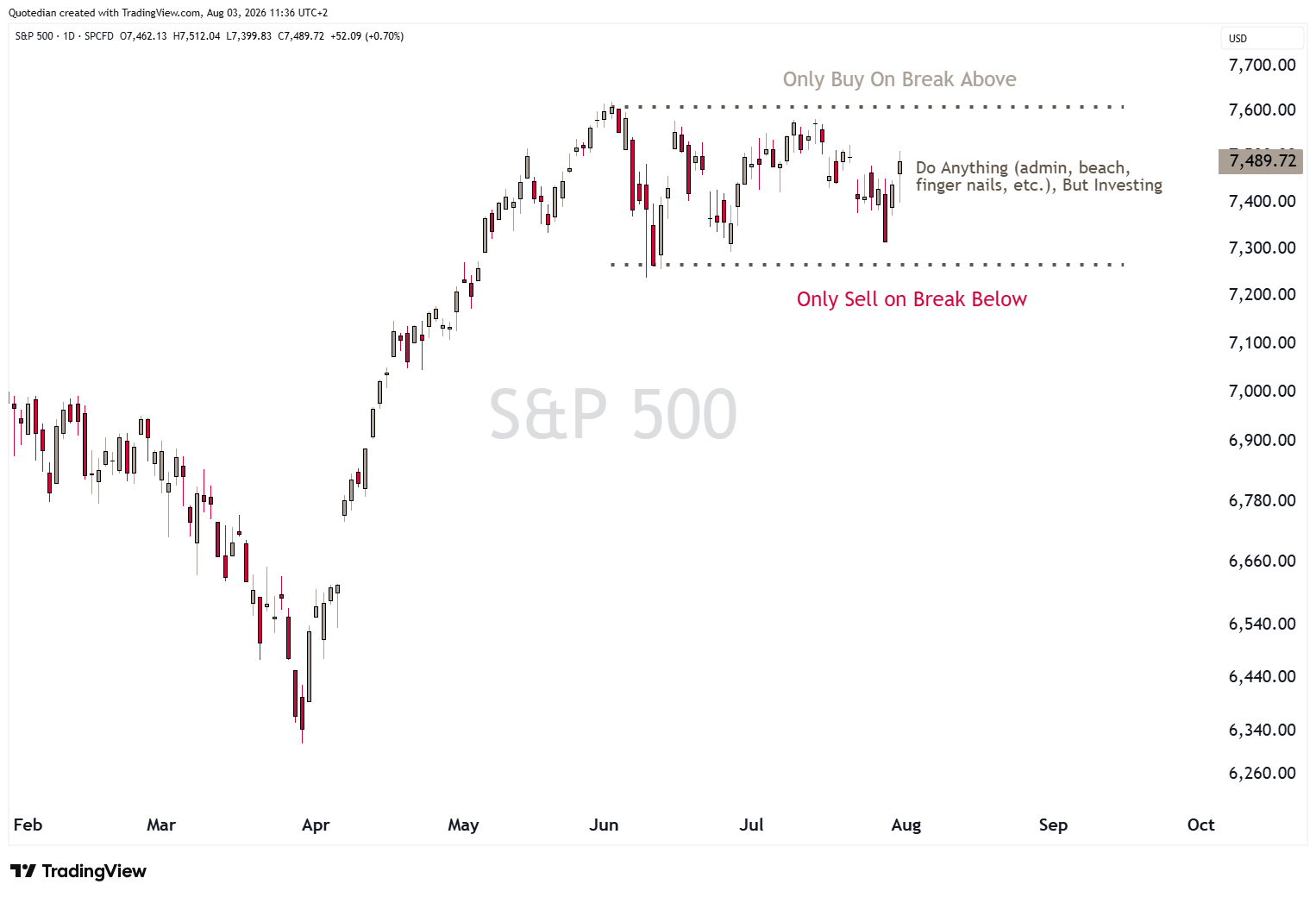
However, a close-up look via the daily chart reveals that our investment ‘strategy’ from early June is still VERY valid:
Going back to the monthly chart of the S&P 500, but this time in its equal-weight version, we note an interesting trend developing:
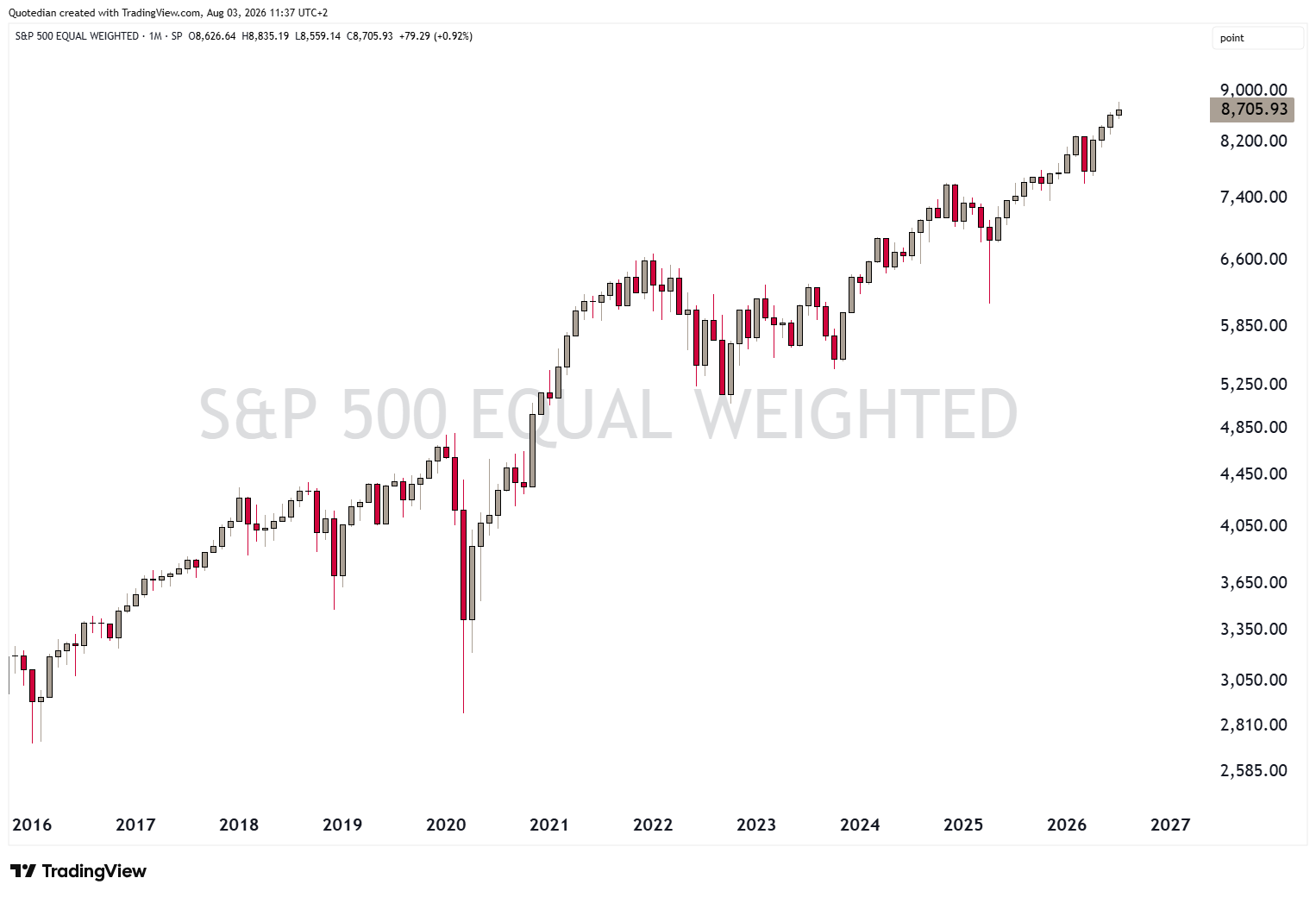
This is a clear sign that the current bull cycle is broadening (and ageing).
European stocks (SXXP) printed an encouraging new ATH in July:
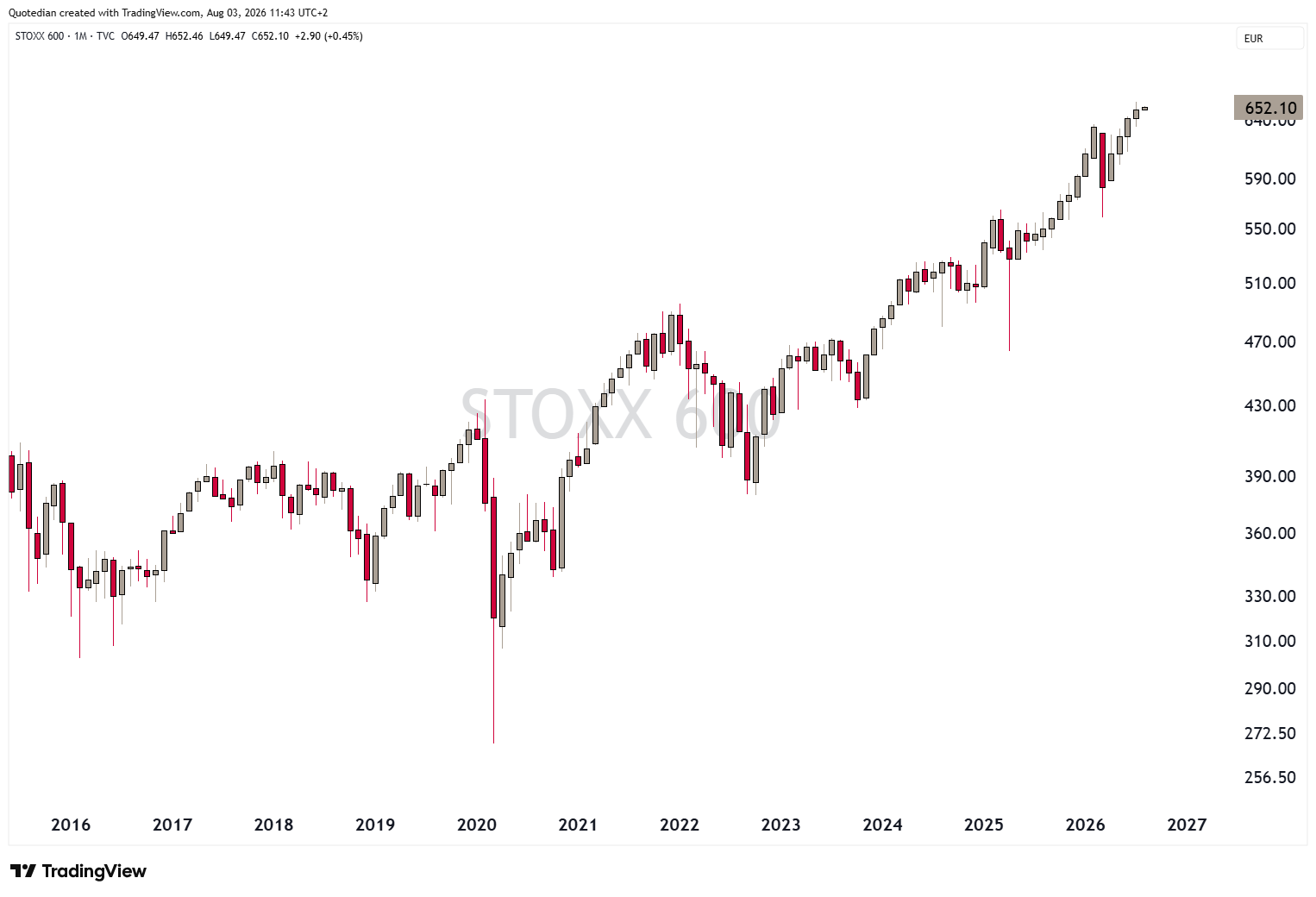
This is further confirming our thesis laid out in NPB’s latest Quarterly Investment Outlook (click here), where we see a rotation away from the largest US growth stocks into other parts of the market, such as European equities.
I wonder, then, whether our high-beta-to-high-quality theme is also working?
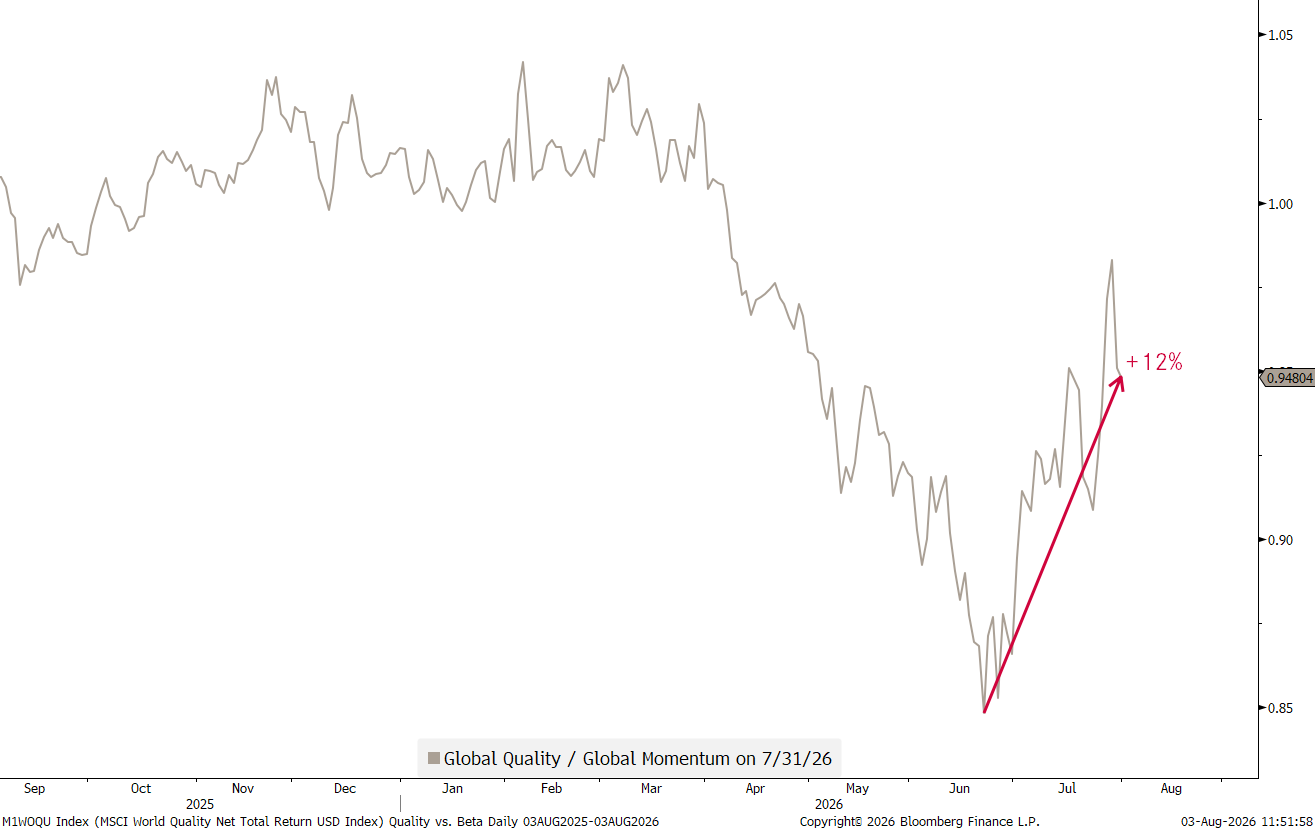
Indeed!!
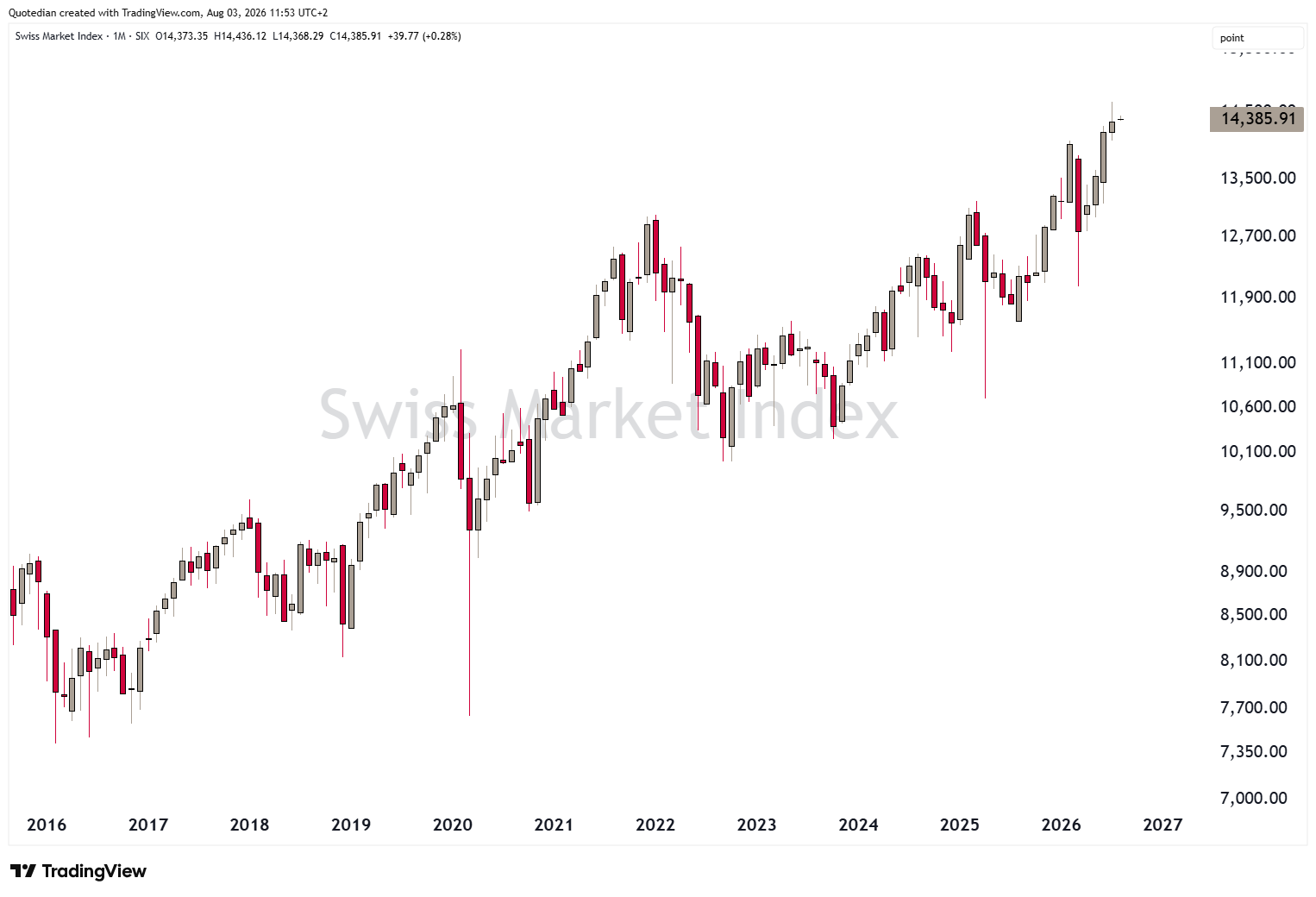
Back to international equities where our home turf market, Switzerland, gets a special mention,
as does the UK’s Footsie,
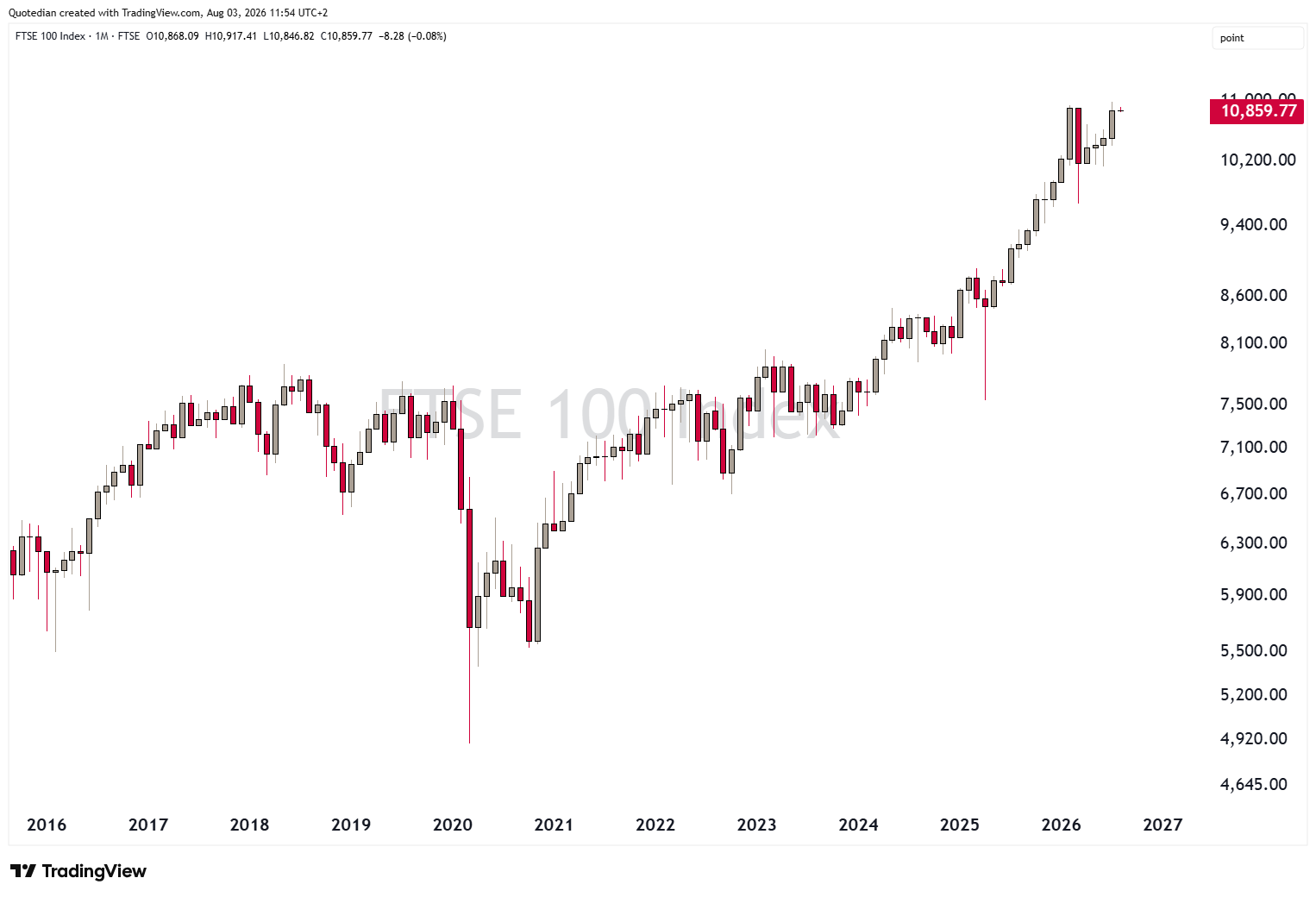
which once again is scratching against the 11k resistance on hopes (also once again) that a new government will provide a miracle (it won’t).
In Asia, Japan’s Nikkei 225 saw its first meaningful reversal since March, and this before the recent events of the BoJ/MoF under the ‘guidance’ of US Treasury secretary Bessent started rattling at the largest carry trade the Milky Way has ever seen by intervening on currency markets (buying the Yen):
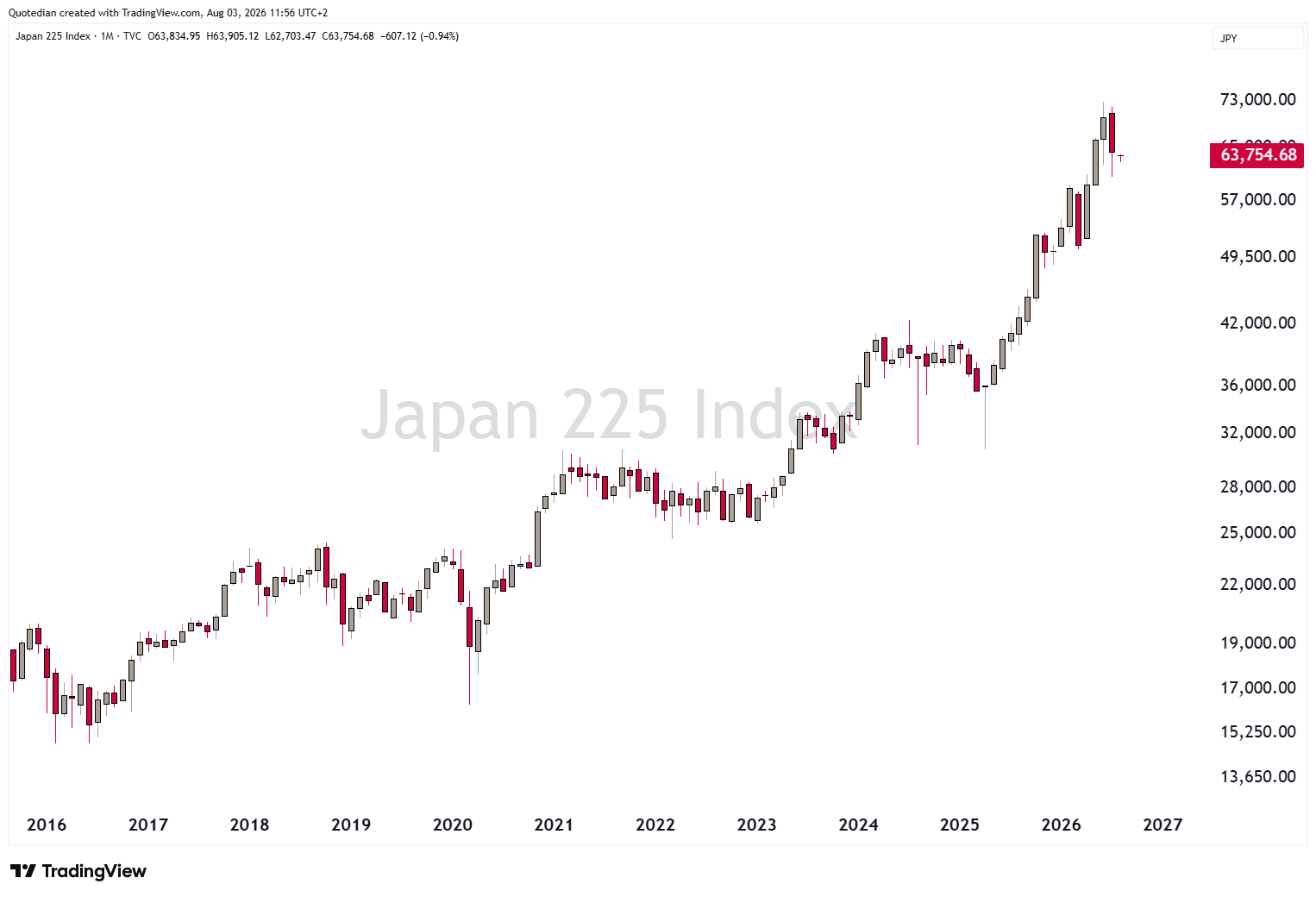
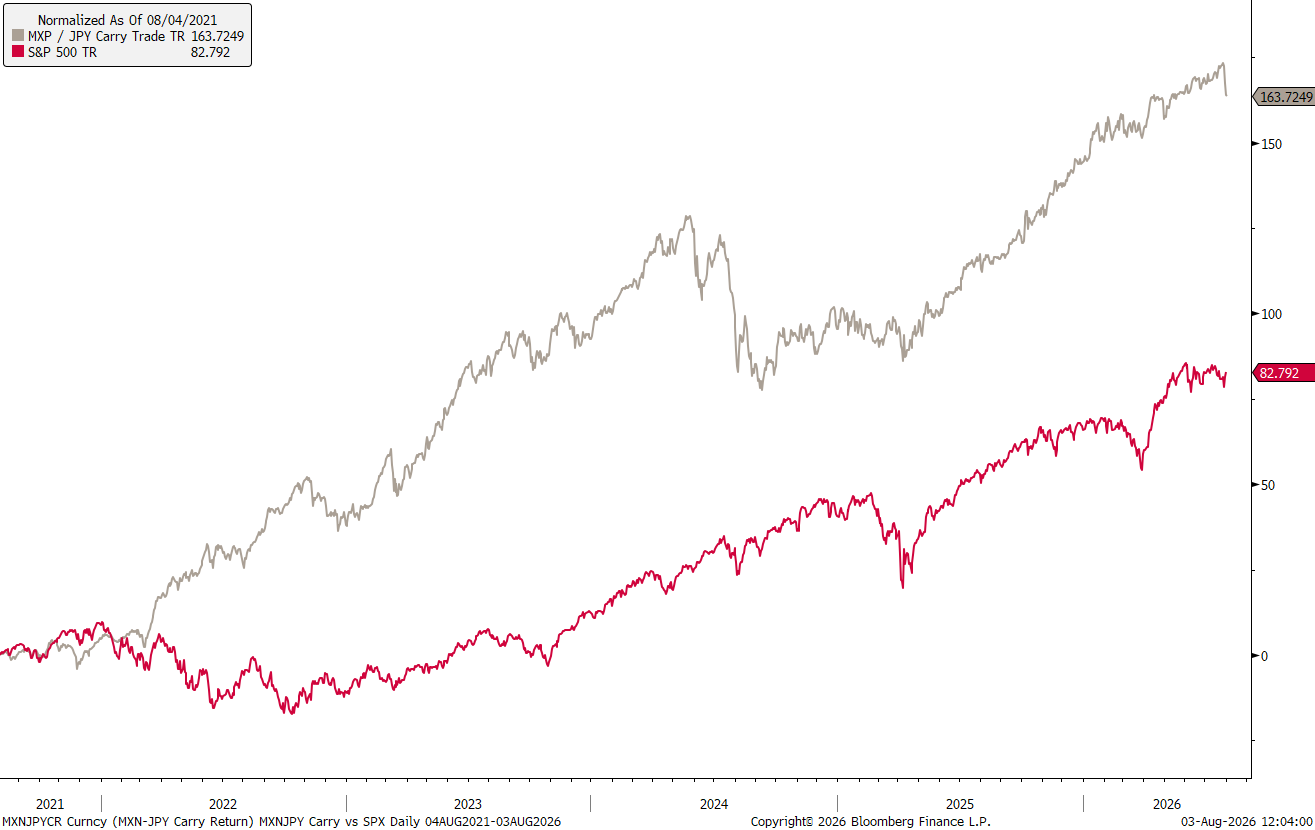
We will discuss this JPY carry-trade thingy on another occasion (and a bit further below in the currency section), but do not underestimate the importance of these developments. After all, investing in the Japanese Yen —> Mexican Peso carry trade has been more profitable than investing in the S&P 500 over the past five years:
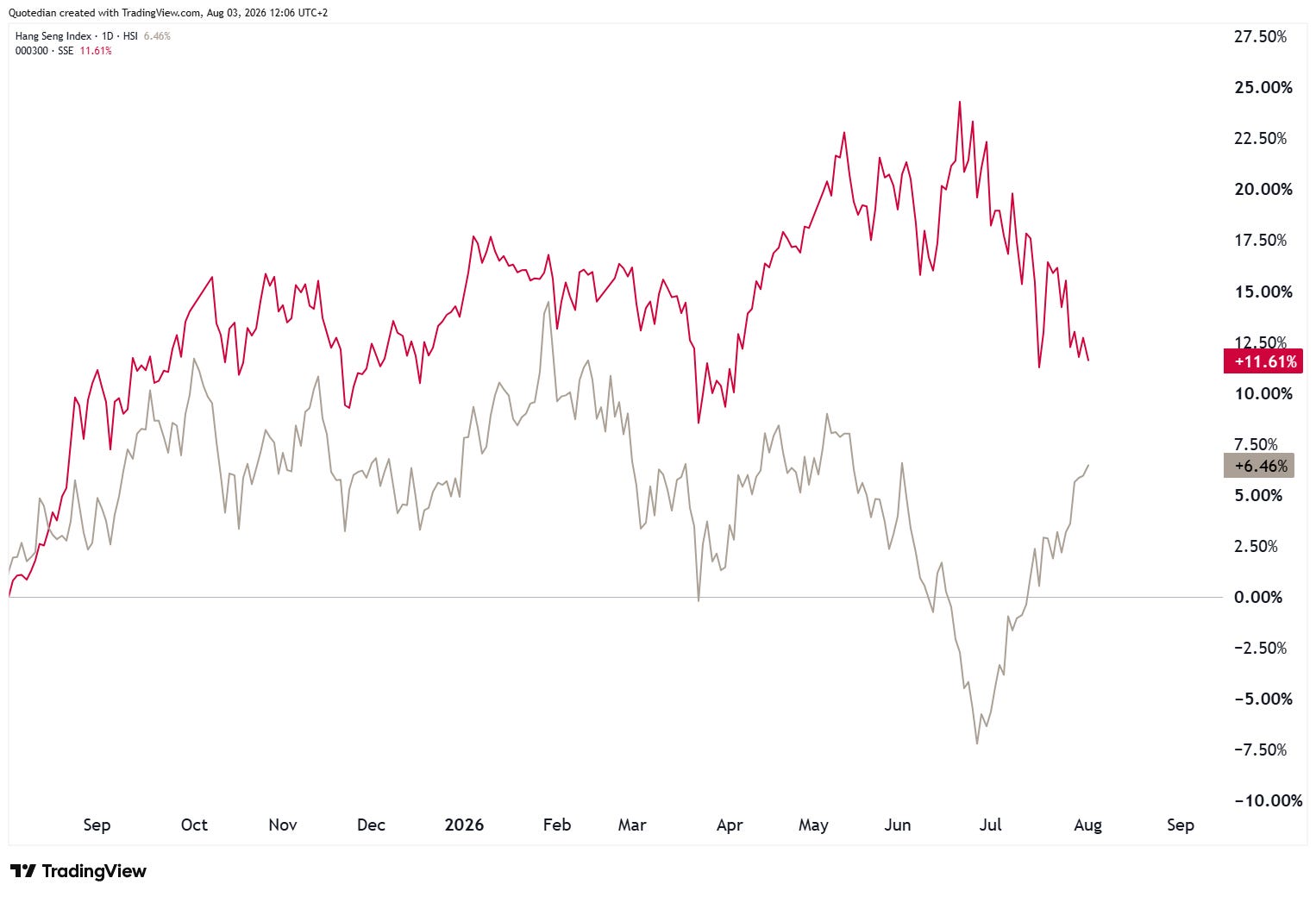
Further in Asia, the performance jaw between China Mainland (red) and Hong Kong (grey) stocks is closing:
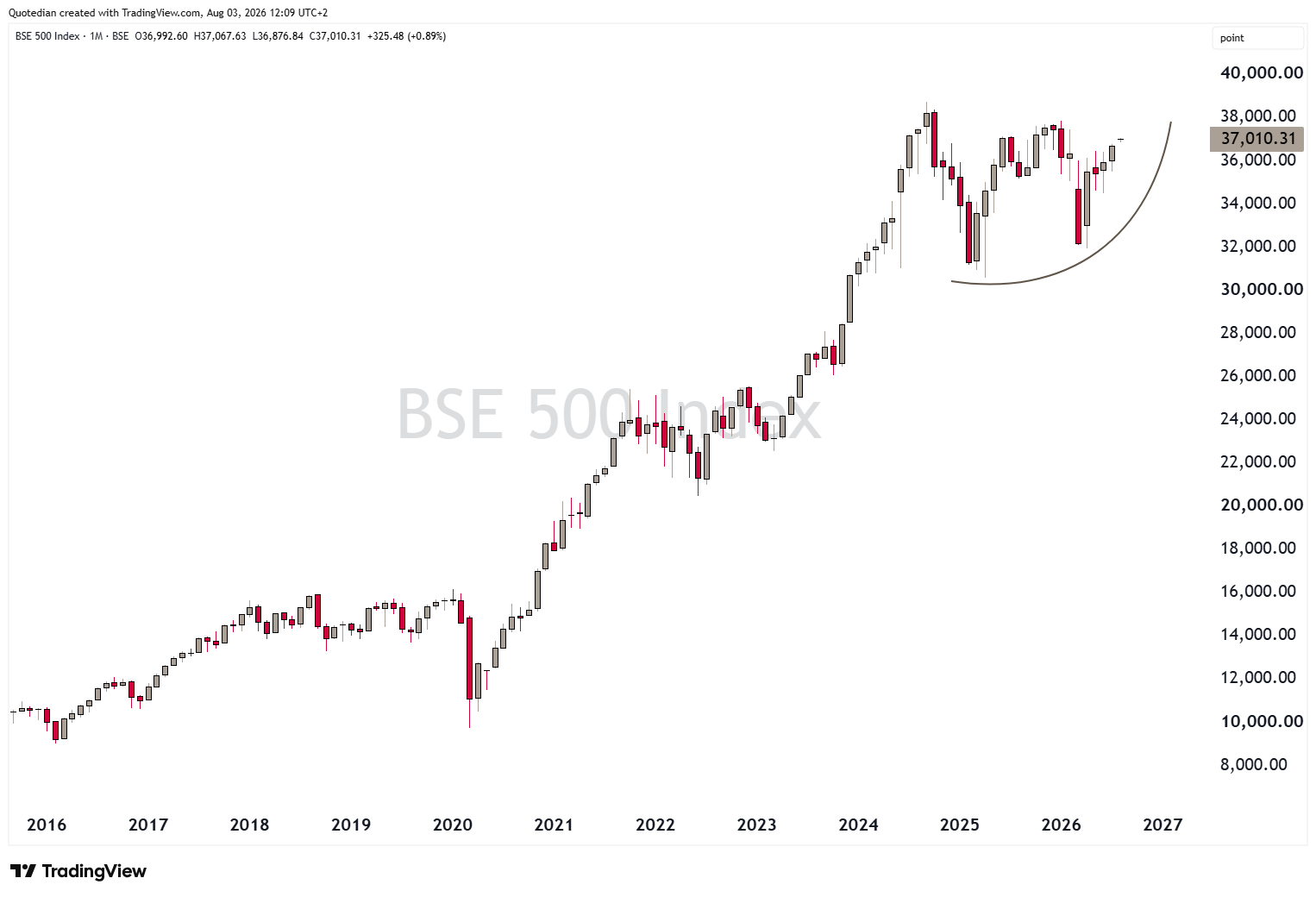
India’s equity market (BSE 500) is trying to exit its two-year- old bear market,
whilst the KOSPI has become rather uninvestable:
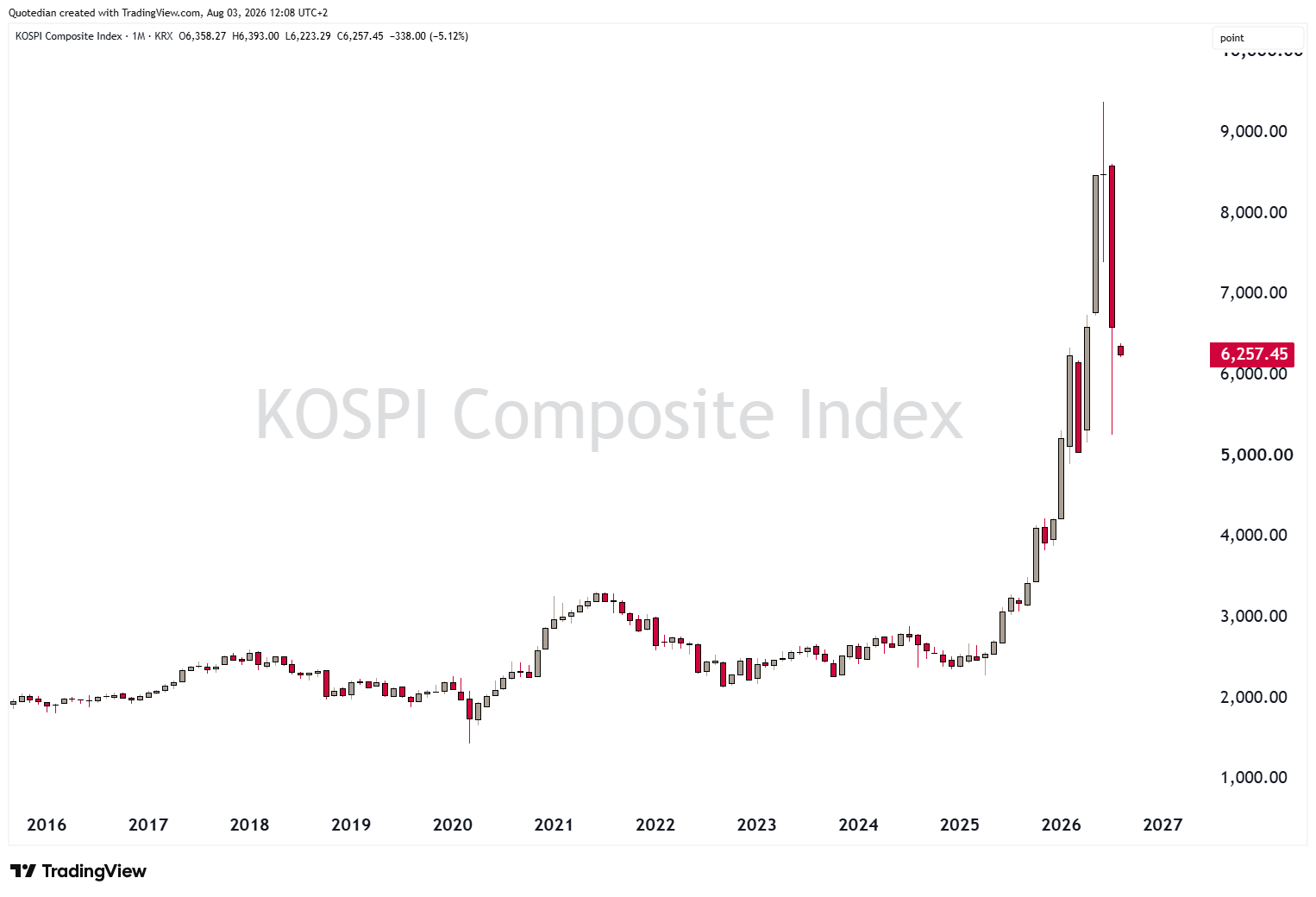
Open only to casino-goers and remember: “There’s no crying at the casino”!
Equity Sectors
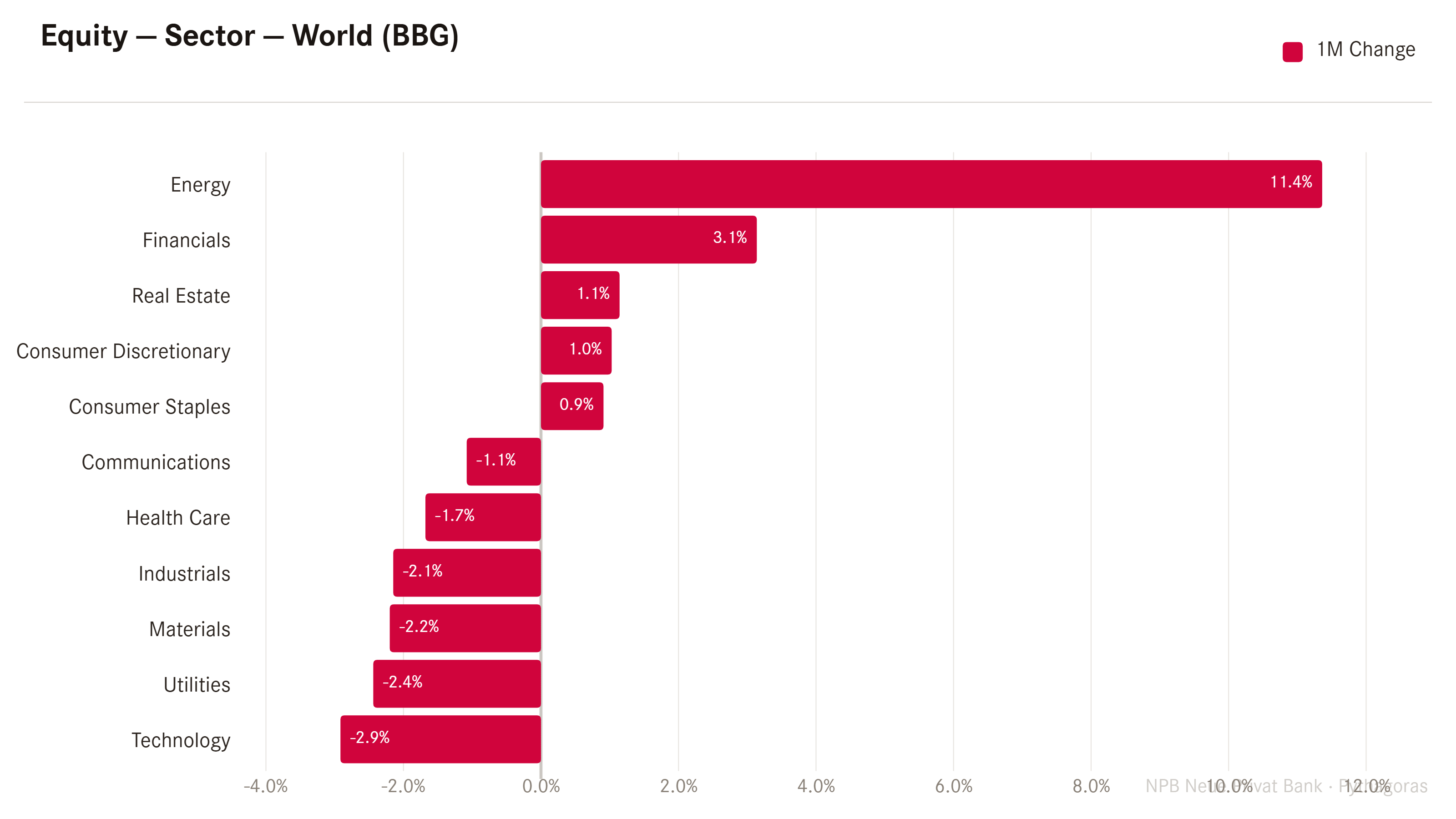
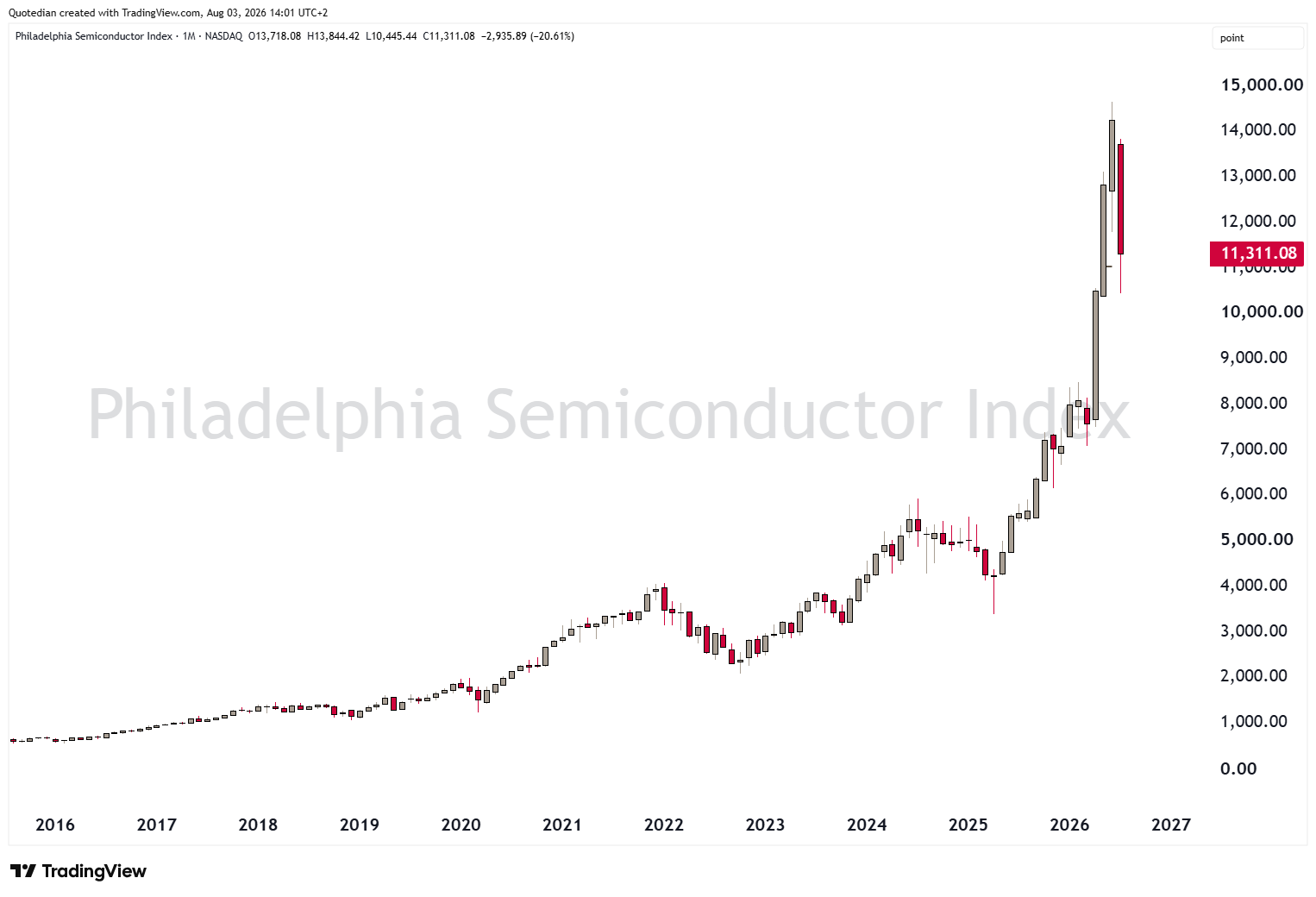
Given the major reversals observed in some parts of the technology sector, specifically the semiconductor part (see KOSPI above and SOX below), the wonder is not that global tech stocks showed the weakest performance but rather that they were down about three percent only:
The semiconductor sector, hereby proxied via the Philadelphia Semiconductor Index (aka SOX), lost 20% on its own, in a massive reversal:
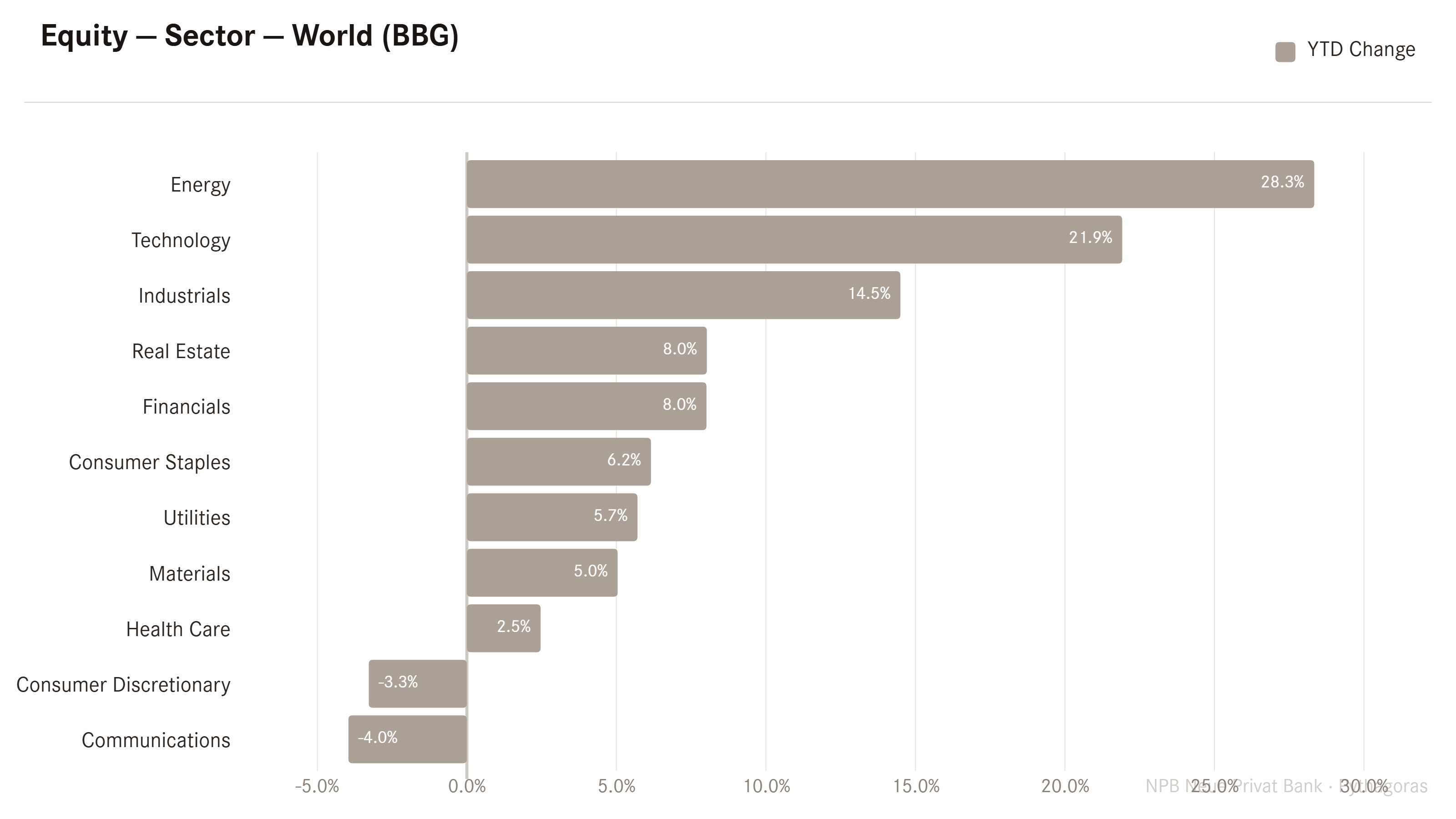
Yet, global tech stocks are still the second-best-performing sector, up over 20% and right behind our beloved energy sector:
Talking of energy and as a segue into the fixed income & interest rates space, have you ever noted the correlation between bonds (TLT - grey) and energy stocks (XLE - inverted - red)?
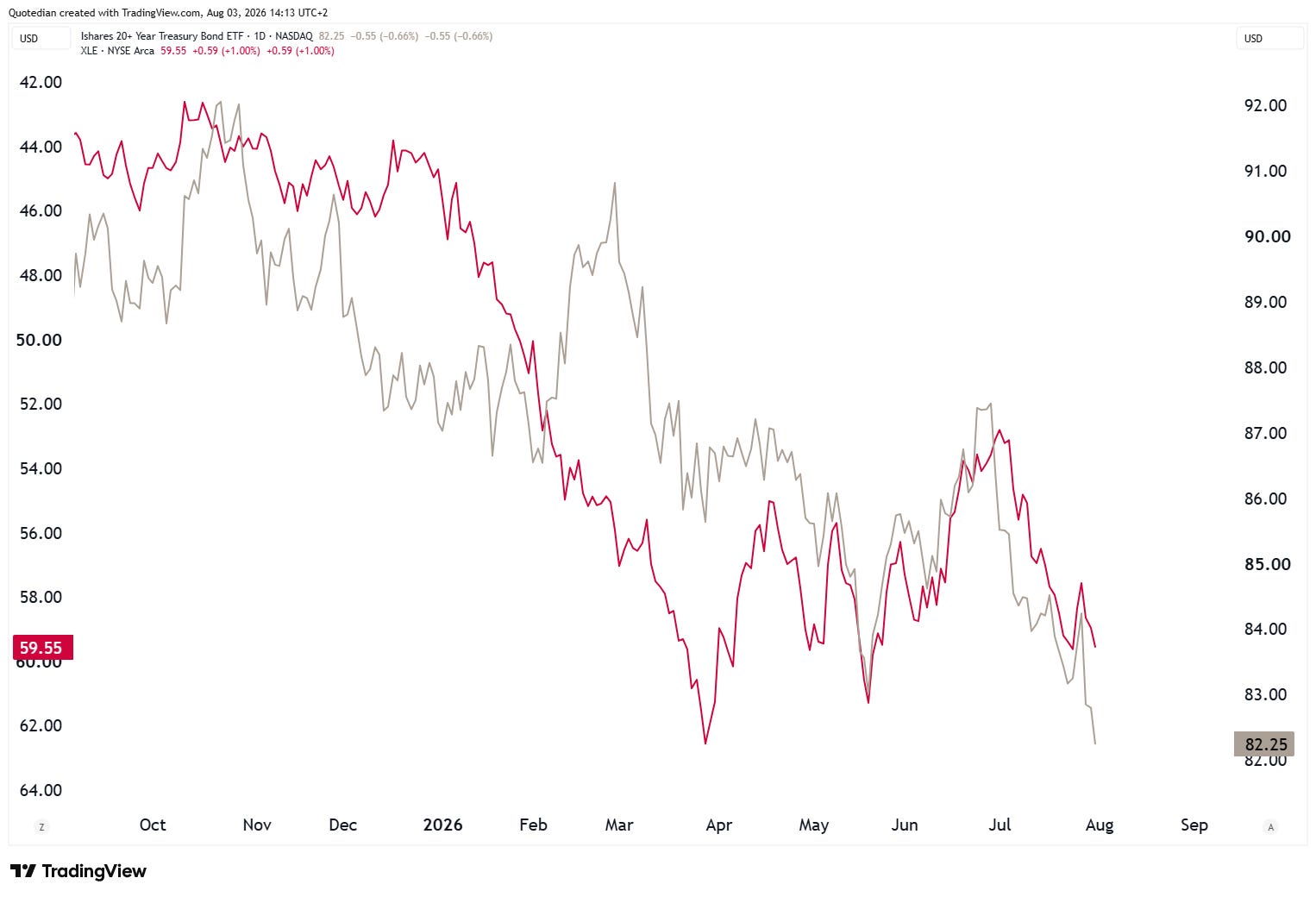
Are energy stocks the new bonds?
Fixed Income / Rates
The following performance table leaves no doubt that July has been very difficult for fixed-income investors:
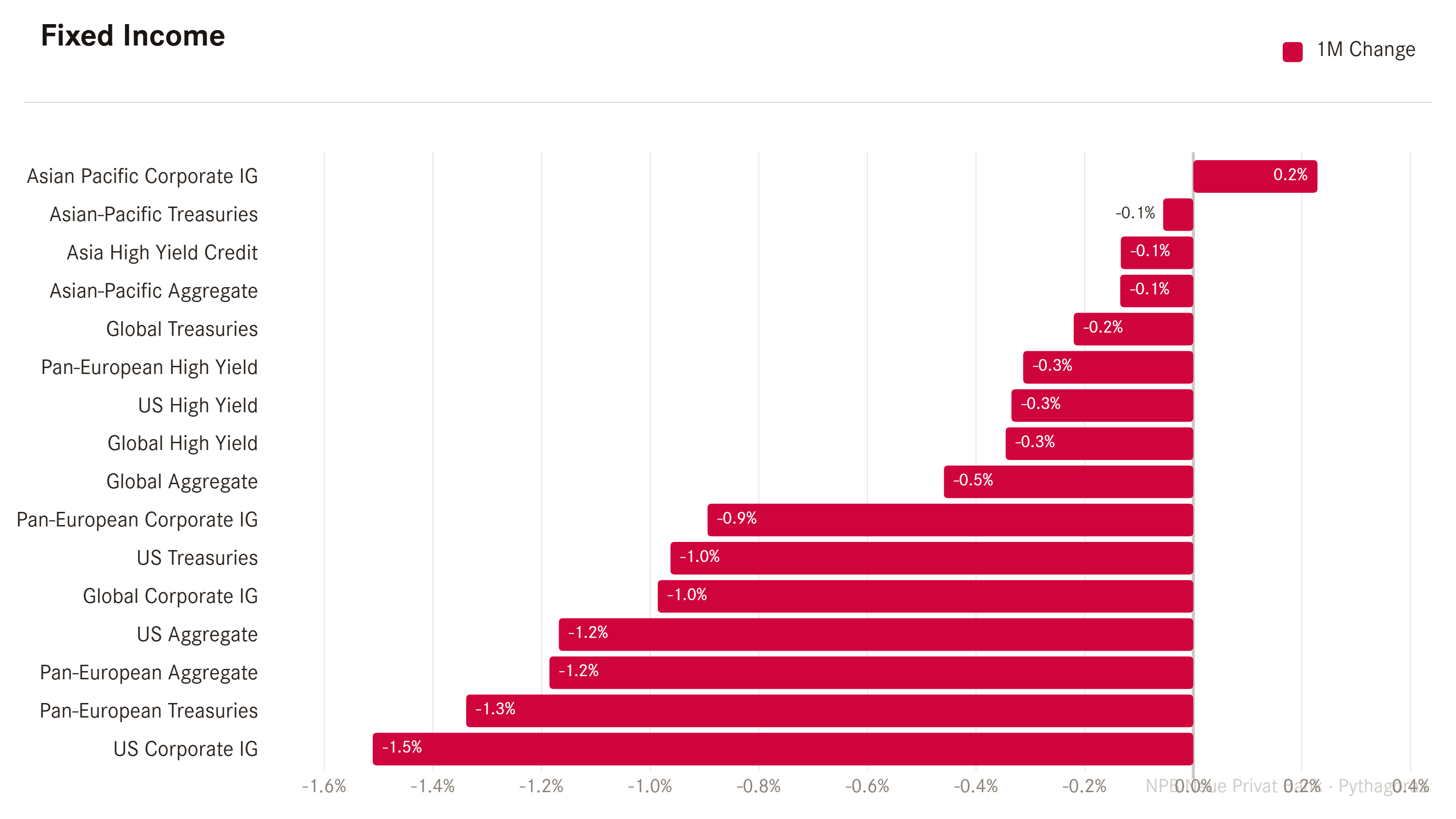
The following chart is one of the most popular ones going around social financial media right now:
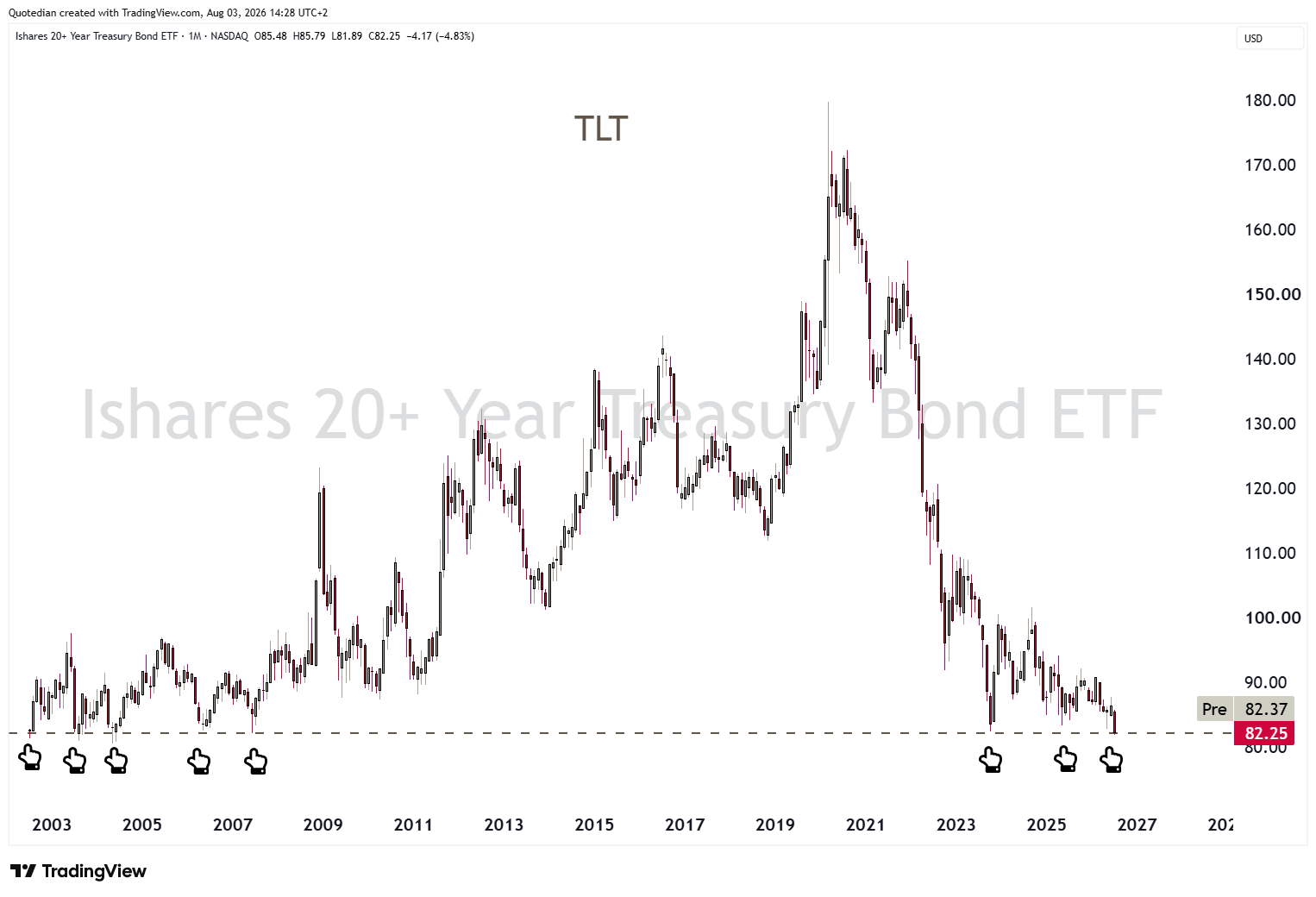
The iShares 20+ Year Treasury Bond ETF (aka TLT), often used as a proxy for longer-duration (US) bonds, sits right on top of its very long-term support. Many are shouting for a break, with only a few calling it a generational buying opportunity. The truth is, the long-side is the low risk trade right now, as it is easy to place a close-by stop loss.
However, it is to be kept in mind that most bond investors do not trade bonds, but rather invest into them and largely follow a “buy and maintain” strategy.
As regular readers of the Quotedian know, we have been calling for a secular rates bull market (bond bear market) for a long time and we have been patiently waiting for the break-out to happen in the last third of the consolidation apex during Q2 or Q3 of this year:
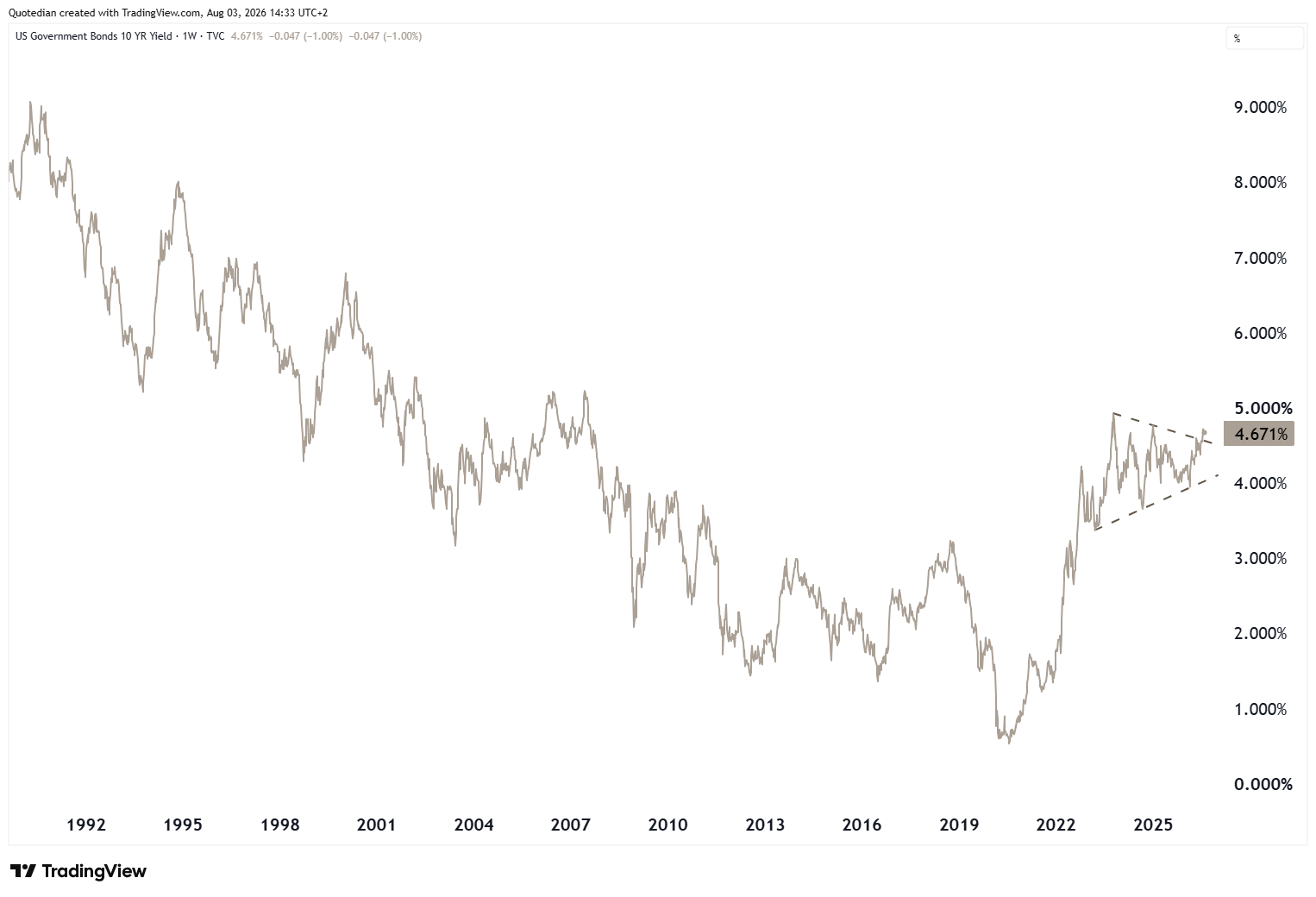
And there we go!
The only thing that holds me back a bit right now, is that all of a sudden, everyone and his grandmother are now bearish on bonds. And indeed, CFTC data confirms that large speculators (hedge funds & co) are extremely unexposed to 30-year bonds, whilst commercial hedgers are very exposed (i.e. not hedged):
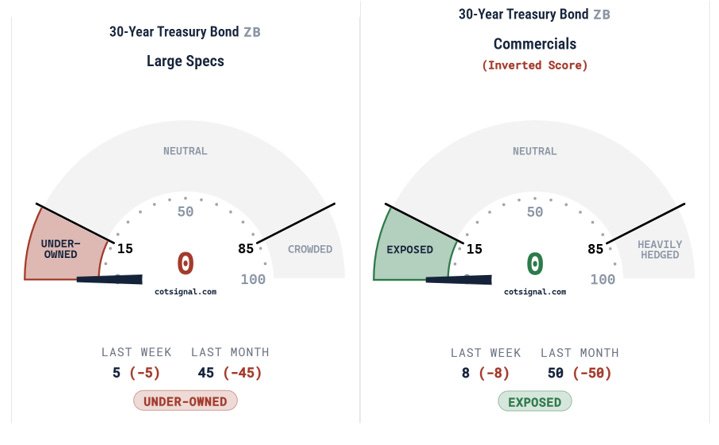
Be mindful of a decent counter-trend rally for bonds over the coming weeks.
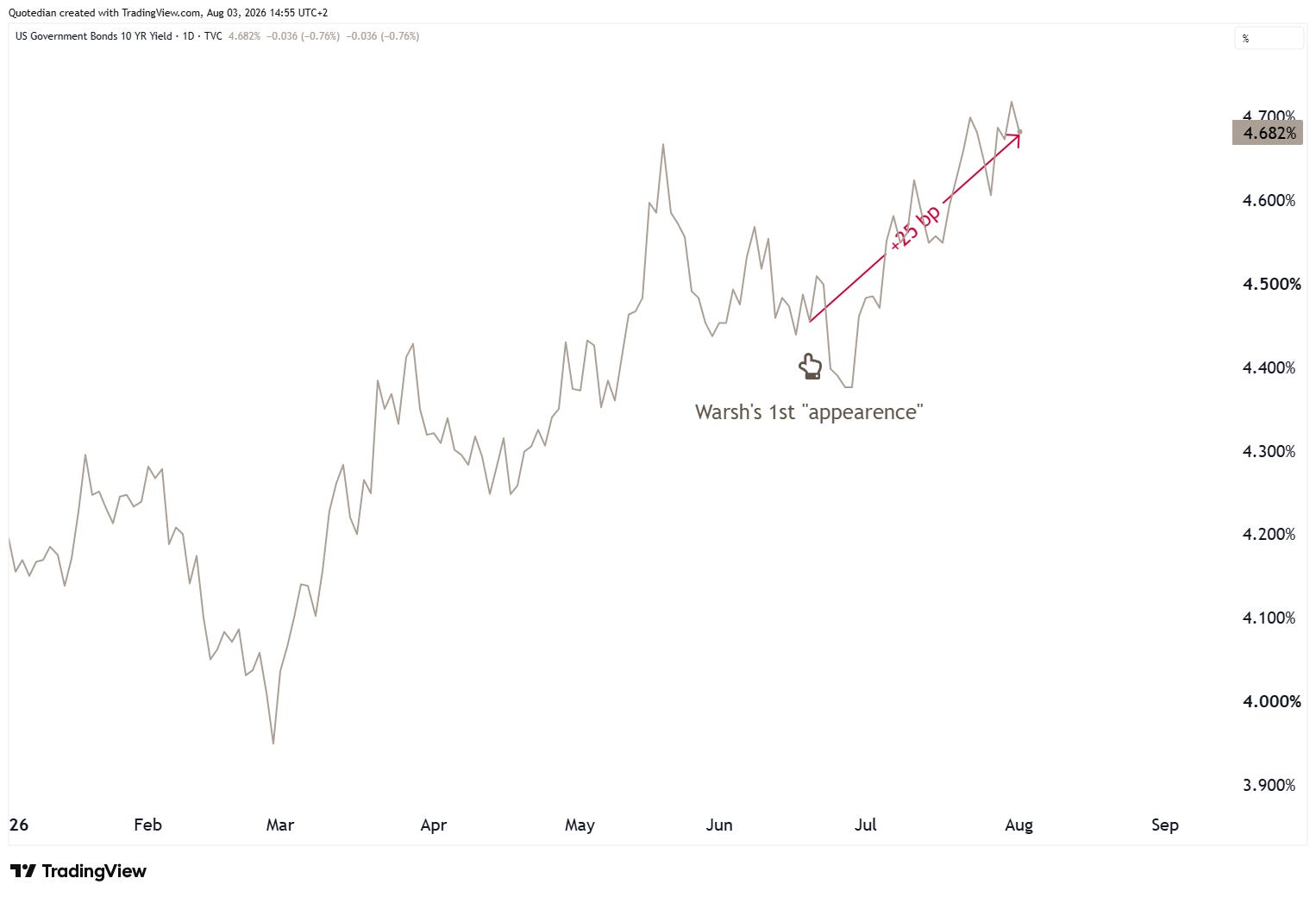
What lead to this rally in the long-end of the bond market and a steepening in the yield curve last week? The Fed of course! The FOMC’s decision not to hike rates, coupled with less hawkish-than-expected comments from new Fed Boss Warsh, got the bond market very worried. Here’s the yield curve steepening witnessed (30y - 3m):
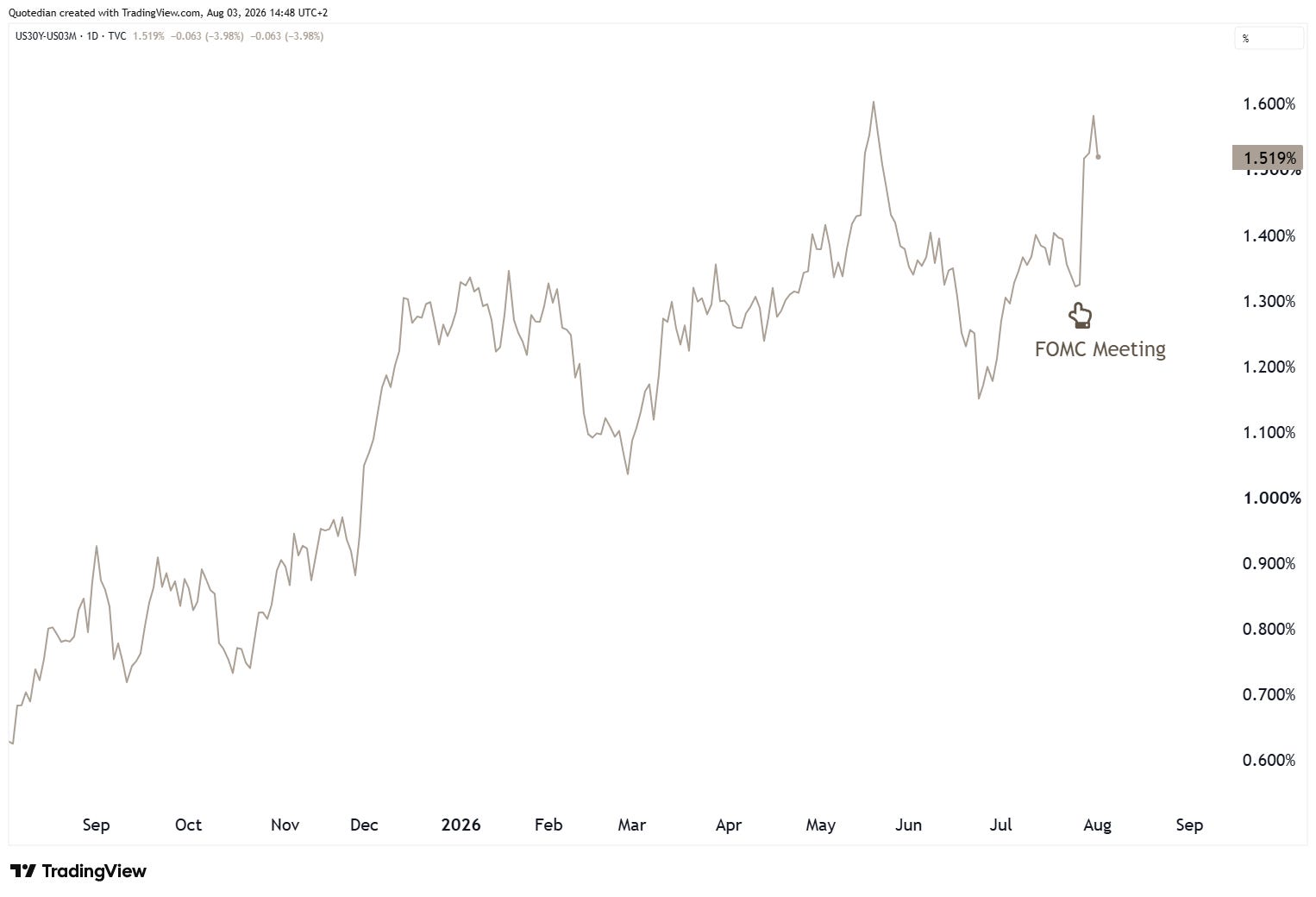
So, is Kevin Warsh already a “lame dove” and no better than his predecessors in inflation fighting?
…OR…
has he cleverly handed over the long-end of the curve to the so-called bond vigilantes, which now have tightened for him, without him having to touch the Fed Fund rate (which Uncle Donald would not appreciate, to say the least)??
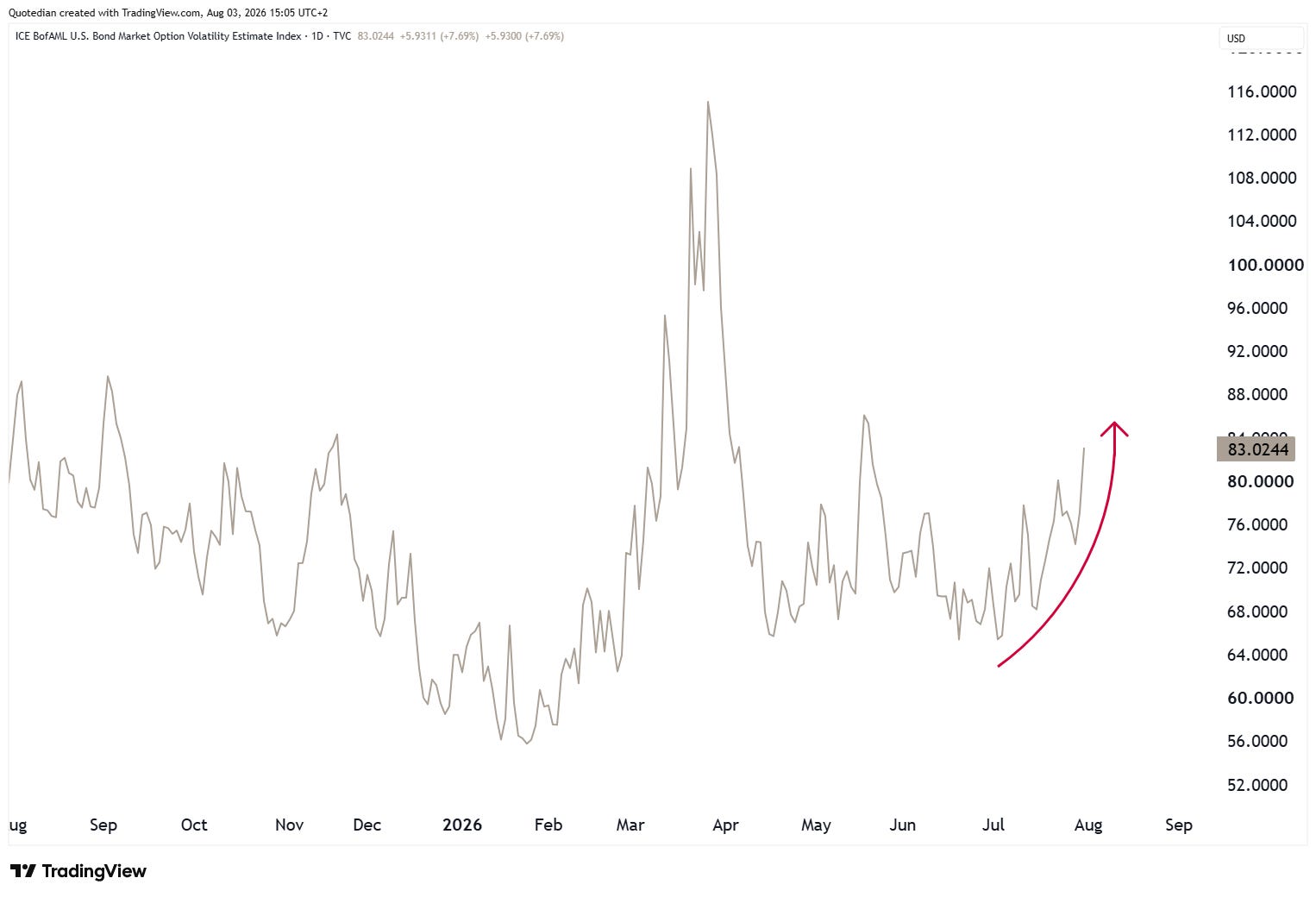
Whether this is indeed his game plan or he’s just as ignorant as his predecessors, bond volatility (MOVE) will be higher going forward, not lower:
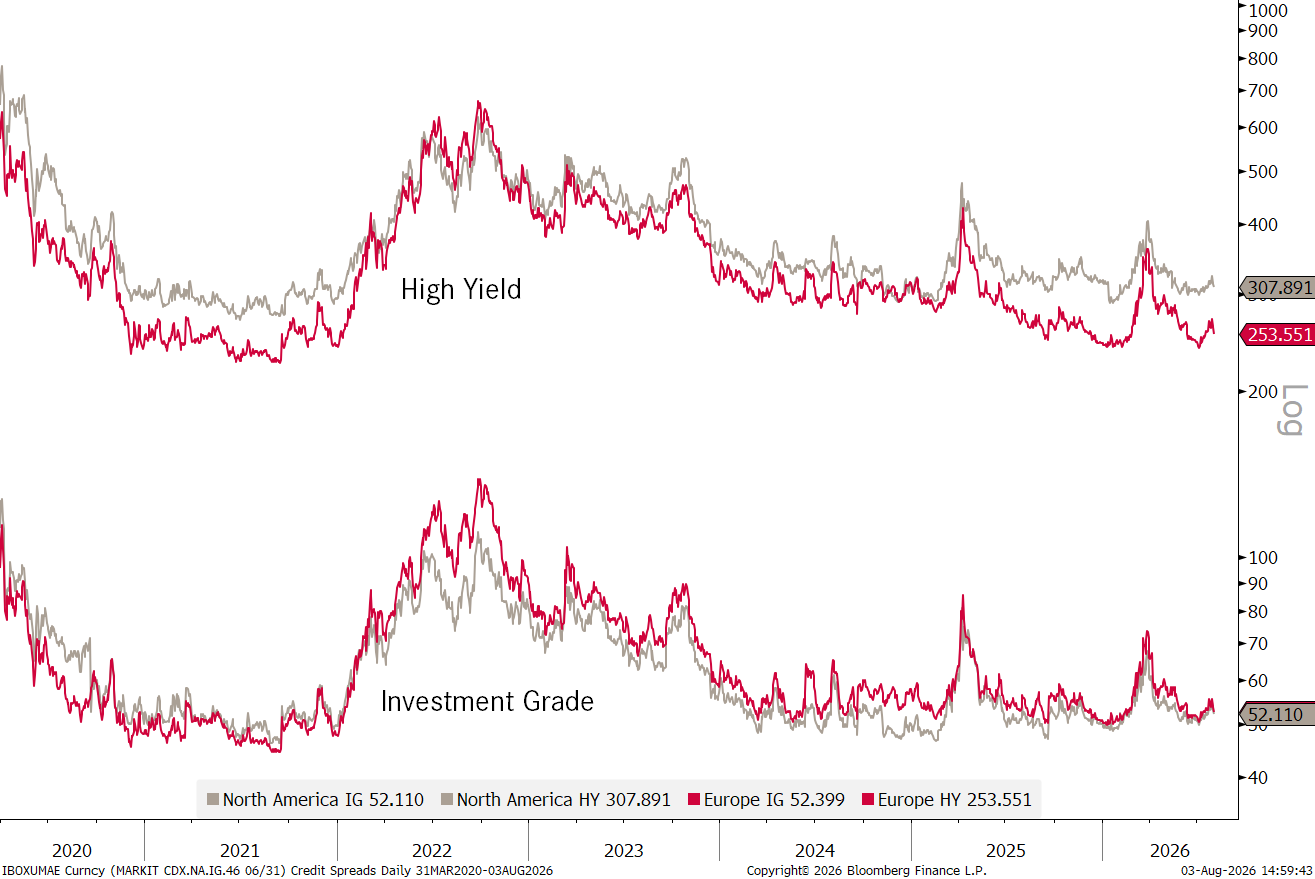
Credit spreads continue to be very compressed:
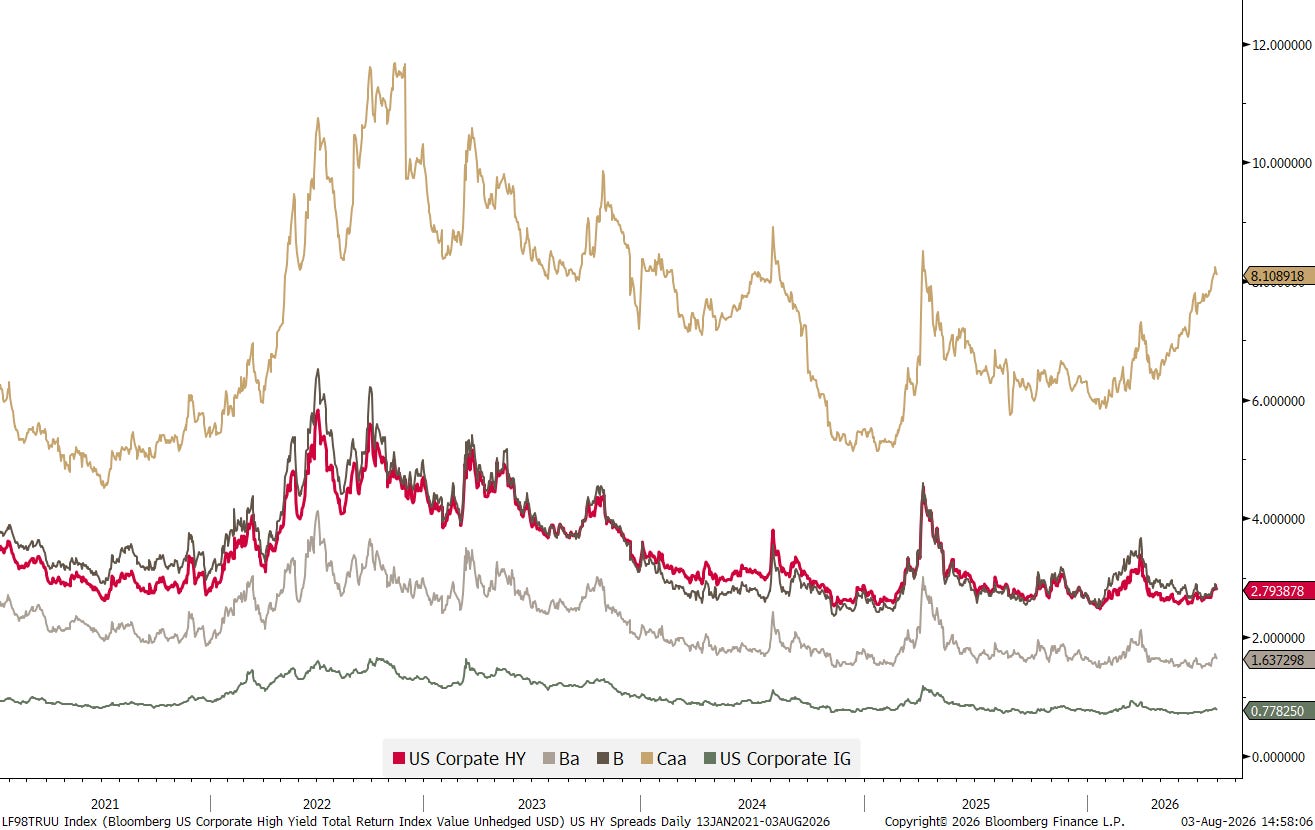
However, I continue to have a close eye on the widening int the CCC segment (light brown):
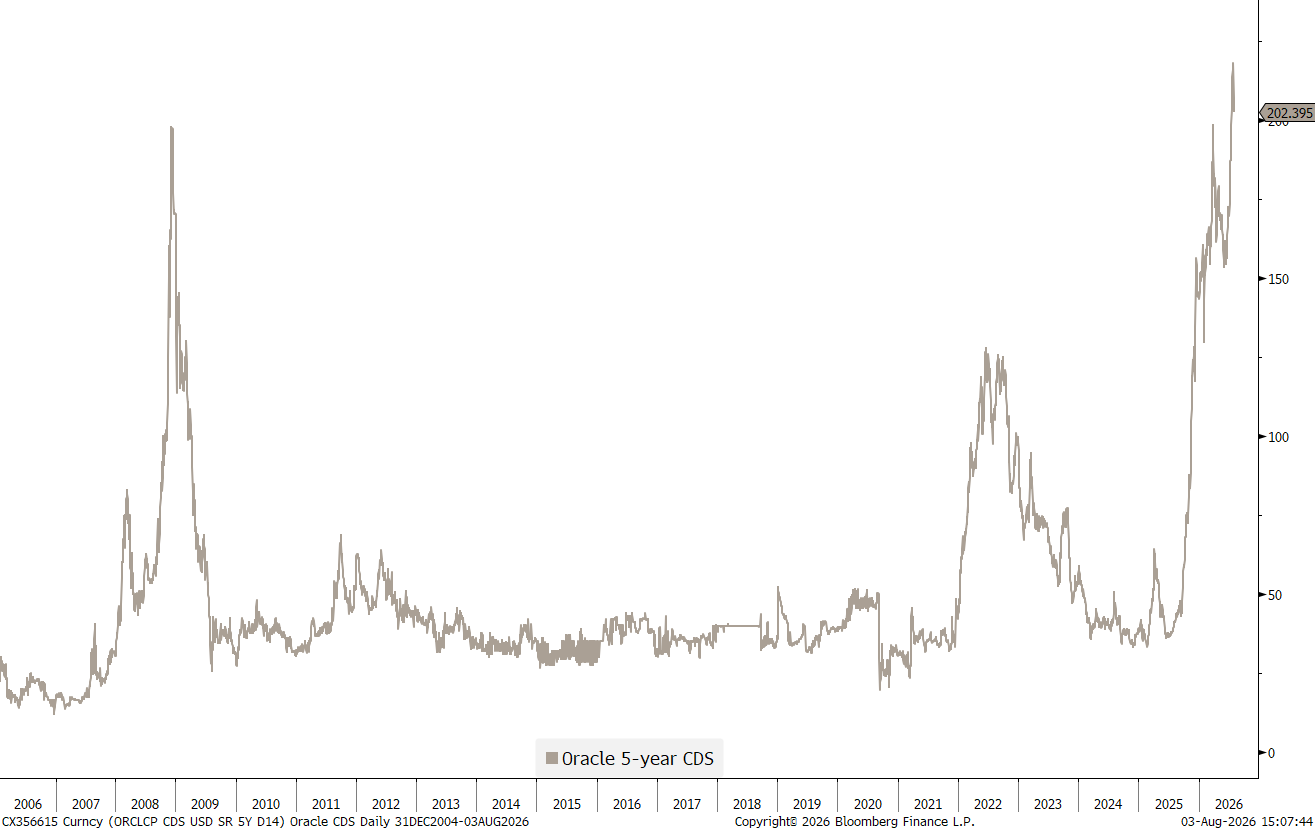
AI overspending continues to be one worry to the markret, which has been expressed in the credit default swap rate of Oracle for a while now and which we have also discussed in this space:
However, the pick up in the CDS rate of NVDA is a new observation:
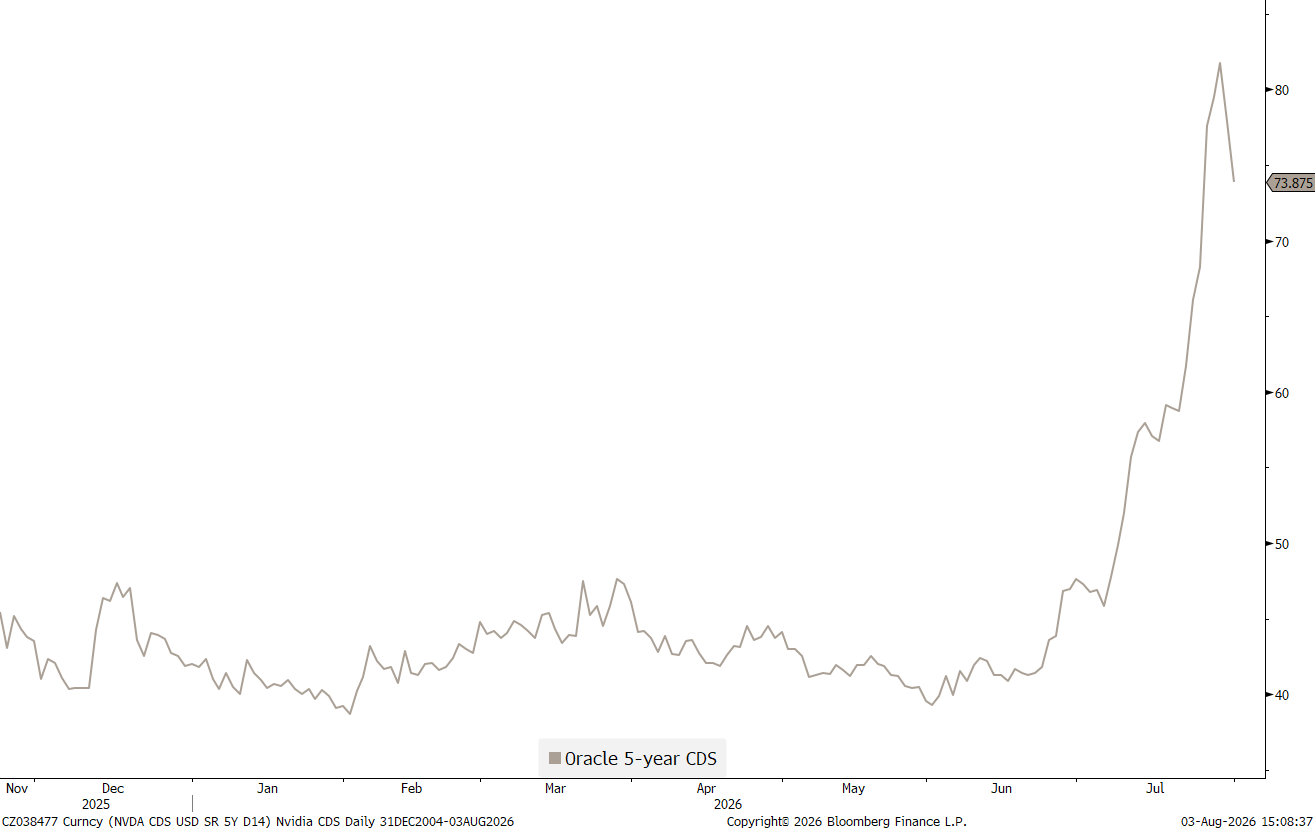
At <80, this is not a signal that the company is about to go bankrupt, but the doubling of the spread in less than a month is smoke to something…
Currencies (FX)
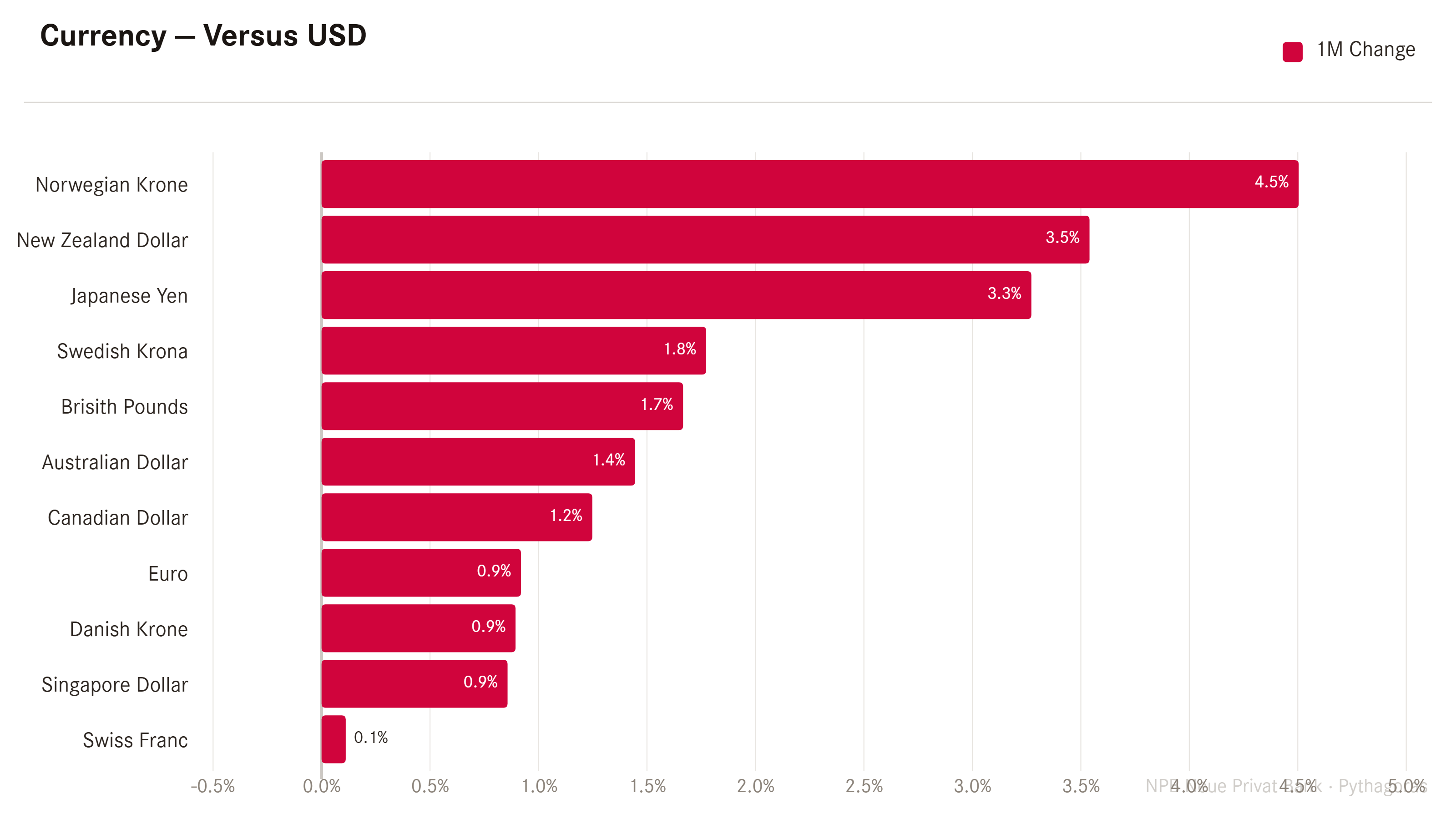
During July, most DM currencies gained territory versus the US Dollar:
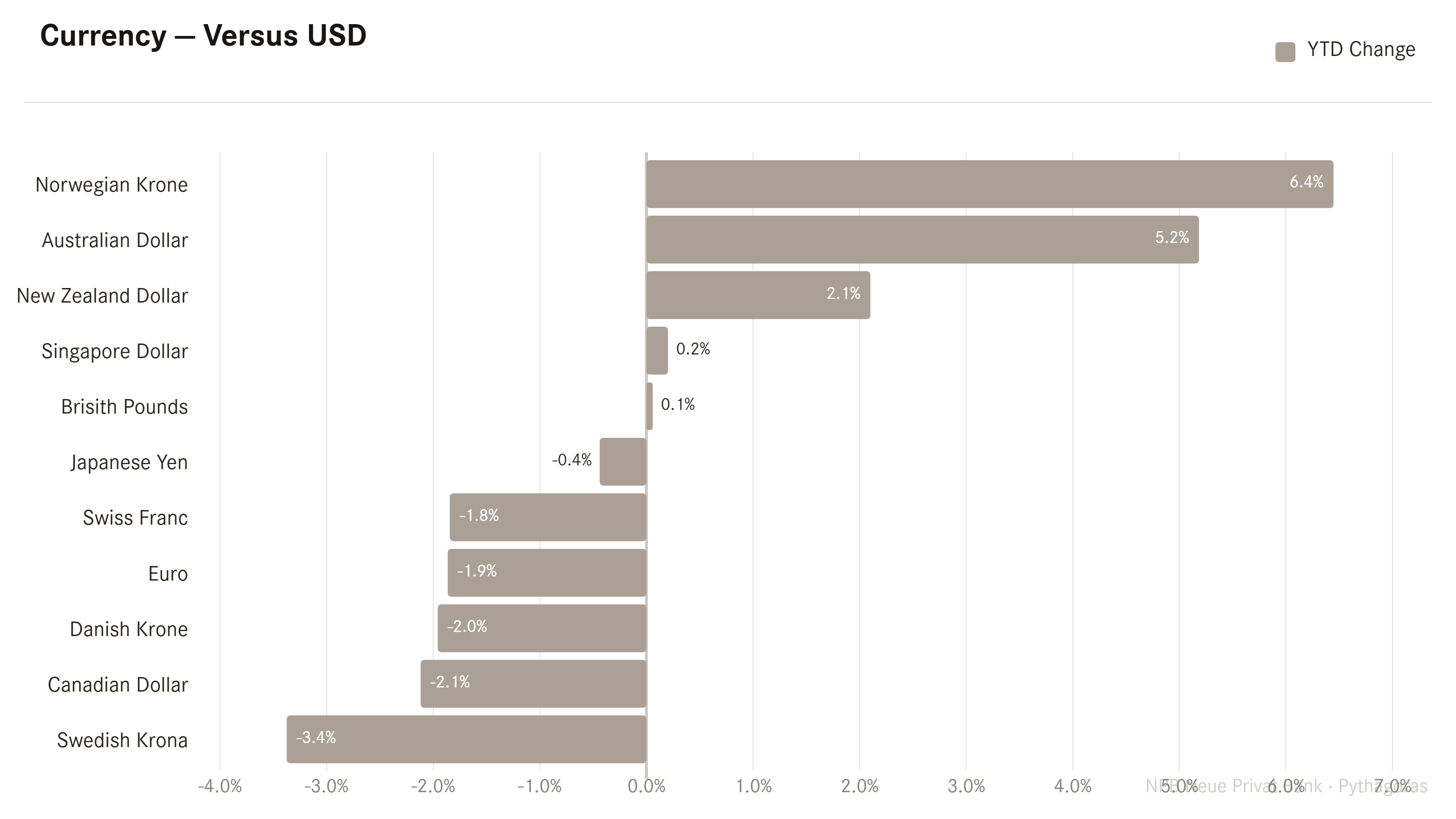
However, on a year-to-date basis, only ‘other’ Dollar currencies beat the greenback:
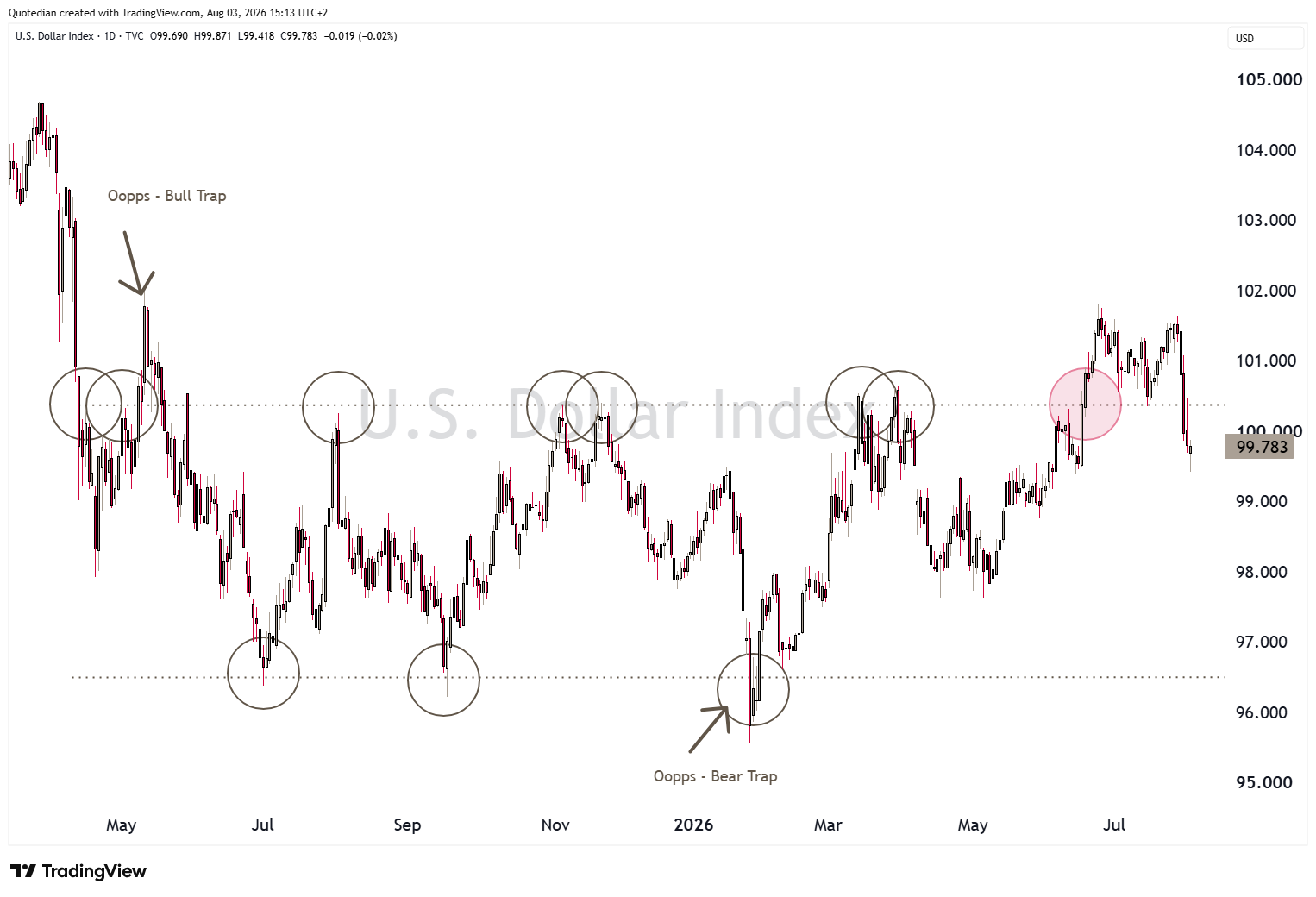
The Dollar Index (DXY) has fallen back into its trade range:
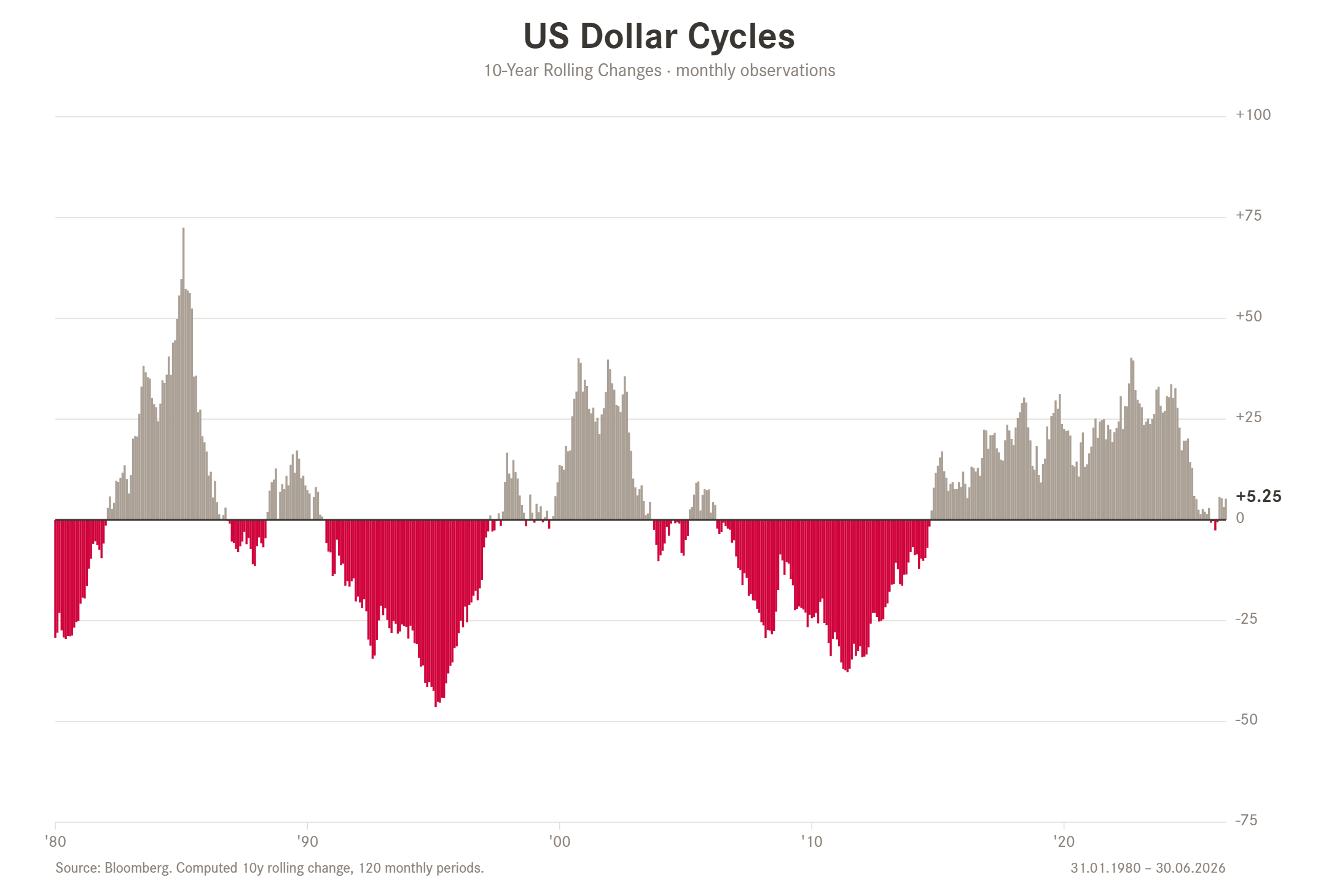
I find the following chart of 10-month rolling returns of the DXY interesting (and very cycle-ish):
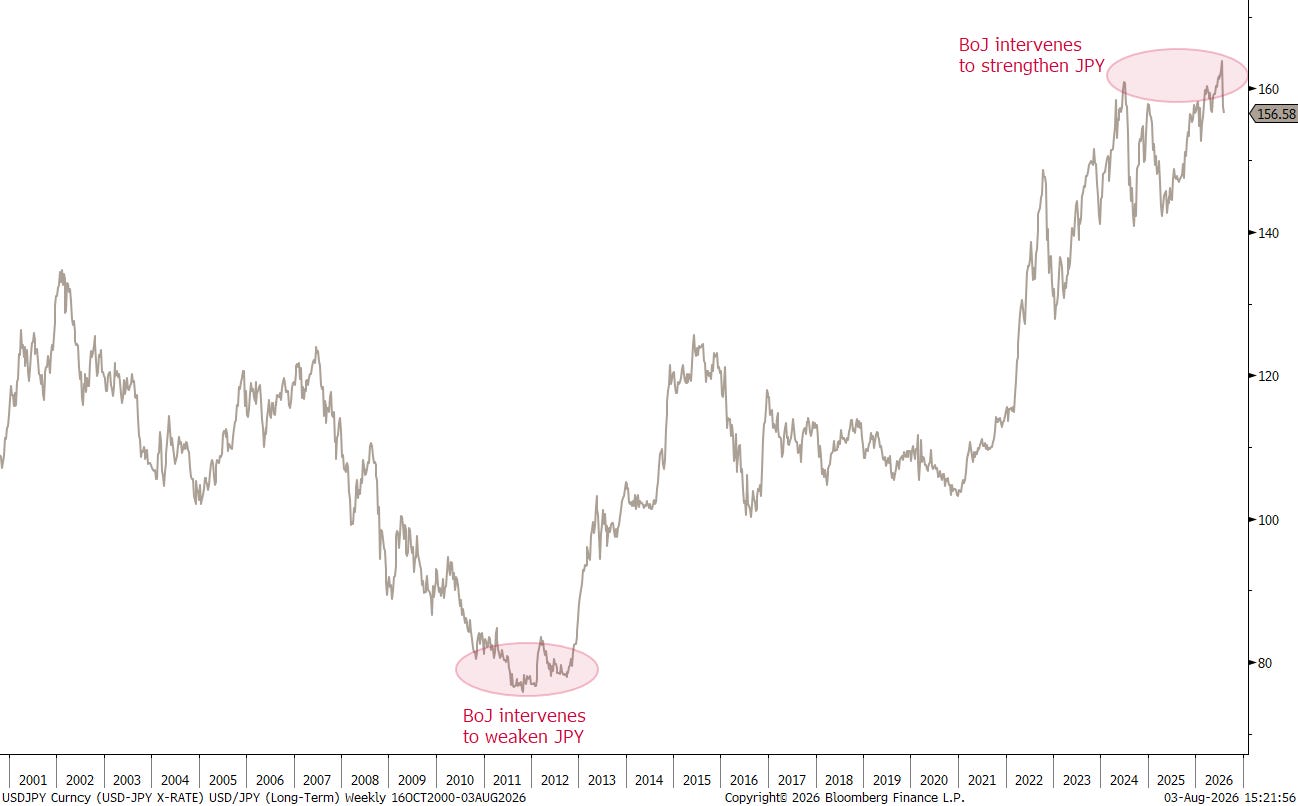
But, of course, the talk “du jour” is currently the JPY, where the Japanese Ministry of Finance has been intervening on currency markets, supported by the US Treasury, in order to bolster the Yen:
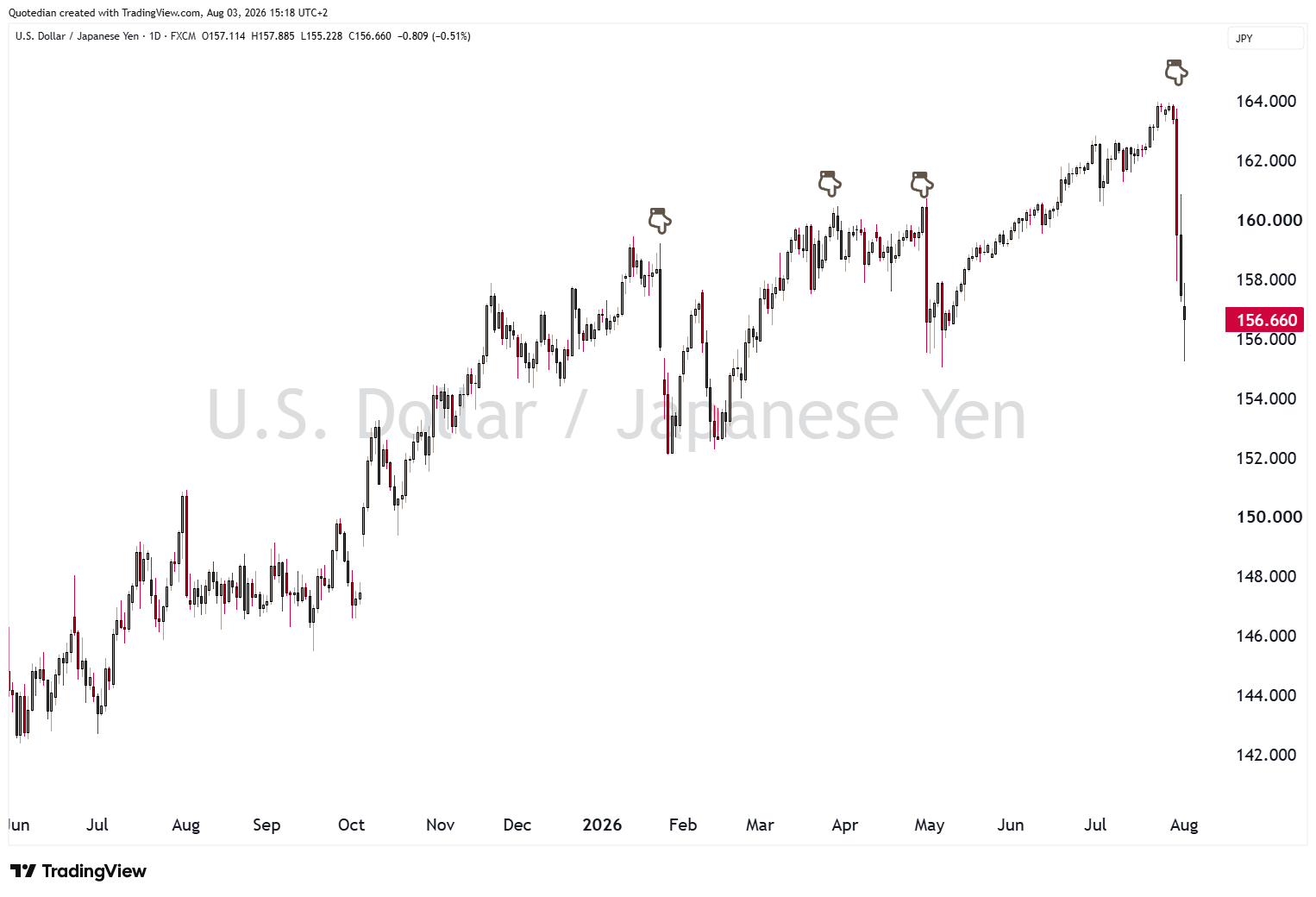
For now, it seems to be working - but so seemed on other occasions (pointed hands) …
Is this chart becoming our playbook again now (after it failed in 2024)?
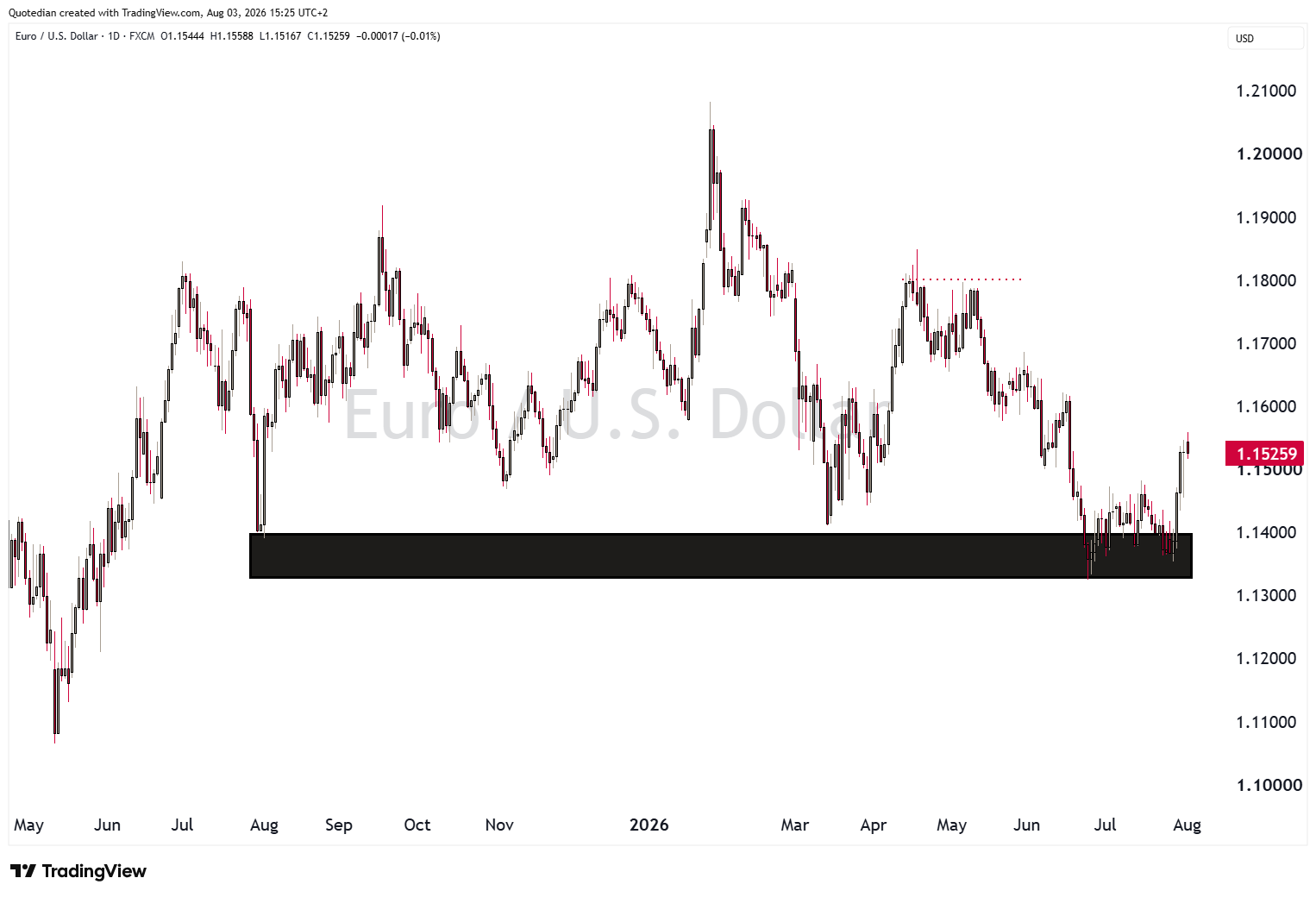
Looking at the recovery of the EUR/USD, one rule in technical analysis says that if your support was broken,
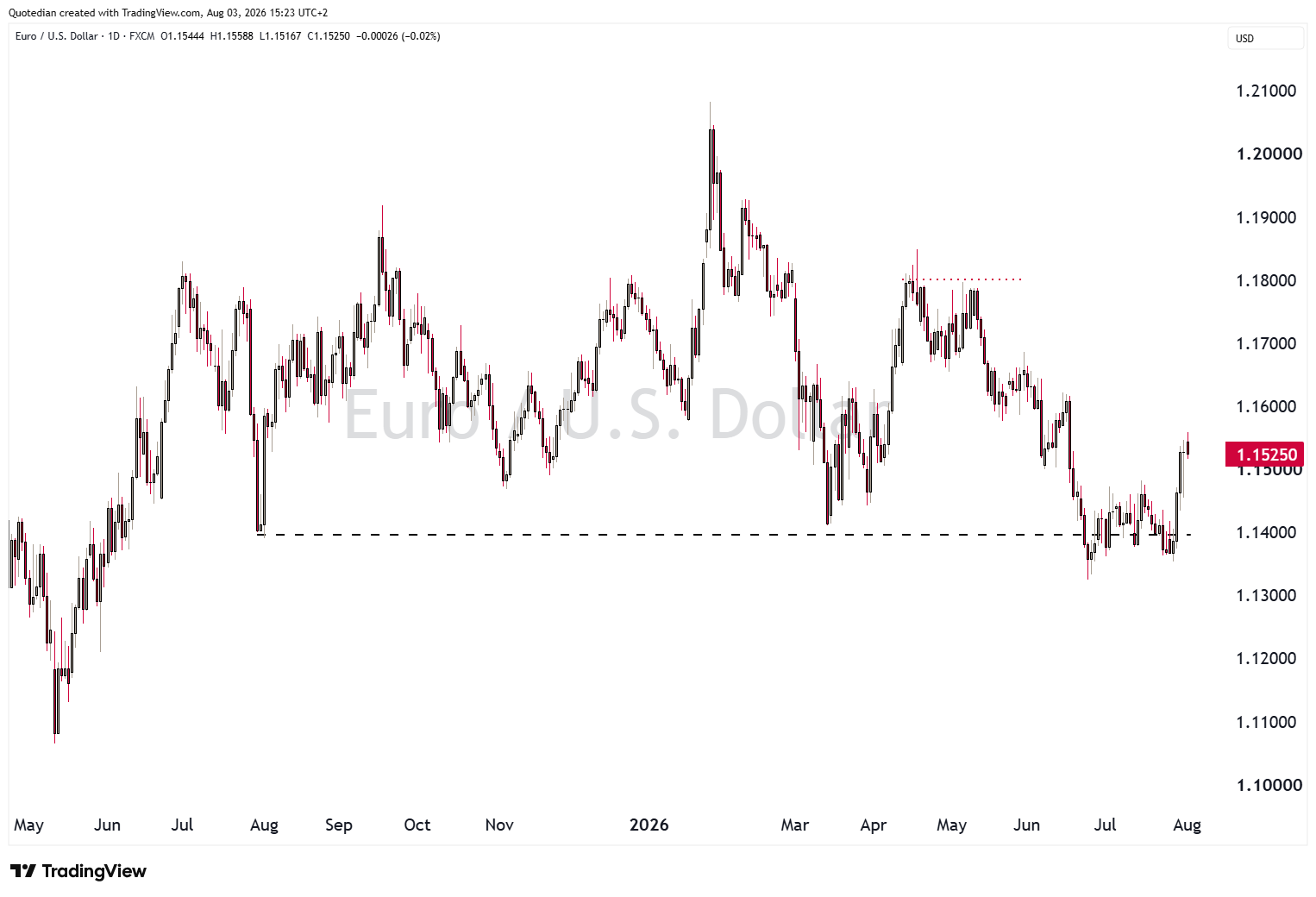
but then prices move above it again, you simply didn’t draw a thick enough line:
Commodities
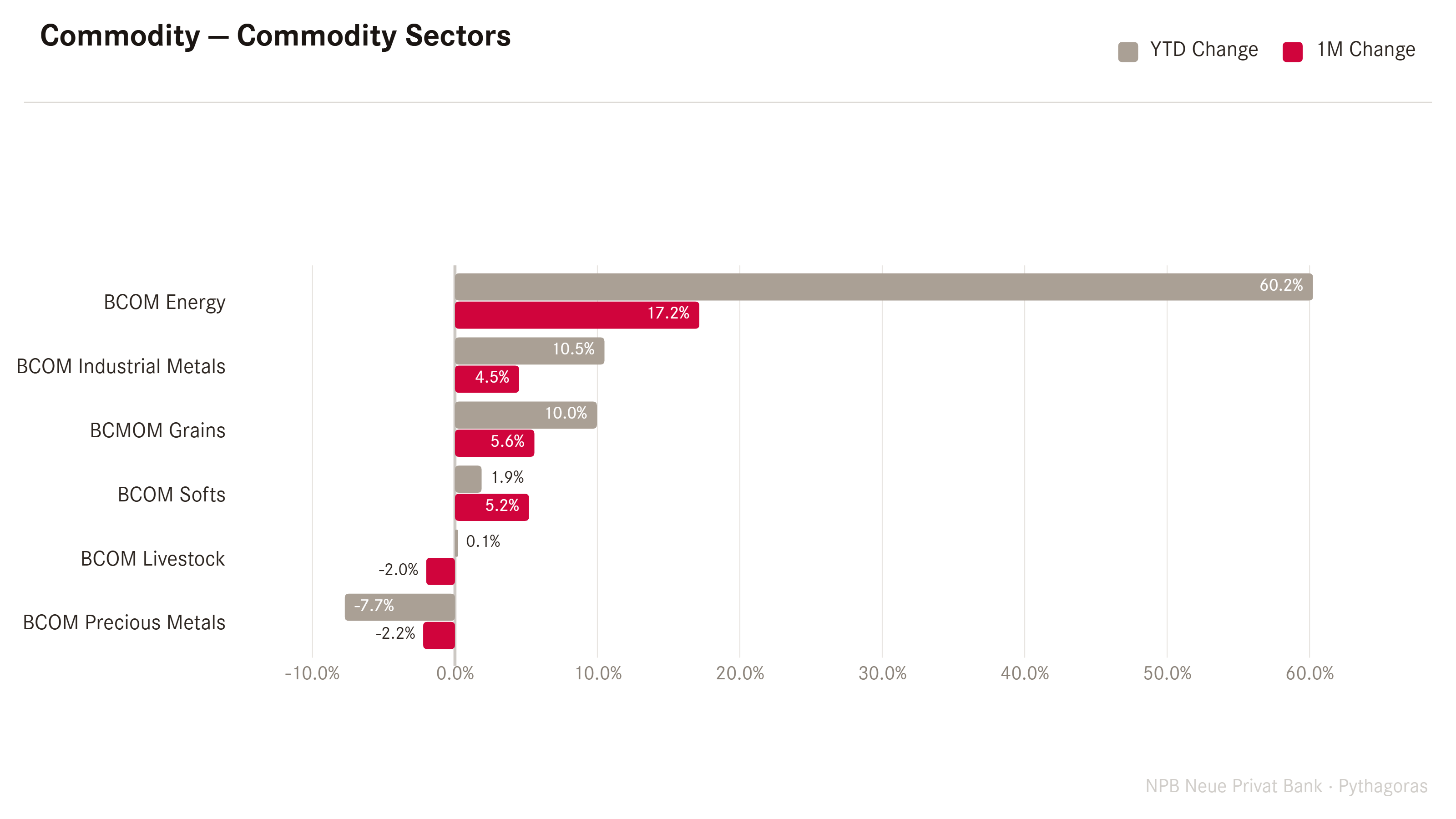
In commodities, July was a fractal of what has been going on since the beginning of the year - a good time for energy commodities, a less good time for precious metals:
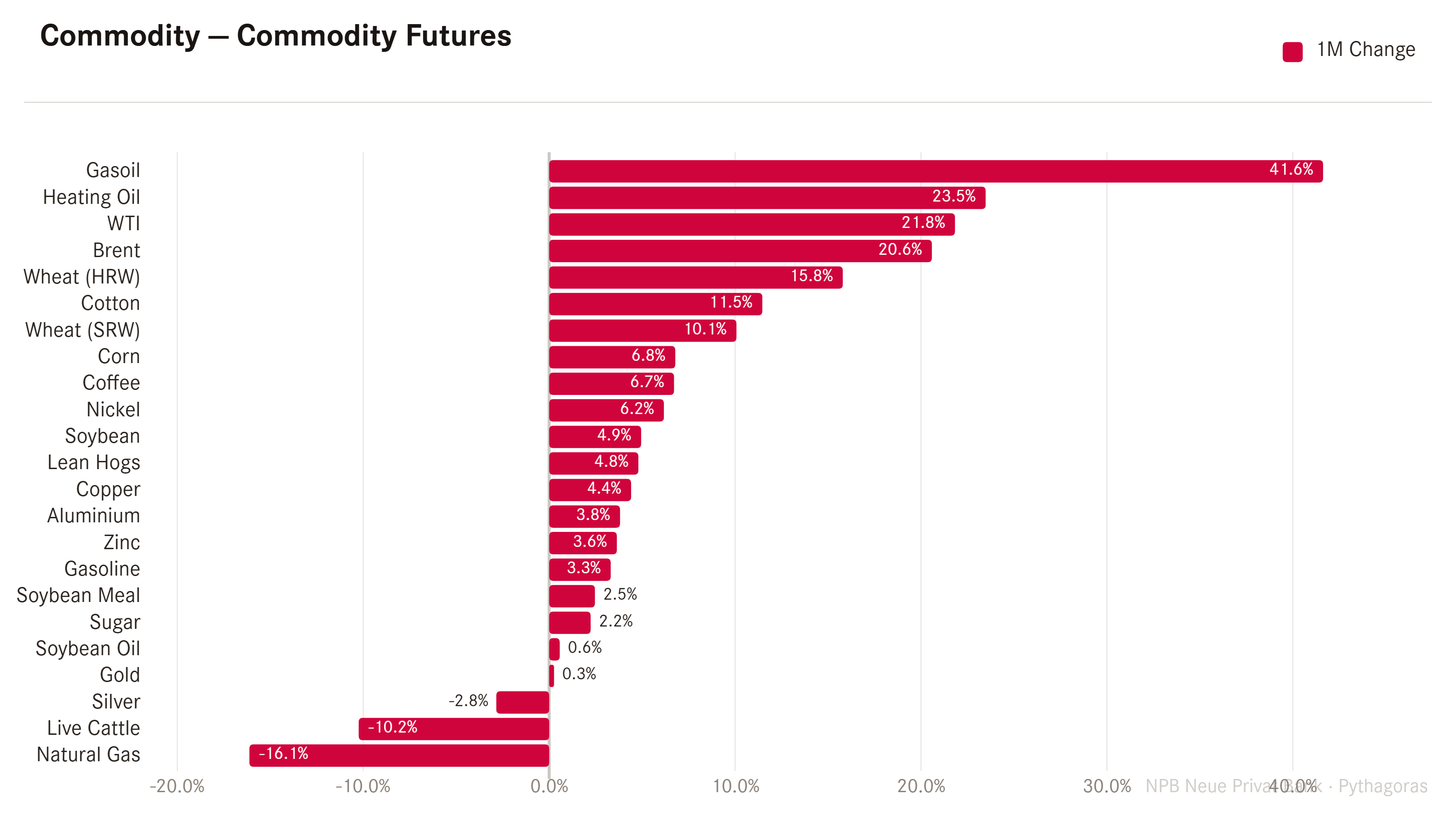
On individual commodity futures, monthly performance volatility continues to be astonishing, reminding me of something that Jesse Livermore probably said, “There are no permanent winners, only permanent lessons”:
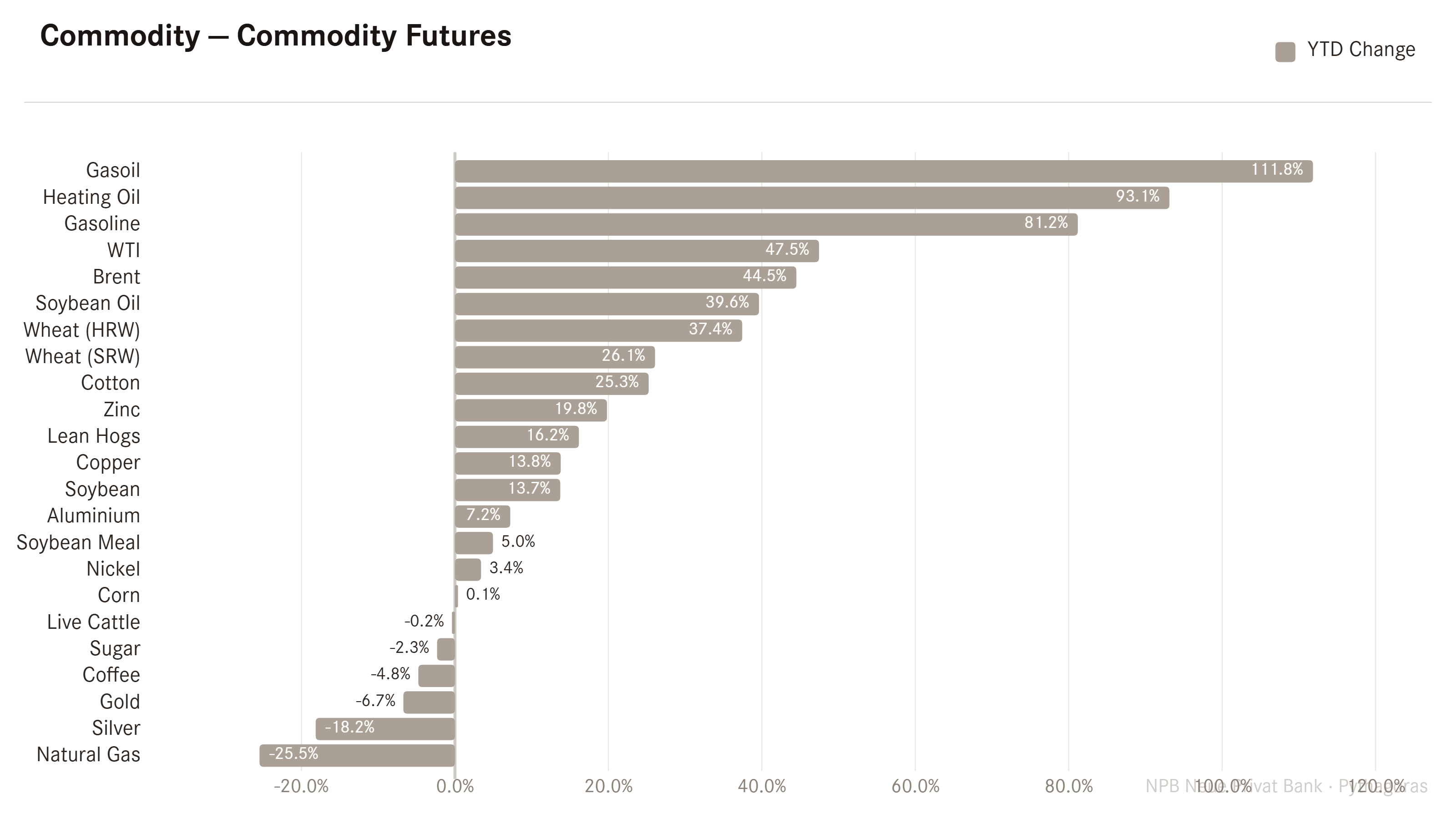
Here’s the YTD performance table for completeness purpose:
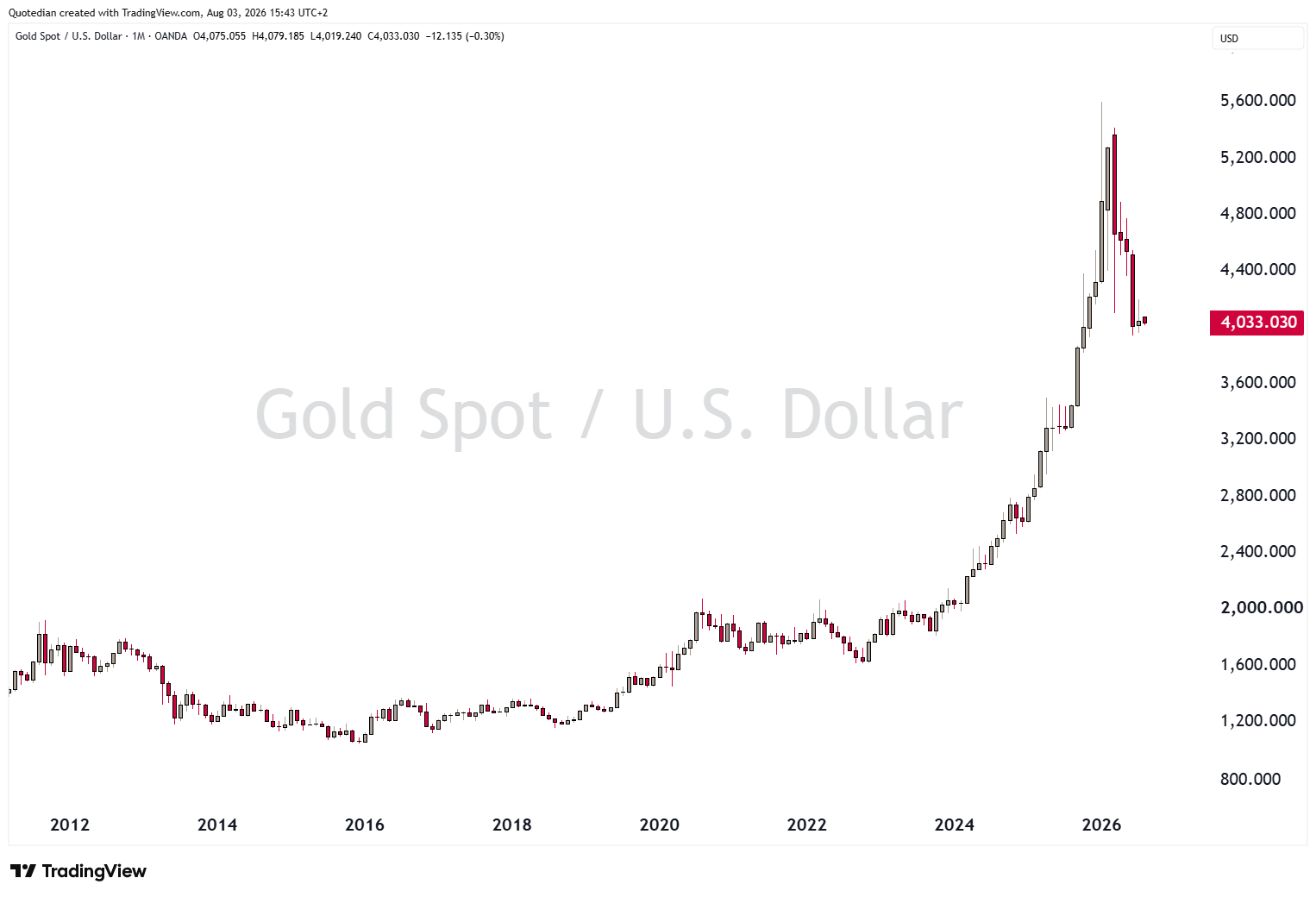
Gold is still deflating its bubble:
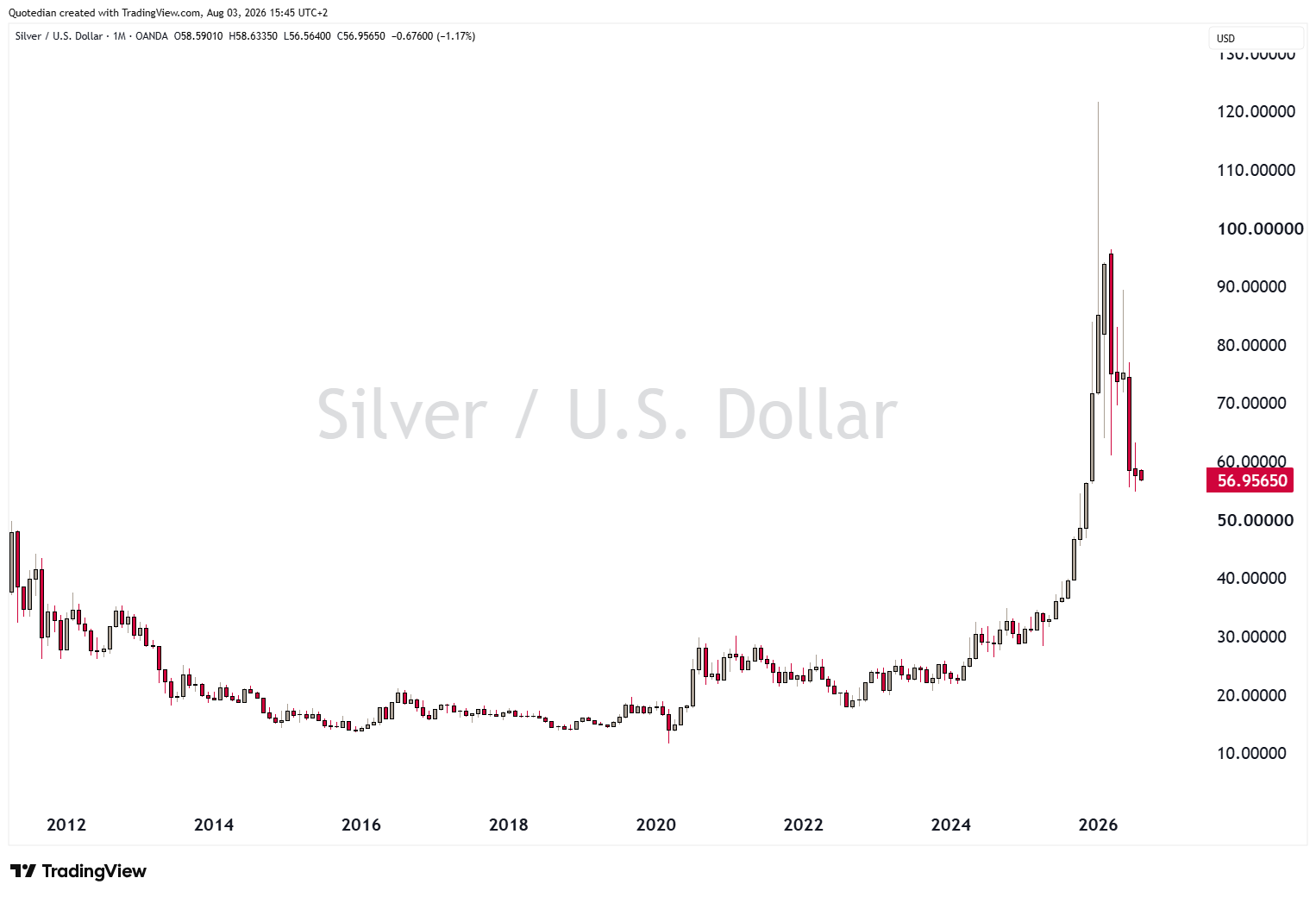
Whilst silver has been more successful with that process:
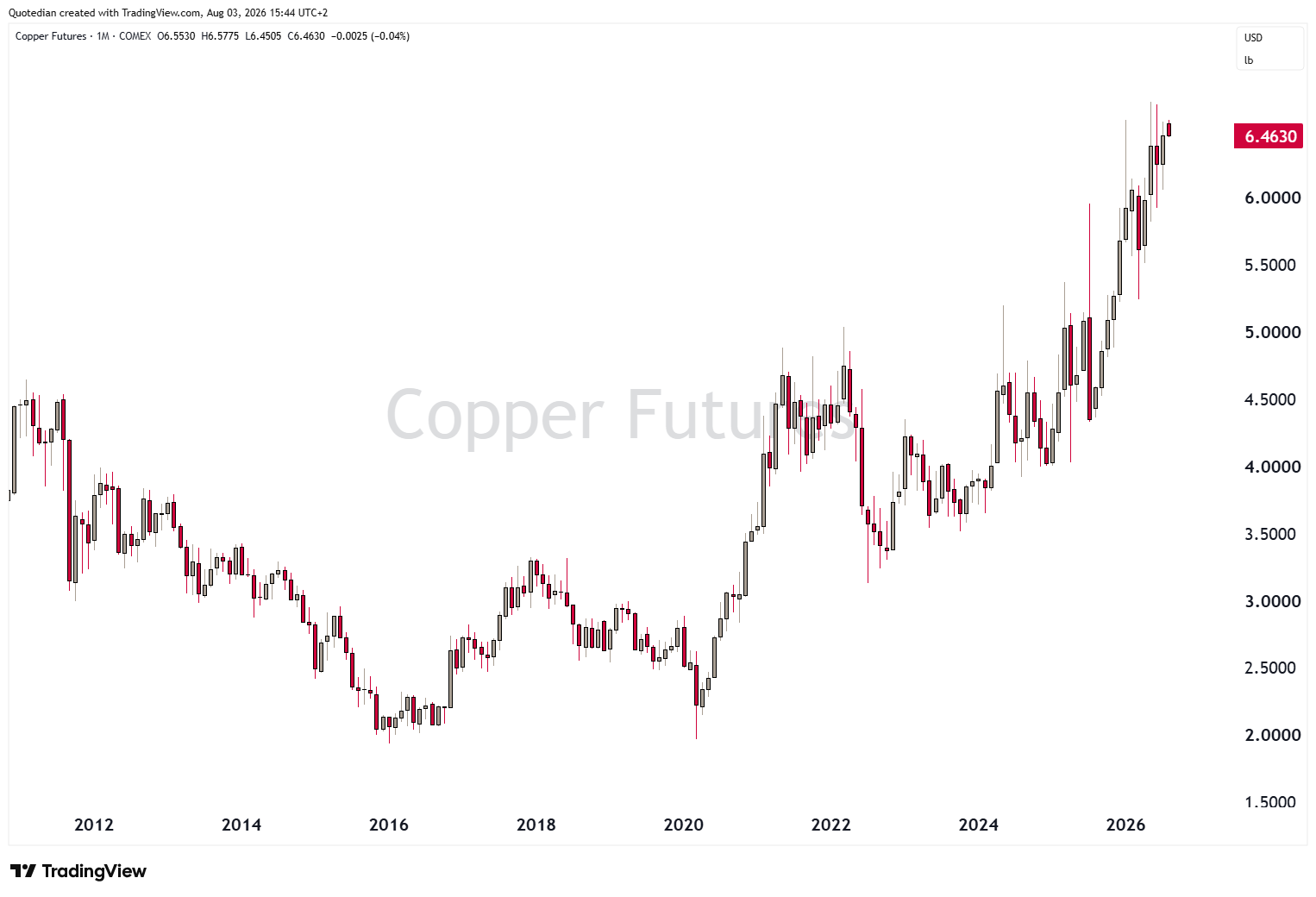
Finally, our copper long continues to work well, albeit at the cost of a very high volatility to be stomached…
So, in conclusion, as always, markets will continue to surprise us. New themes will arrive on the next summer wind; old certainties will quietly disappear with the one after.
That’s all for this week … May the Trend be with You!
André

Everything in this document is for educational purposes only (FEPO)
Nothing in this document should be considered investment advice
Investing real money can be costly; don’t do stupid shit
Leave politics at the door—markets don’t care.
Past performance is hopefully no indication of future performance
The views expressed in this document may differ from the views published by NPB Neue Privat Bank AG
As always, great Quotedian André!