


“Debt management that even appears to follow the political calendar spends the one asset that took two centuries to accumulate: the credibility of the Treasury market. That asset doesn’t regain its value so easily.”
— Stan Druckenmiller, WSJ open-ed August 2026

After Treasury Secretary Bessent threatened to impose yield curve control to lower the long end of the US interest rate curve, Fed Boss Warsh has now chimed in, threatening to increase the short end. Opposing forces?
Interest rates are hence currently the clear focus of market participants with confusion abounds.
Odds of rate hike in September have increased - observing economic data (NFP, CPI) over the next two weeks will be crucial
Stocks are a bit of a sideshow for the time being and with earnings season largely over, an immediate catalyst for a defining move may not be on the horizon.
Gold may already be ready for the next upleg and, accordingly, the US Dollar for the next move lower

For all the LEGO theatrics above, the battle is real.
Last week’s You Shall Not Pass!! (click) was about Scott Bessent drawing a line in the sand at the long end of the Treasury curve. Doubling long-dated buybacks — and making rather sure everybody understood he could do more — was not quite Draghi’s whatever it takes, but it certainly rhymed with it.
There is, however, one small complication.
The US Treasury does not set interest rates.
Kevin Warsh does.
And therein lies the potential for what Frankie Goes to Hollywood so helpfully described forty-two (XLII 😉) years ago: when two tribes go to war.
Bessent needs to keep the cost of financing America’s rather impressive debt mountain under control. Warsh needs to preserve monetary credibility and keep inflation expectations anchored. In a perfect world, those objectives coexist happily.
This may not be a perfect world.
And the choreography has already become interesting. Treasury has helped Japan support the yen, reducing the risk that Tokyo might eventually be forced to sell Treasuries in defence of its currency. It has doubled buybacks of 10- to 30-year debt to USD 4 billion per operation. And the next step could involve using some of the Treasury’s vast General Account to finance further purchases.
Draw down the TGA, however, and eventually it needs refilling — most likely through more T-bill issuance.
Conveniently, America is simultaneously creating a potentially enormous new structural buyer of those bills: stablecoins.
So, stripped of the plumbing, the emerging machine looks something like this:
Buy long bonds. Issue short bills. Let stablecoins absorb the bills.
And should all that bill issuance start putting pressure on money-market liquidity, the Fed may eventually find itself involved as well.
Which leaves us with the rather delicious irony at the heart of today’s Quotedian:
Bessent may need Warsh to make Bessent’s policy work.
So much for two independent tribes.
The real question is therefore no longer whether Treasury can knock a few basis points off the 30-year yield.
It is something considerably bigger:
Who actually controls the price of money?
But let’s see what markets are saying about all this - (un)fortunately however, we need to start our weekly tour across the asset class once again with bonds, as that is where all the action is - equities continue to be a sideshow for now.
As a matter of fact, I just had an epiphany when I was thinking about describing Fed Chairman Warsh’ hawkish tone:
Harsh Warsh!
That’s so damn good I was about to change the whole title and intro of the Quotedian - but I am too far passed my deadline already to start from scratch. But, I think it at least deserves a trademark:
HARSH WARSH™
It also deserves a meme!
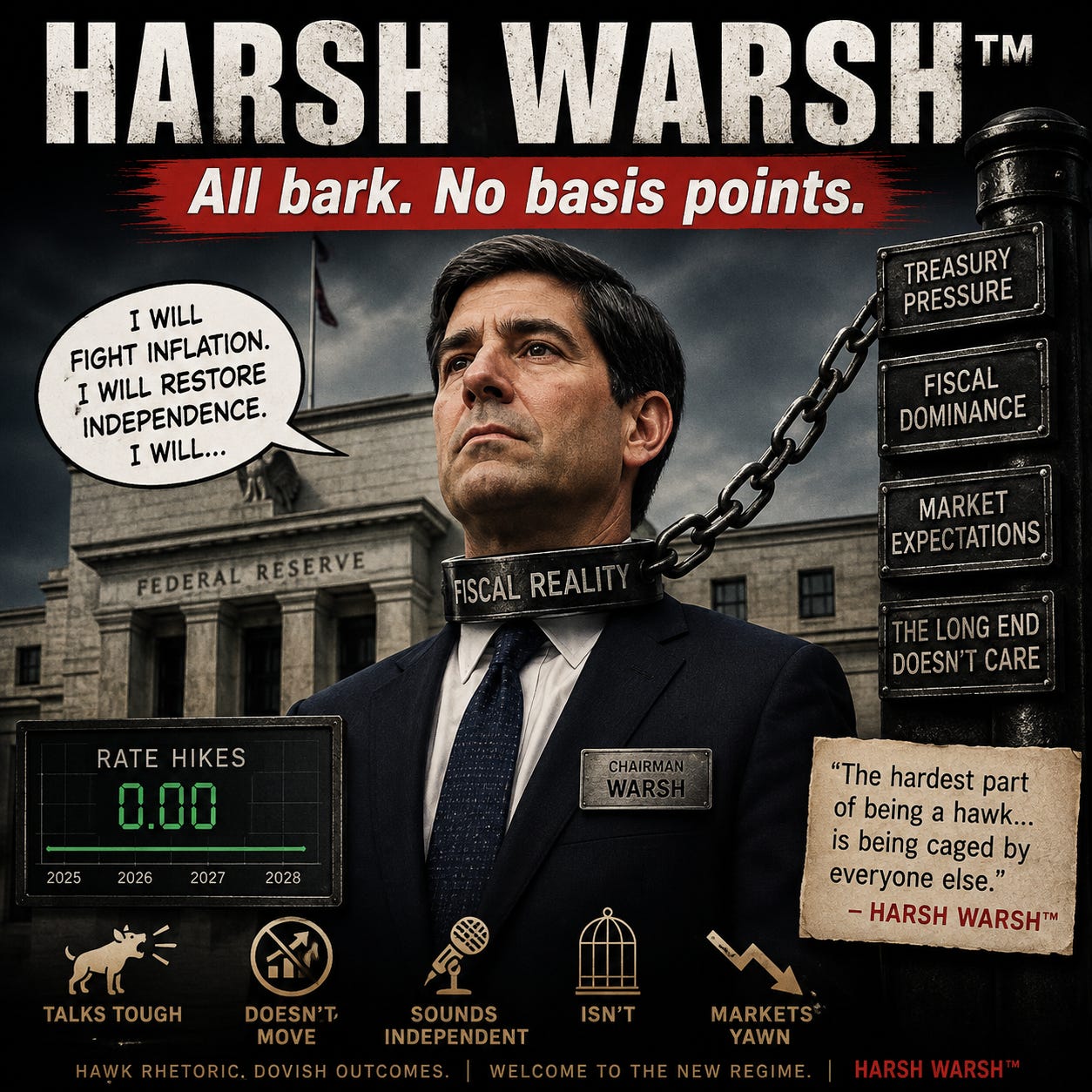
But I digress.
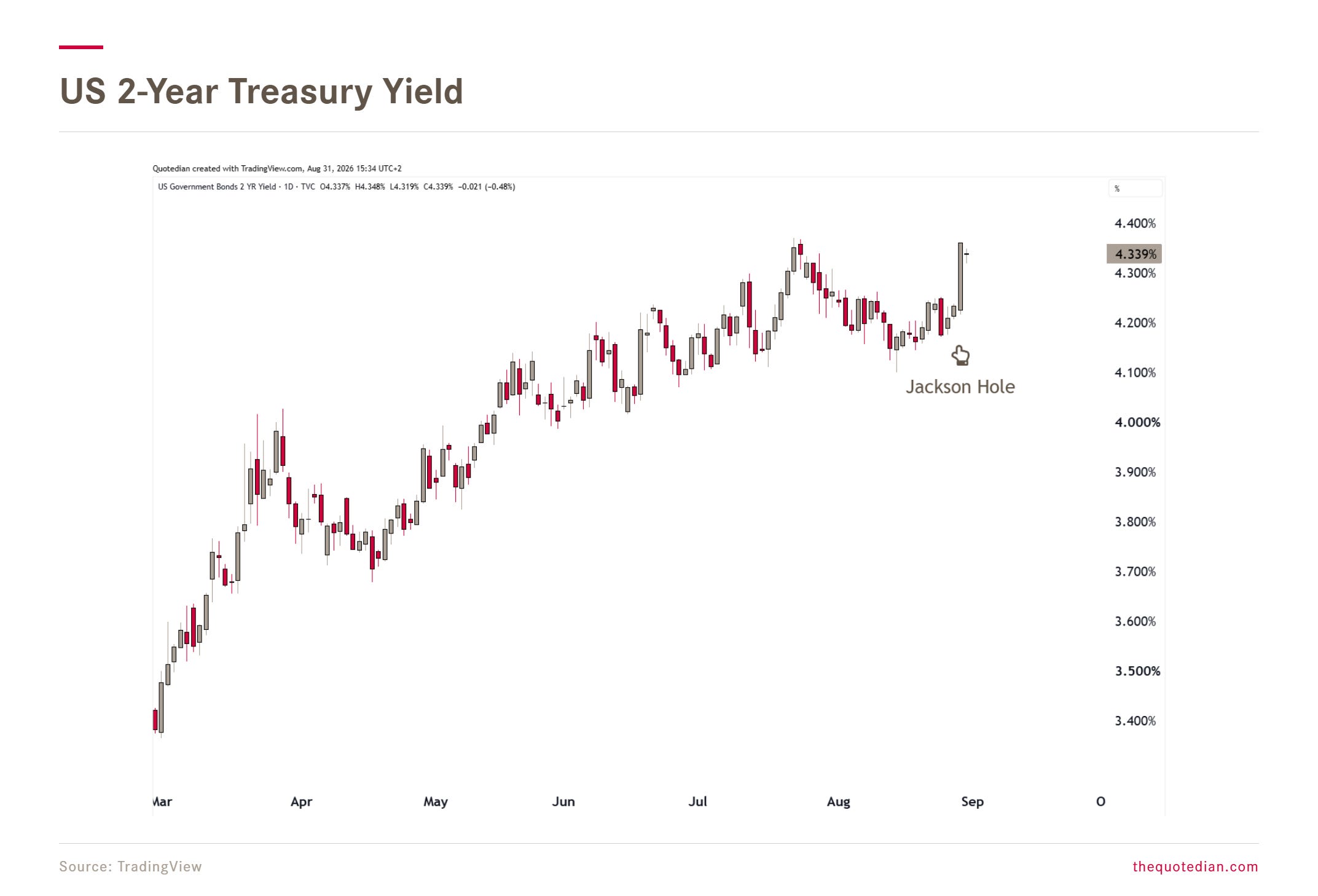
Yields at the freely traded shortest end of the curve (2y) shot higher on Harsh Warsh™:
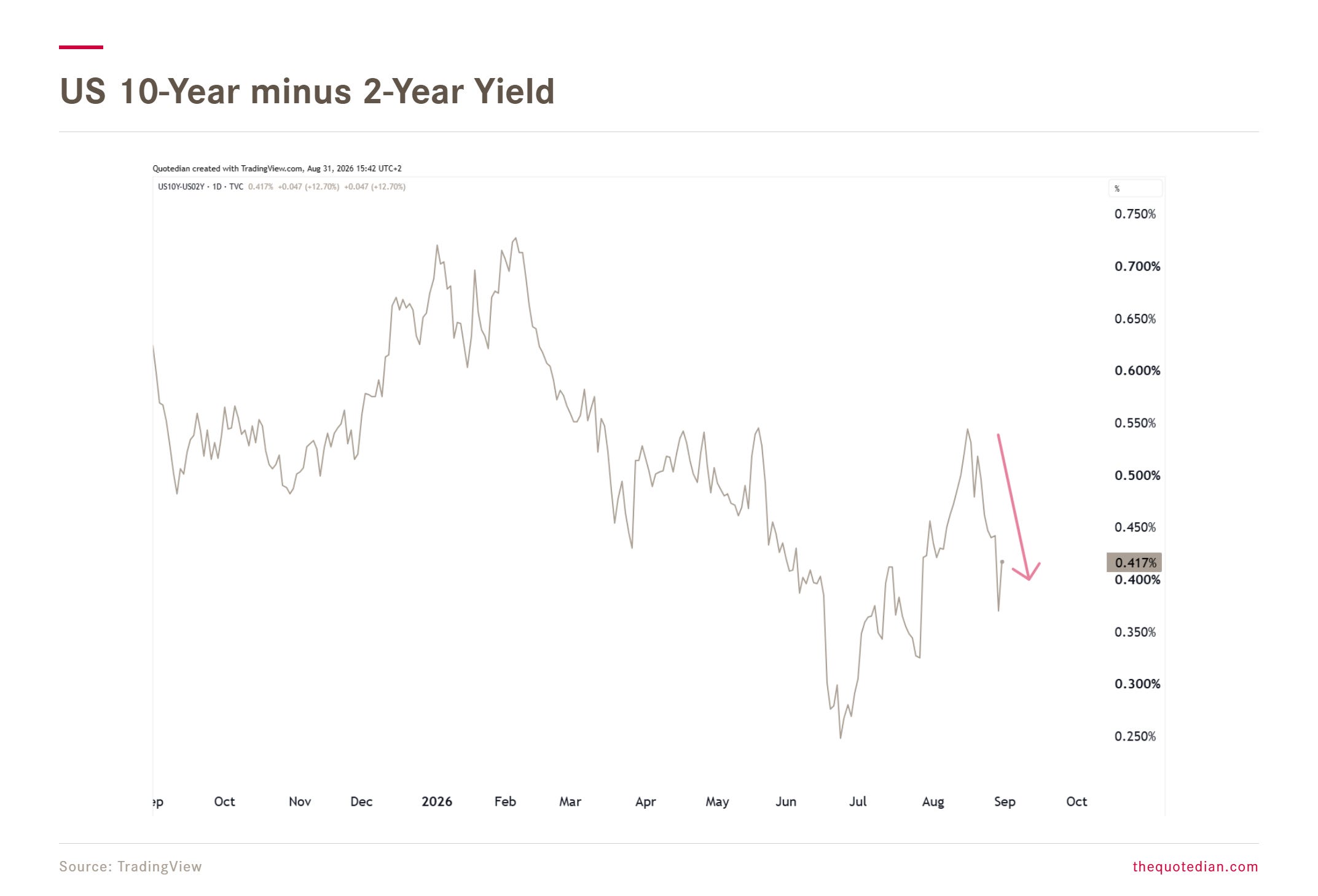
The yield curve (10y - 2y) flattened as yields at the short-end rallied more than those at the long-end:
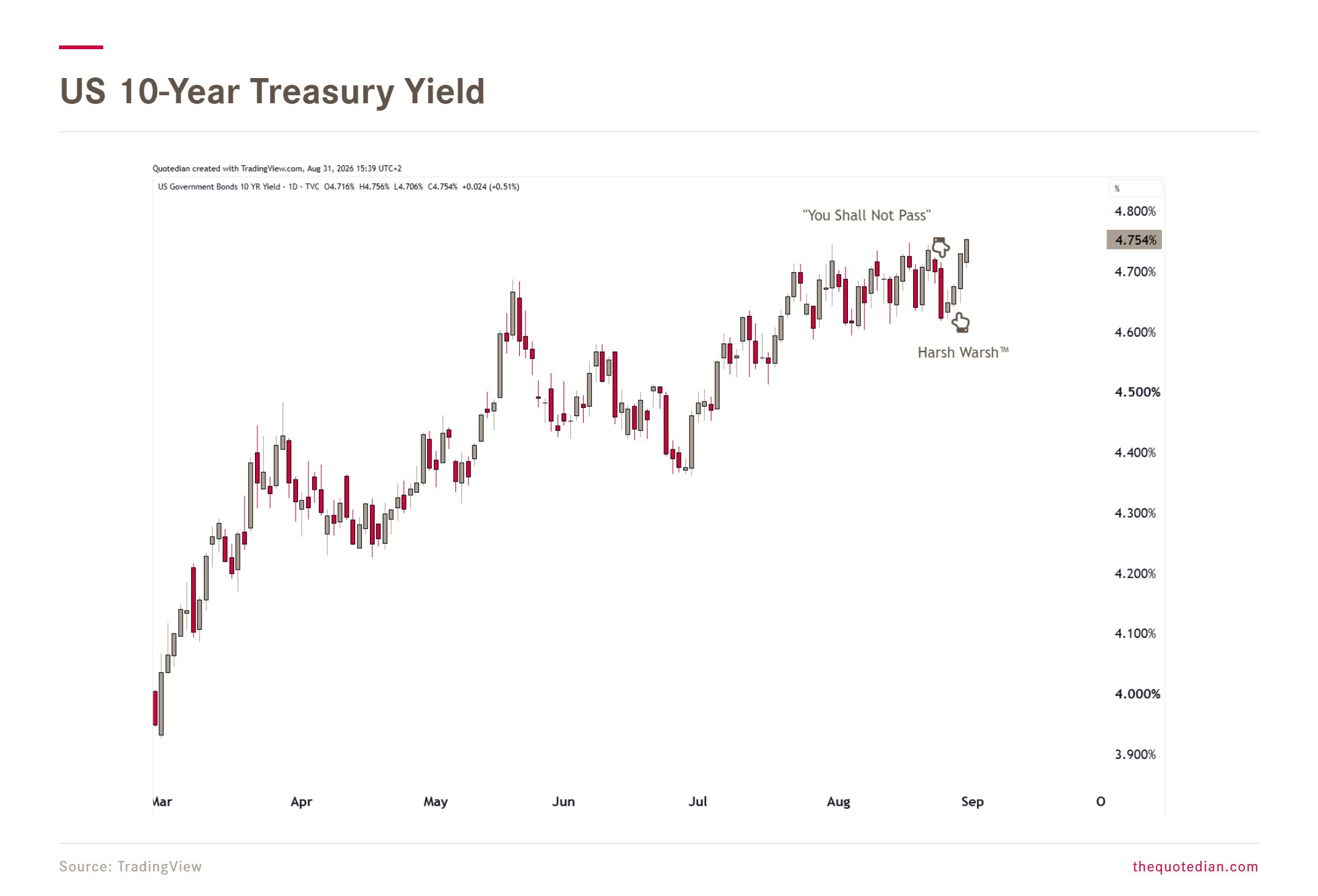
HOWEVER, the long-end still also rallied, pushing the yield on the Tens (10y) right above Bessent’s “you shall not pass” intent of the week before last and to its highest level this cycle:
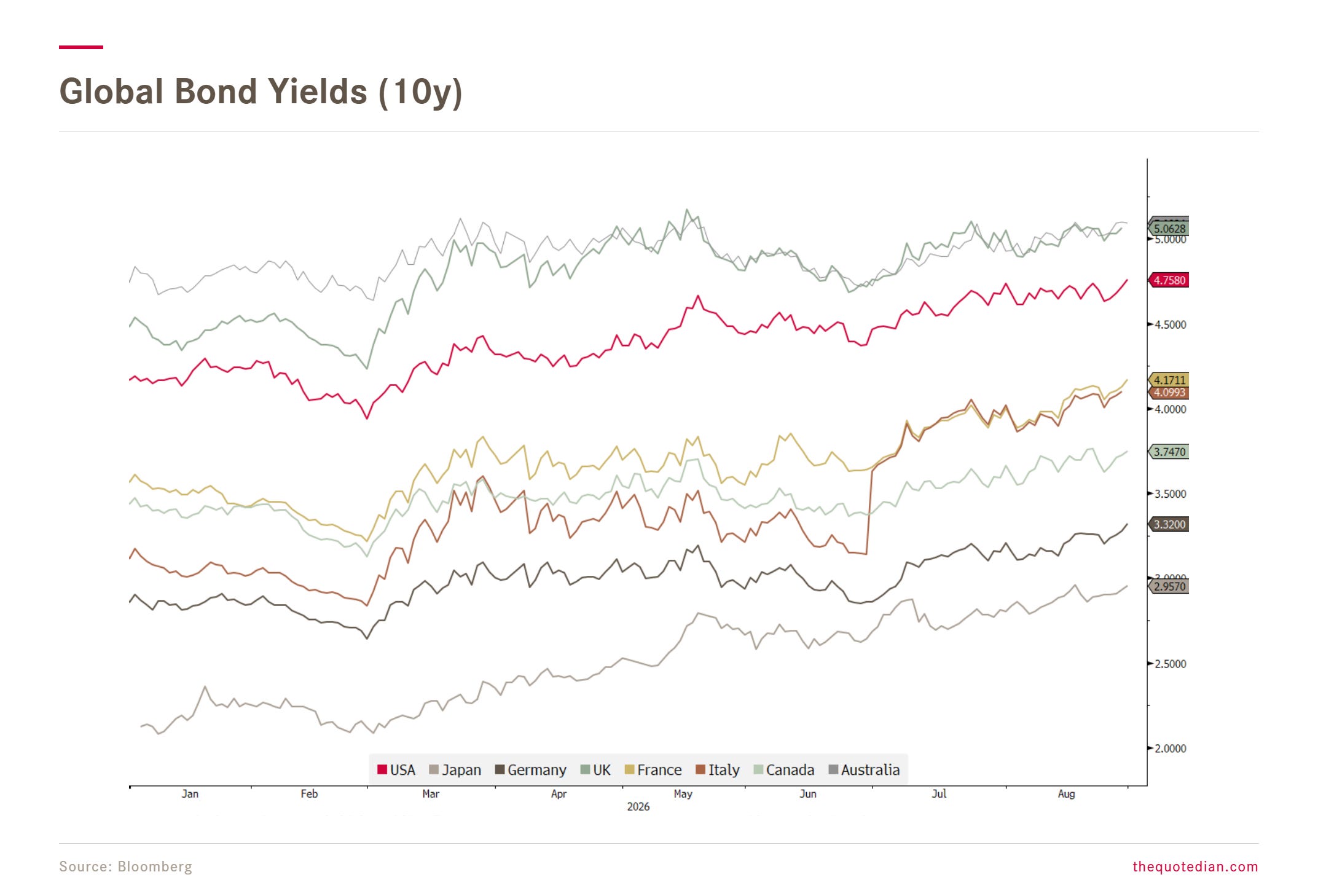
Global bond yields have been rising this year, with an acceleration visible over the past few months:
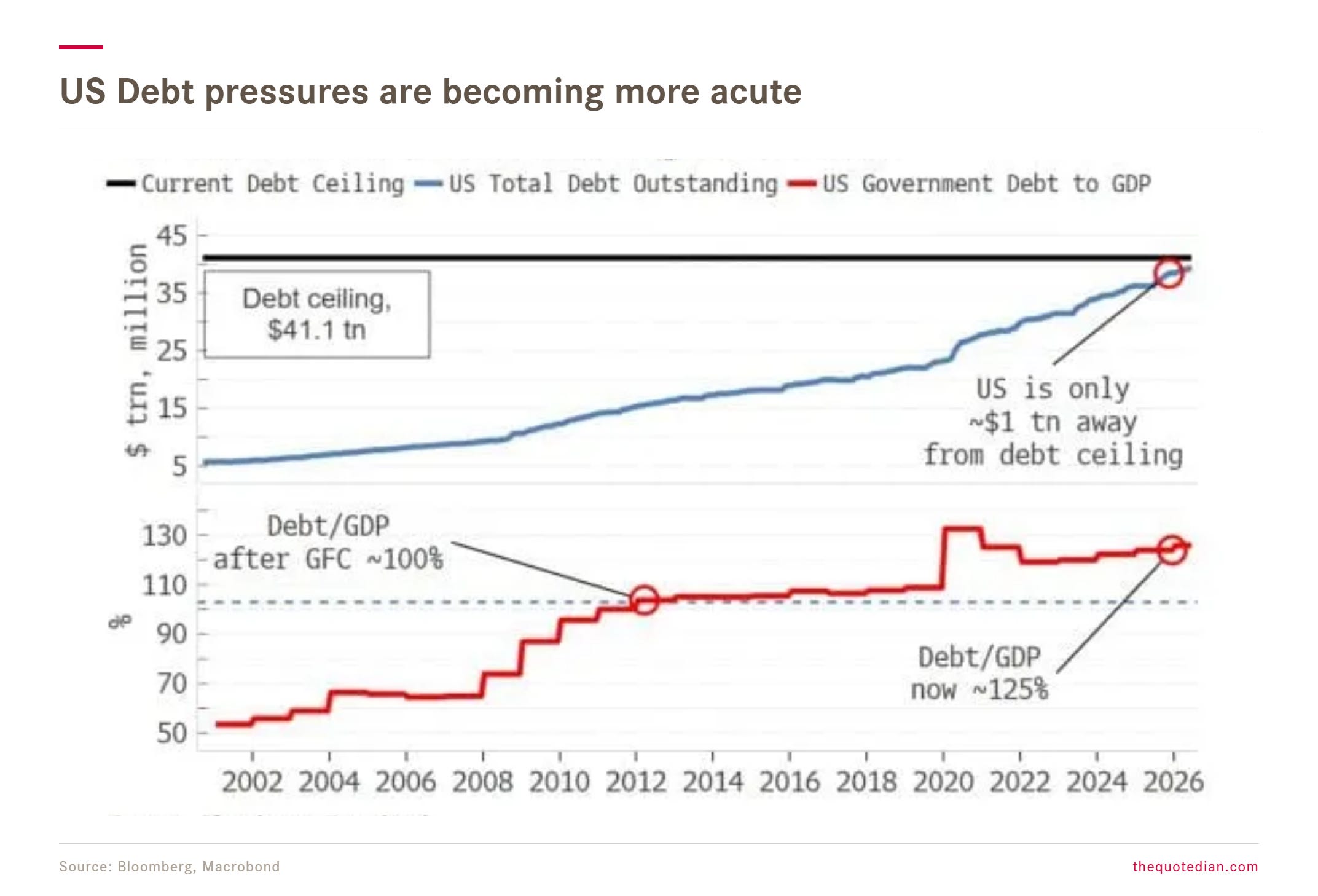
No wonder, as fiscal discipline is a thing of the past. Here’s just the US example:
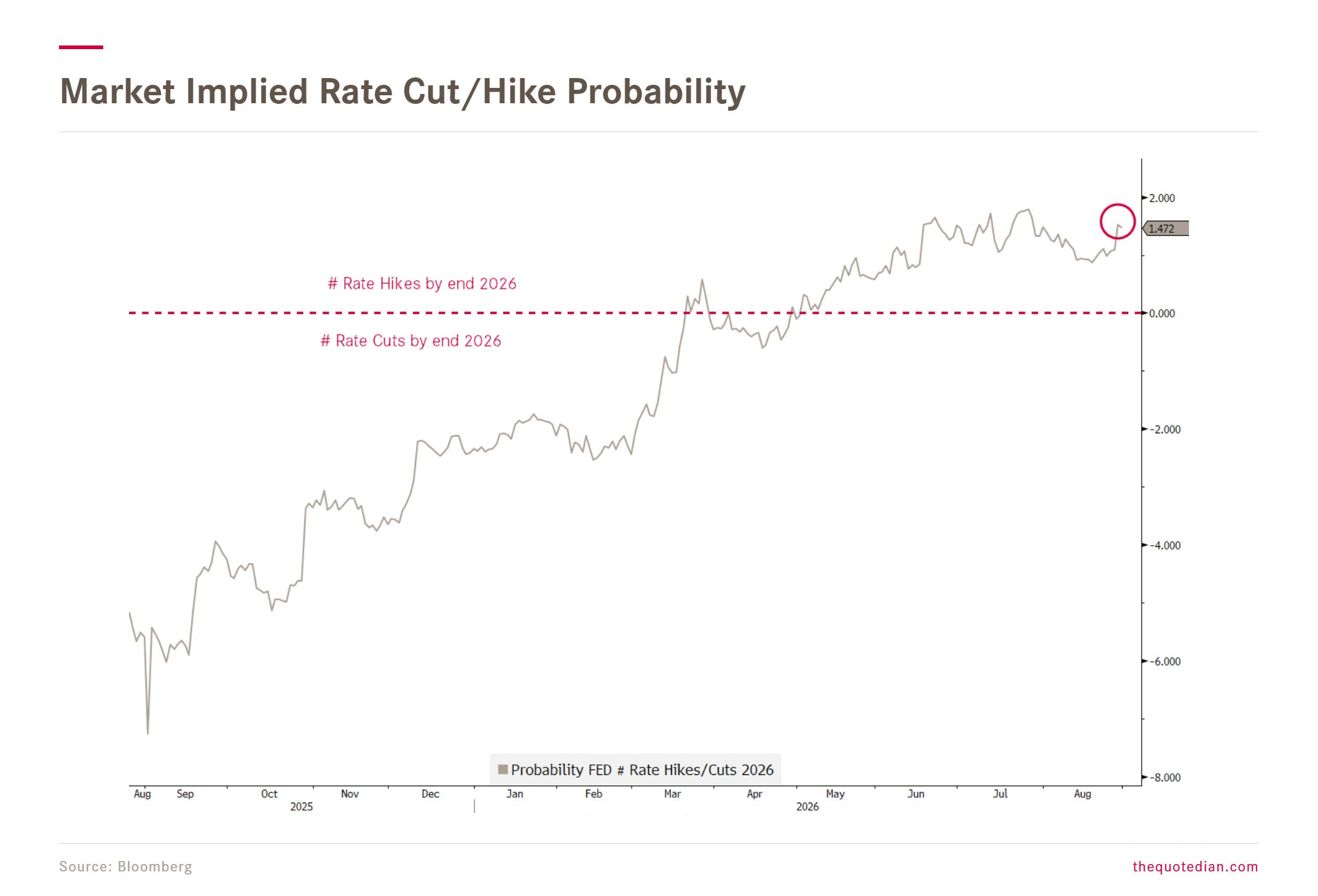
But back to HARSH WARSH™ and his crusade to fight inflation. We have two more important data points before the next Fed meeting on September 16th - this Friday’s non-farm payroll and next week’s CPI (Consumer Price Inflation) reports. Both need to be on the weaker side for the Fed not to hike rates as the market has close to double its odd for a rate hike since Jackson Hole last Friday:
Pre Jackson Hole:

Post Jackson Hole:

For year-end, market-implied possibilities for rate hikes is now back at one and a half:
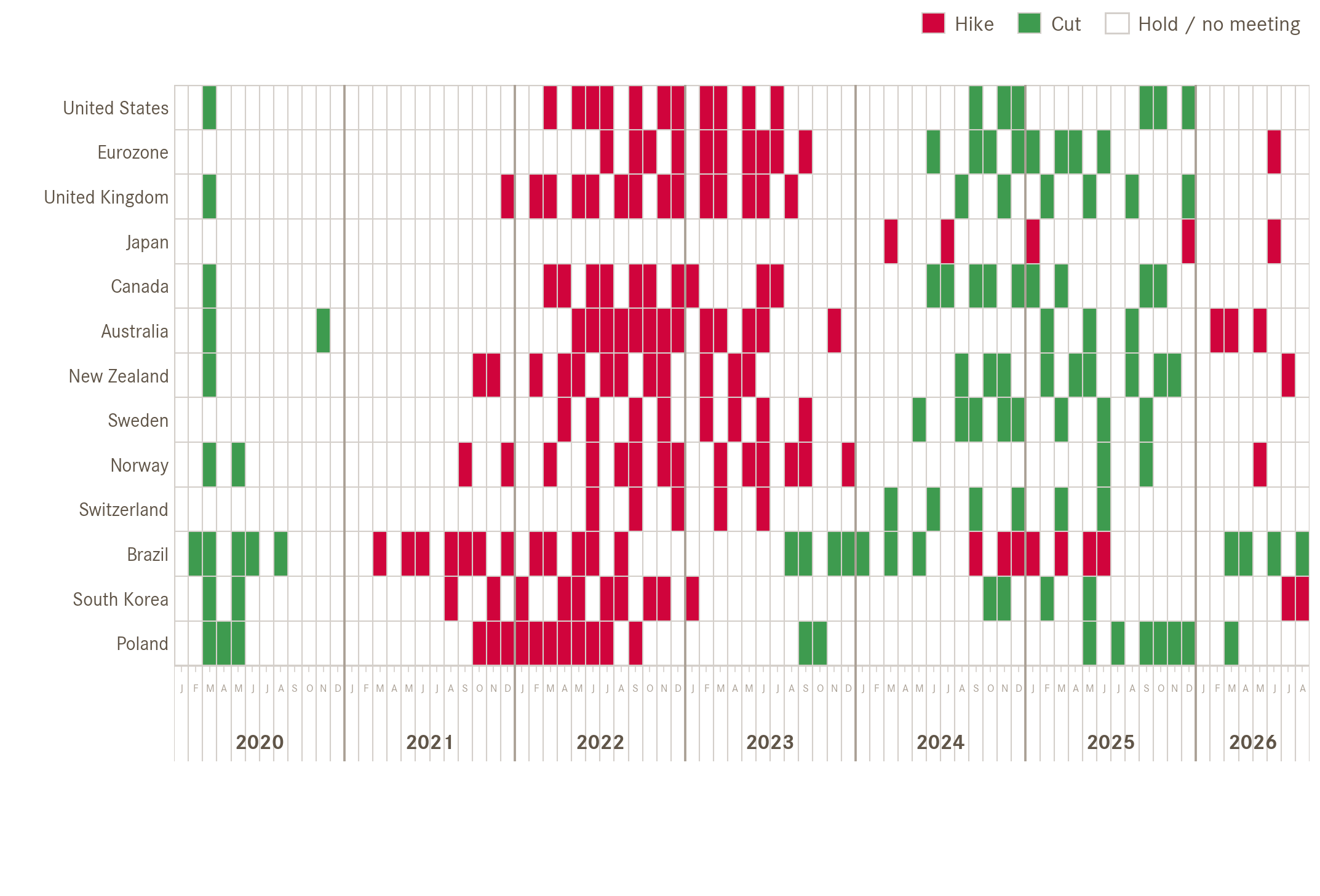
But, of course, would the Fed no be a first mover. Many other central banks have gone into tightening mode:
Let’s turn to equity markets now, where the S&P 500 after finally breaking out of its multi-week summer trading range, is struggling to make significant progress:
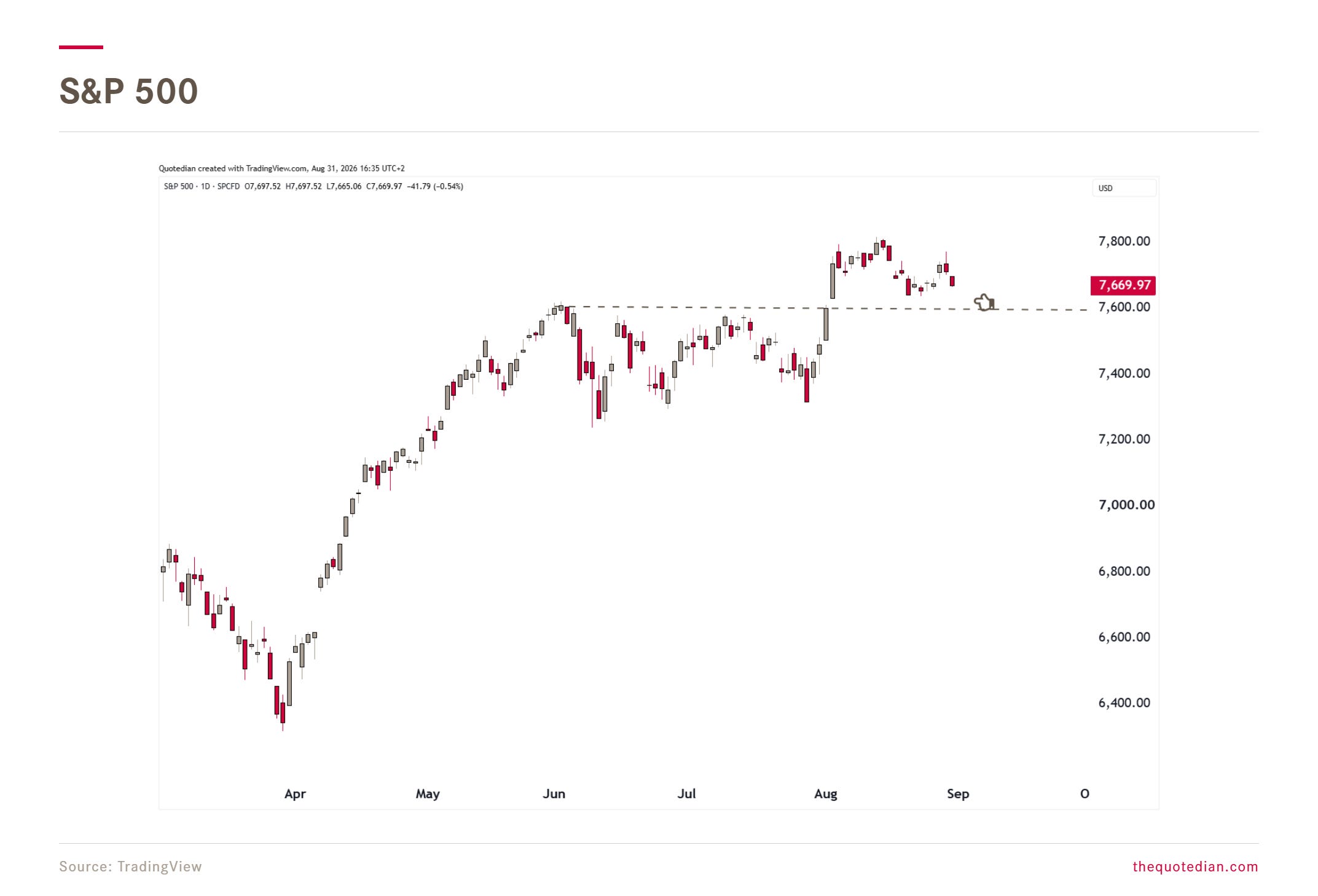
The increased odds for rate hikes this year since Friday’s HARSH WARSH™ speech have exerted some additional pressure on stocks, and odds have increased that the Gap at 7,600 (pointed hand) may get filled over the coming sessions.
The technology-heavy Nasdaq 100 never made it to new all-time highs:
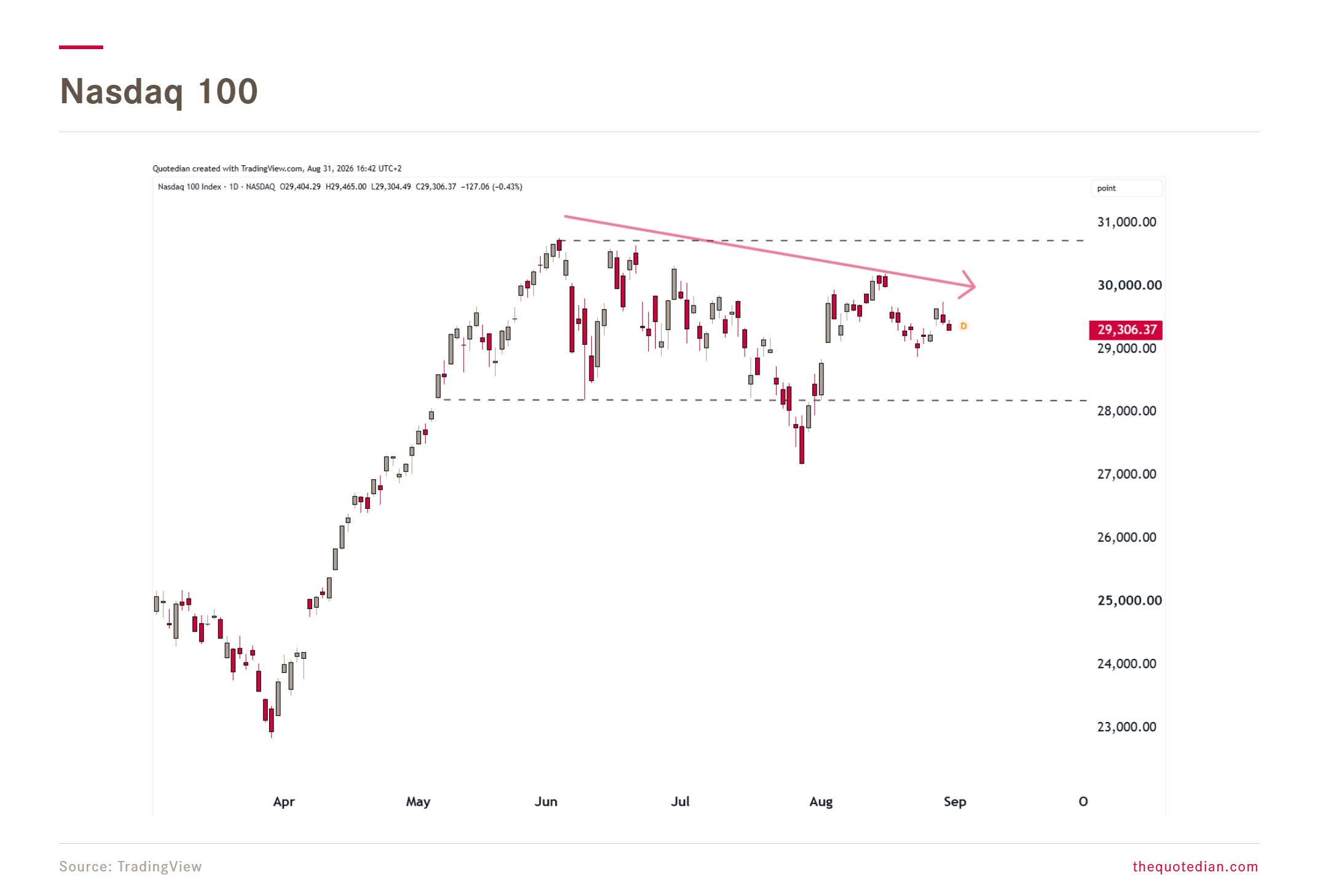
A decisive move above 30k would be helpful to break that pattern of lower highs (red arrow).
Considering the equity market for a moment from a Treasury induced “you shall not pass” yield-curve-control (YCC) moment, suppression of yields is liquidity-boosting and hence bullish for equities.
Let’s take Japanese equities as a case study. The Topix gained 210% or roughly 12% per annum:
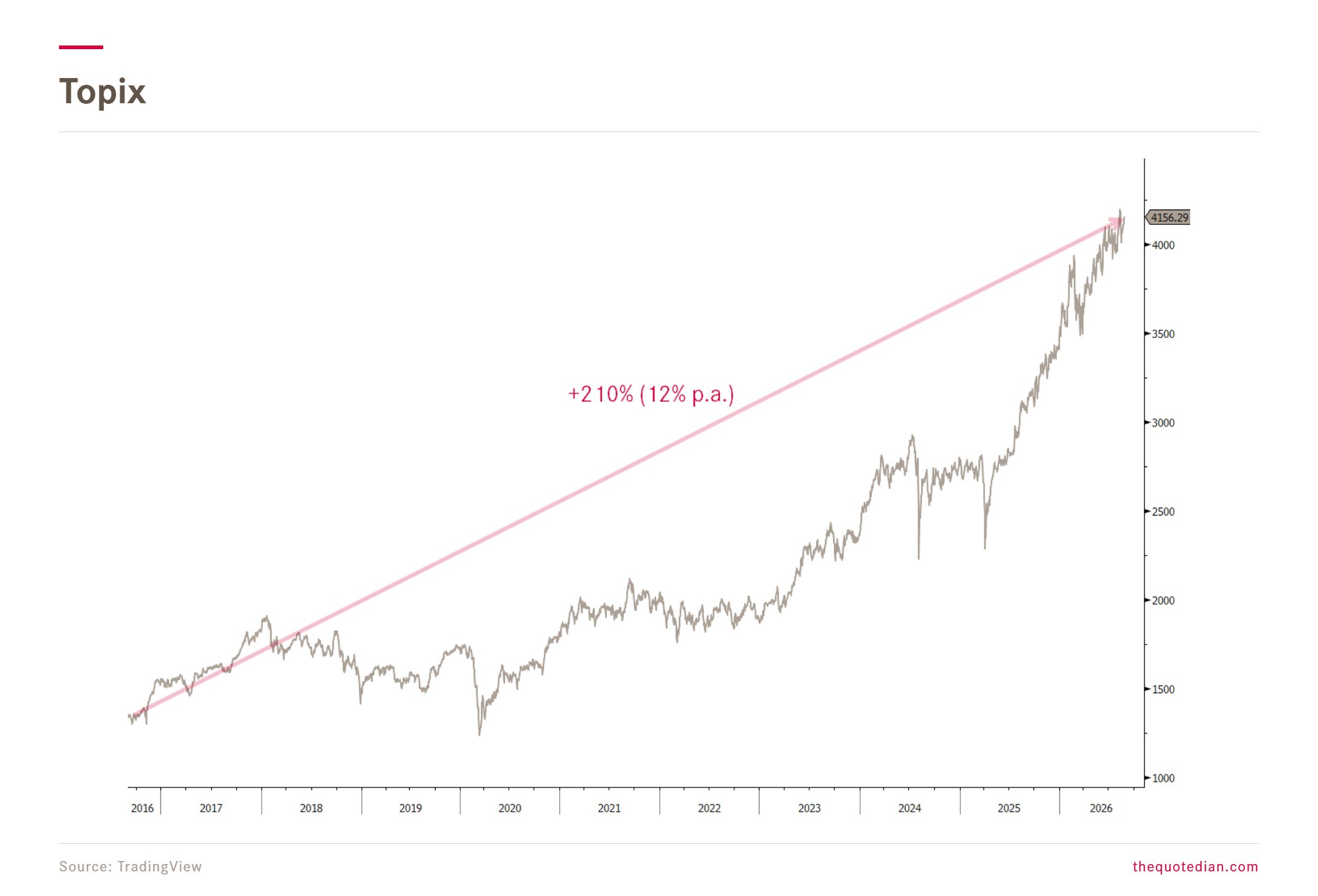
Not bad.
BUT, and here’s the BUT, that performance is in Yen terms. If we take a ‘neutral’ currency, such as gold for example, the price return drops to -40% or close to minus five percent per annum:
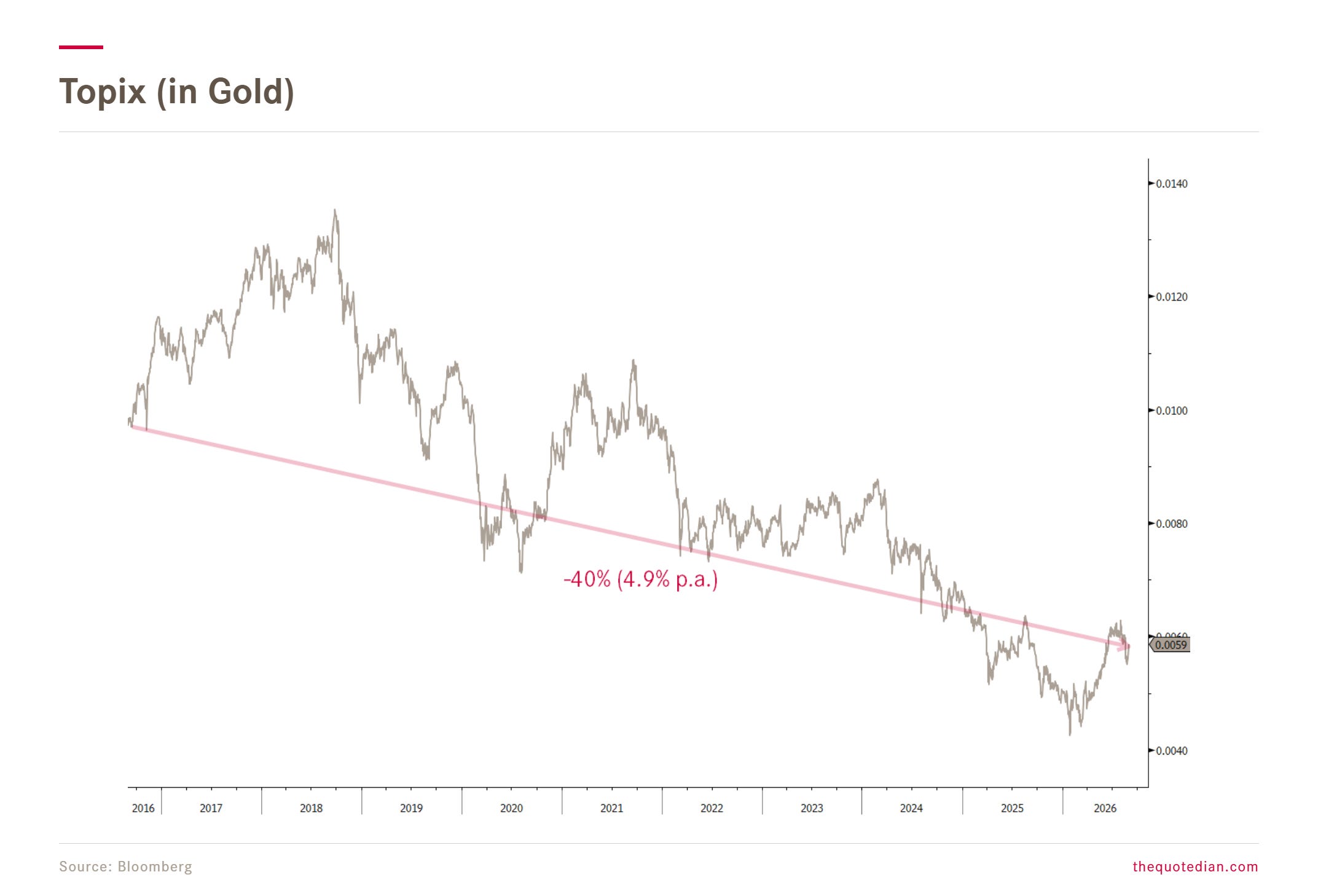
As we discussed last week, the likely pressure valve for YCC by the treasury is the US Dollar.
European equity markets have also been treading water, but generally have a tad more a bullish “feel” to them then their US cousins:
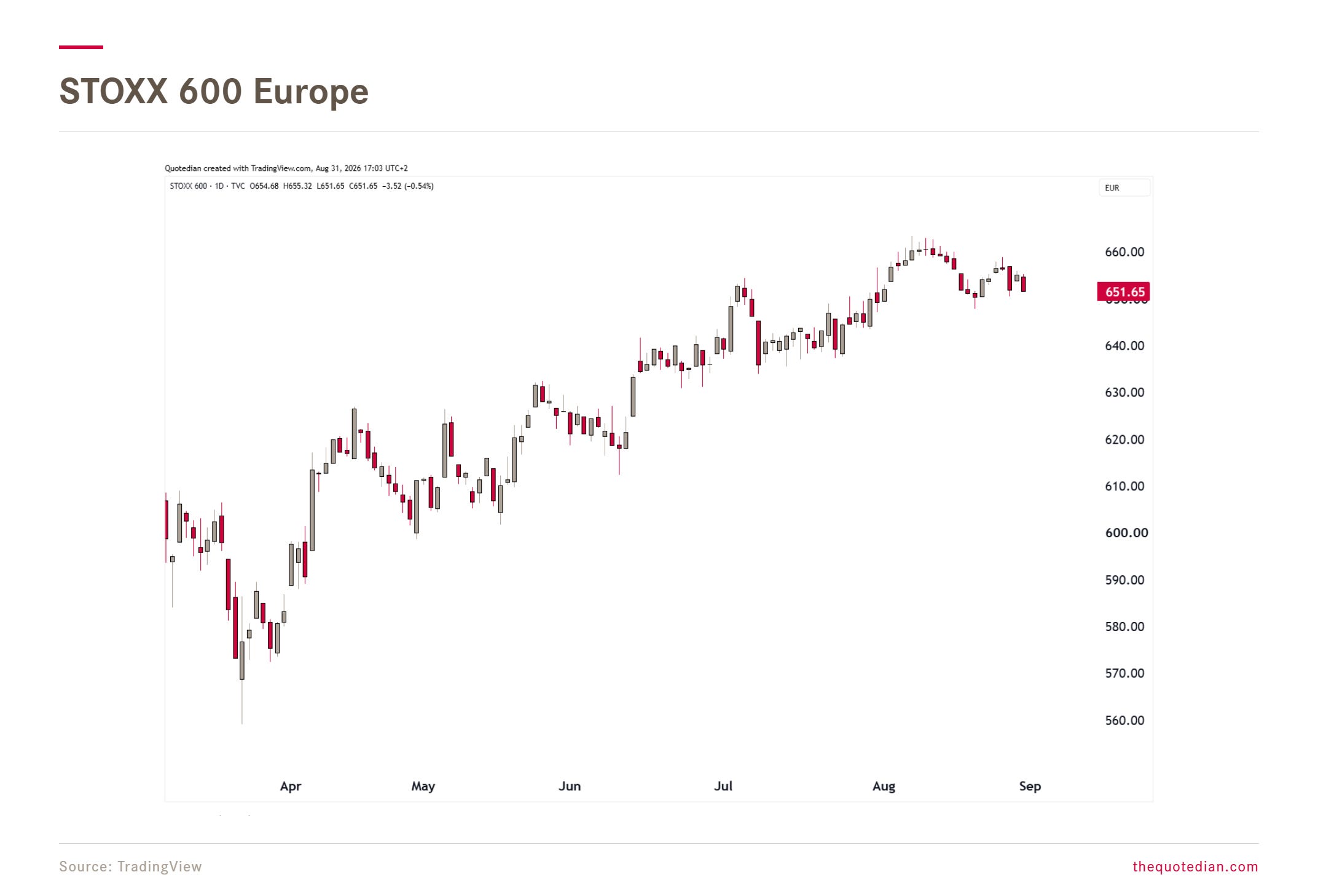
Unless you focus on France, that is:

We skip Asian markets this week as nothing specific has caught my attention over there.
Let’s move to some sector observation instead and allow me to take a small victory lap:

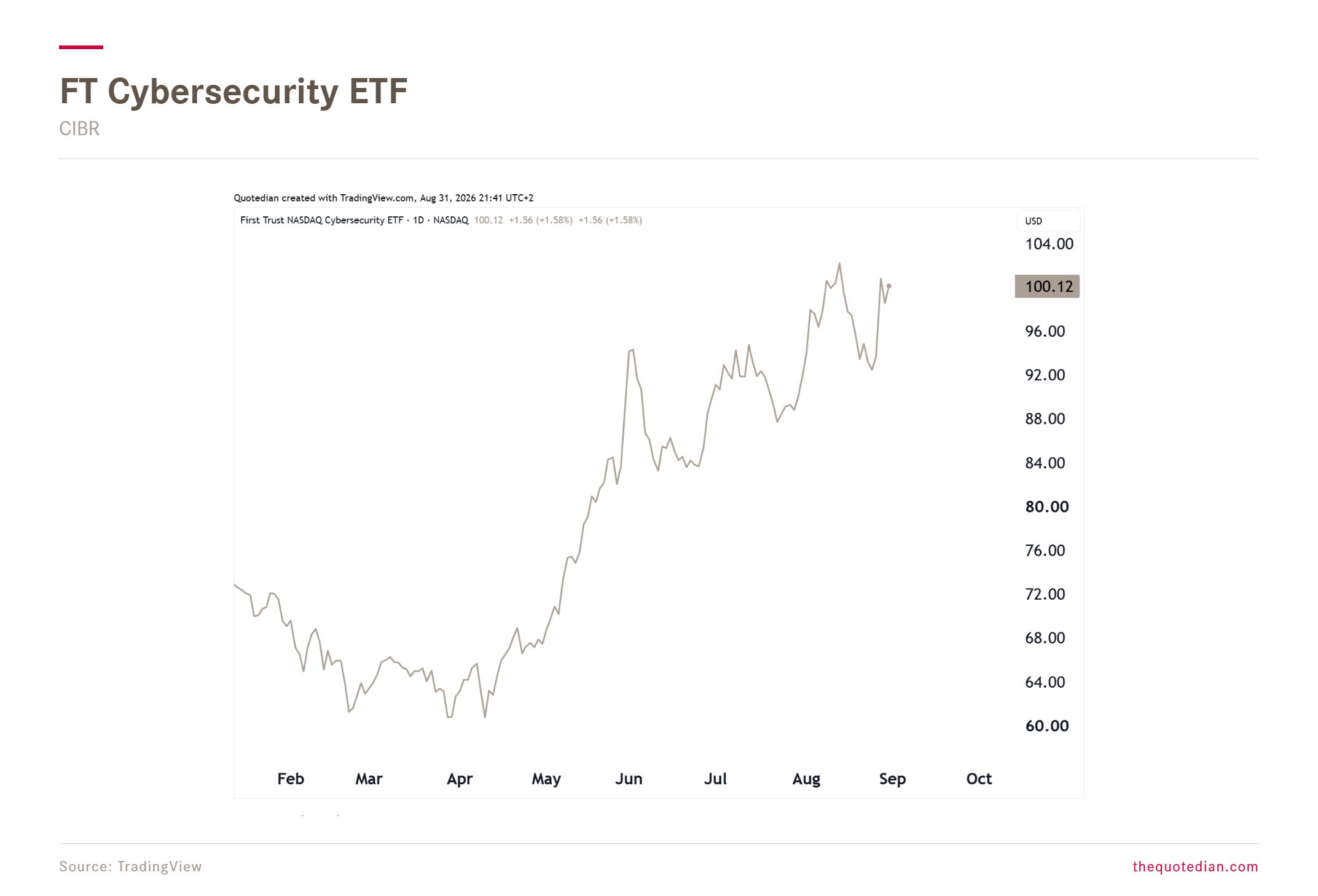
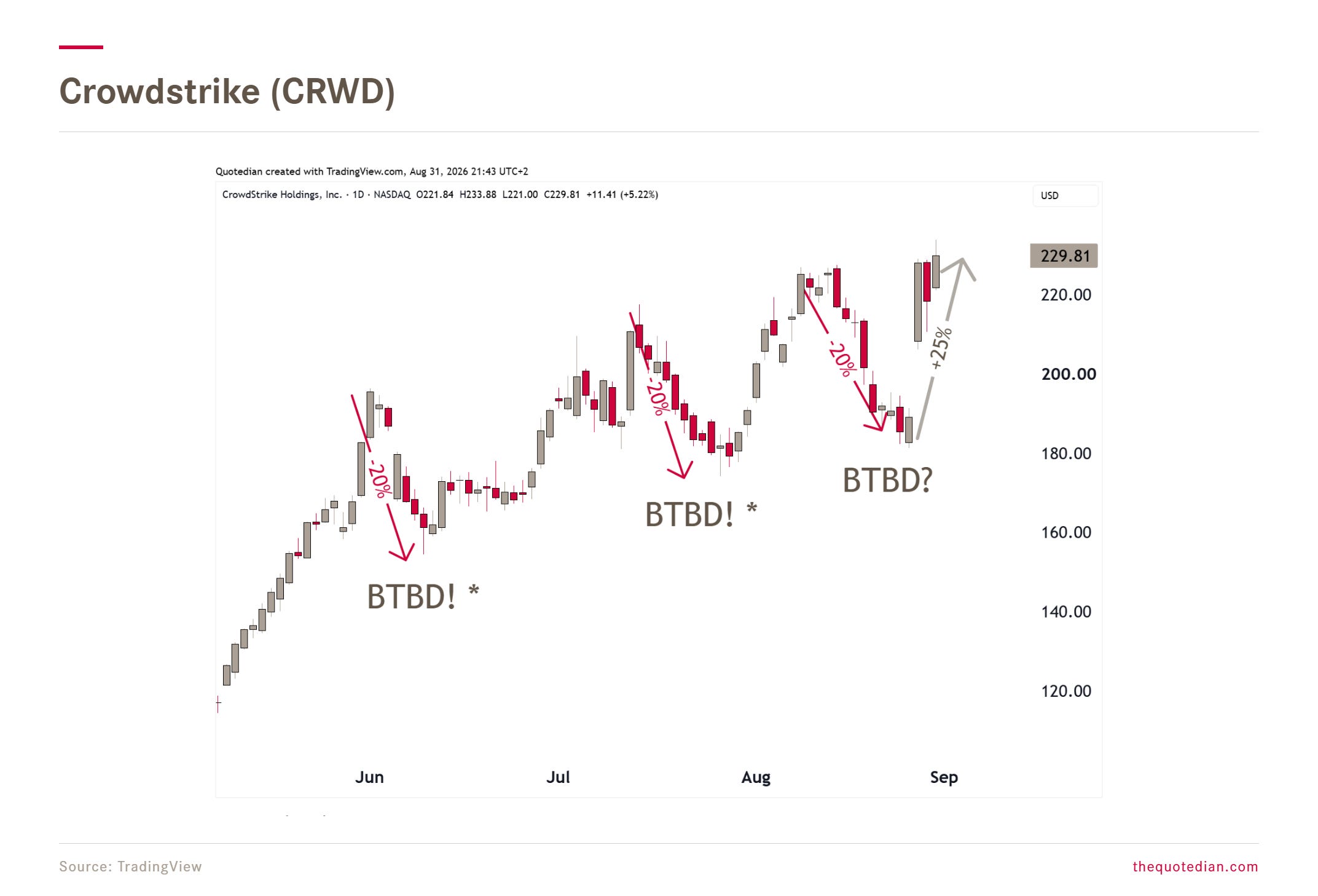
Over the past two weeks, I have been highlighting the cybersecurity software sector as a potential outperformer. The First Trust Cybersecurity ETF as a proxy for the sector is working well:
But, I am especially happy for one of its main constituents, Crowdstrike (CRWD), which even offered as an excellent entry opportunity a few day before ripping higher:
Admittedly, the recovery of the entire Software sector (proxy; IGV) has been close to miraculous:
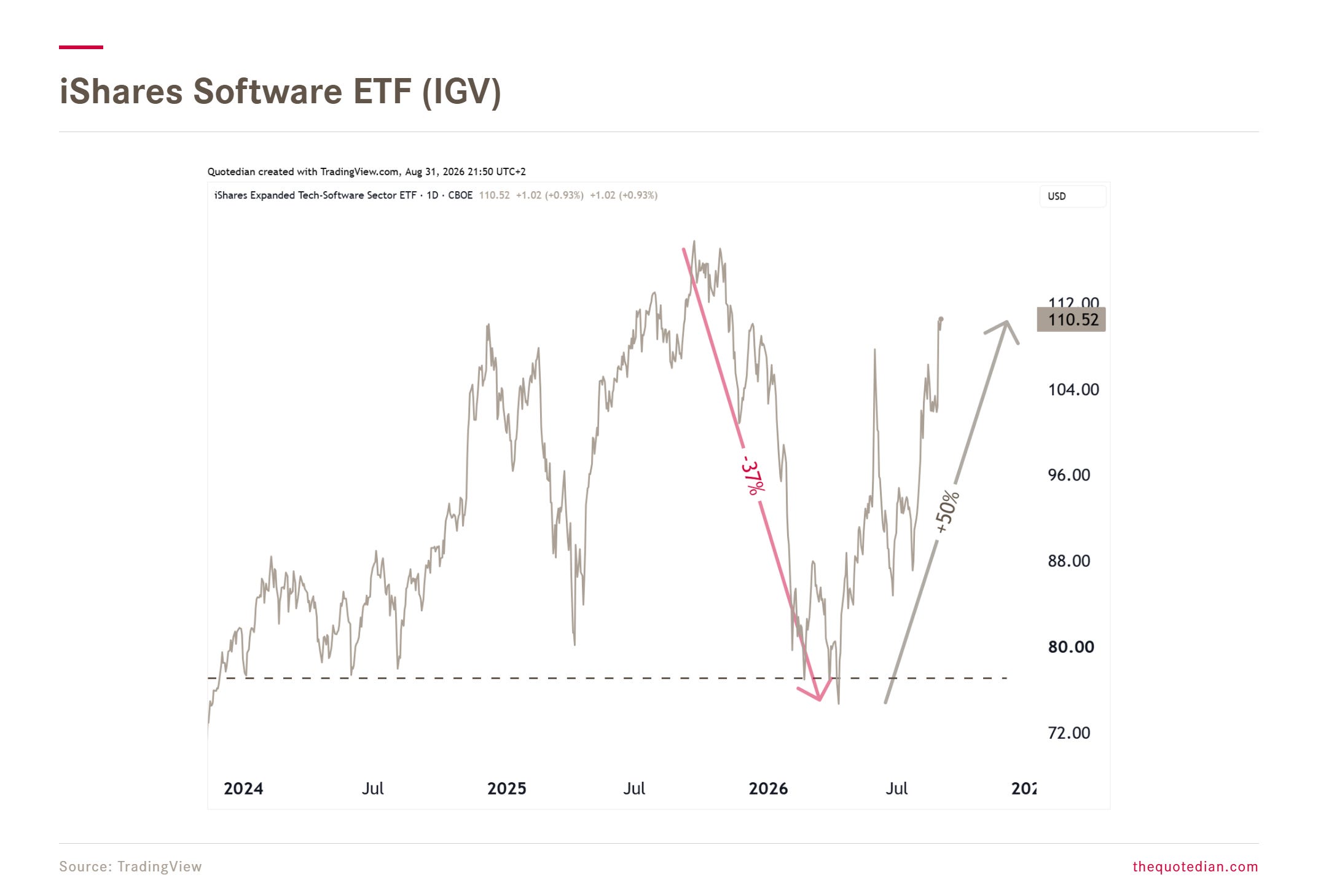
Whatever happened to the SaaSapocalypse??
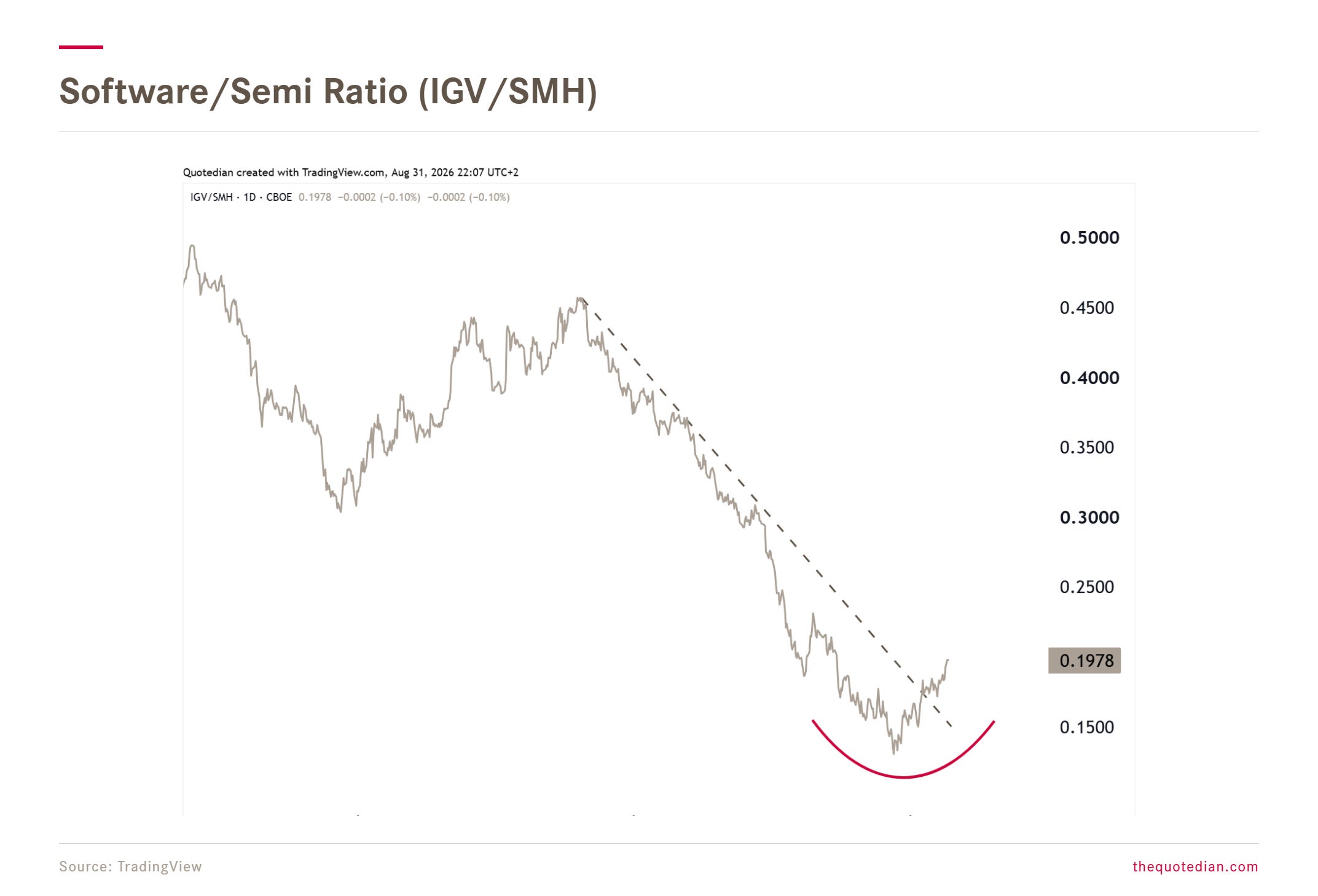
An interesting development then is, and I believe this was absolutely NOT the narrative only a few weeks ago, that software stocks (the AI losers) are showing important trend changes versus the semiconductors (the AI winners):
Two more sectors I have highlighted in the past few editions and which I want to reaffirm my bullishness on:
Energy stocks - it is always amazing how a trend starts creating narrative once it gets rolling. Suddenly, every headline seems fossil fuel positive (I know I just create a tonne of green haters). The refiners continue to work exceptionally well:
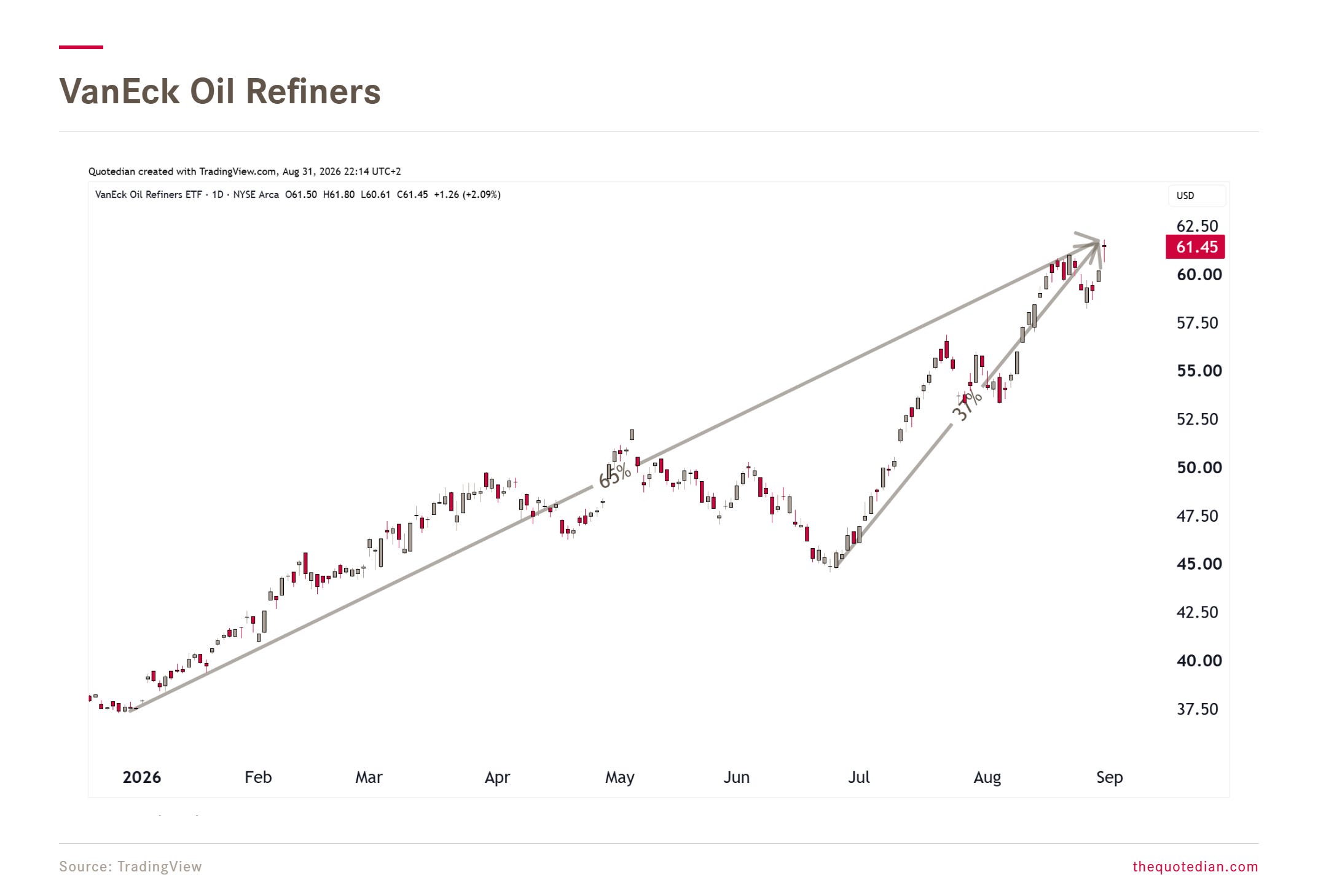
65% since the beginning of the year and 37% since the war “ended” (wink, wink).
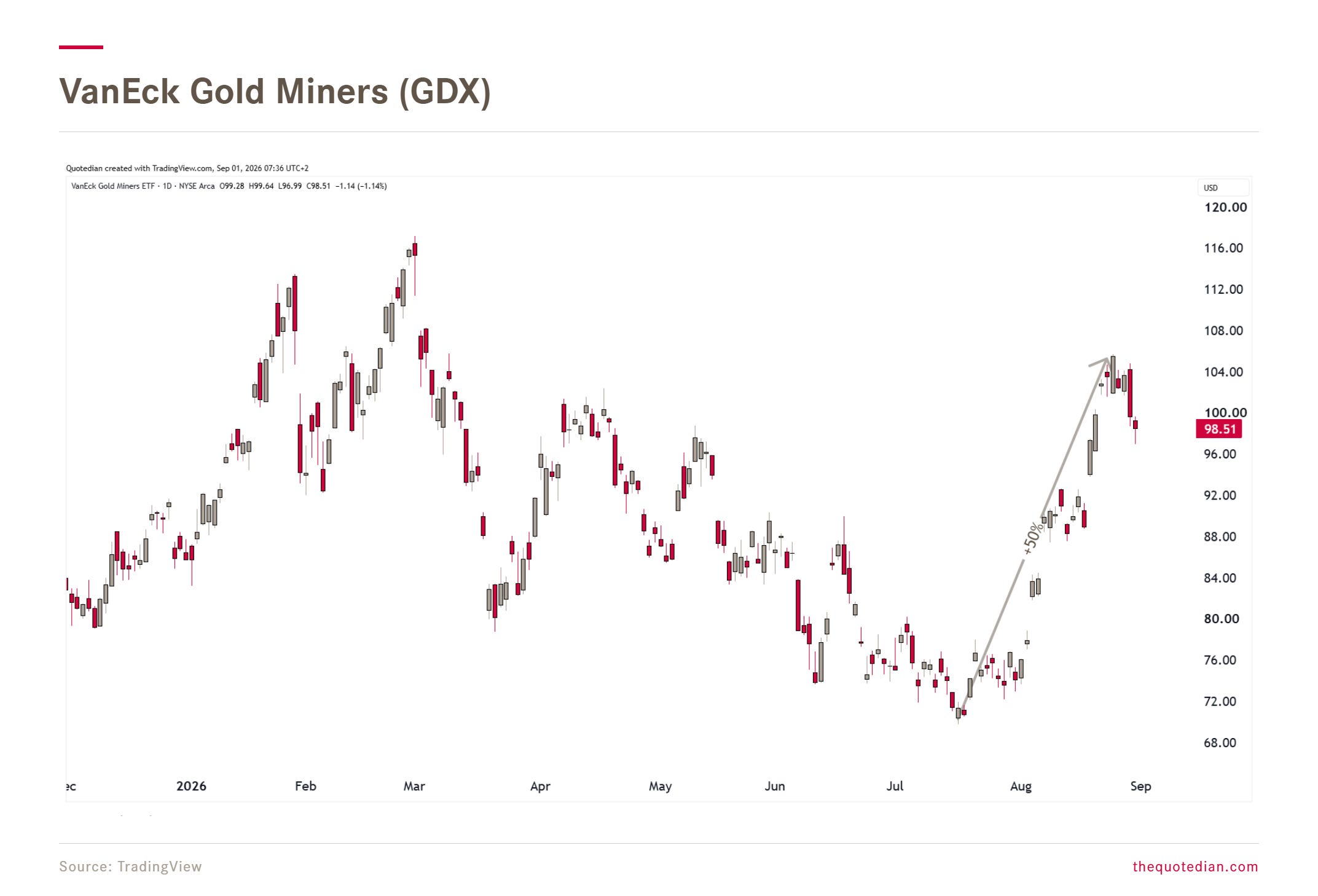
And the other commodity-related equity segment that is working exceptionally well is of course Gold/Silver mining stocks.
The VanEck Gold Miners ETF is one obvious choice to play the upside if you continue to be as bullish as we are on the sector:
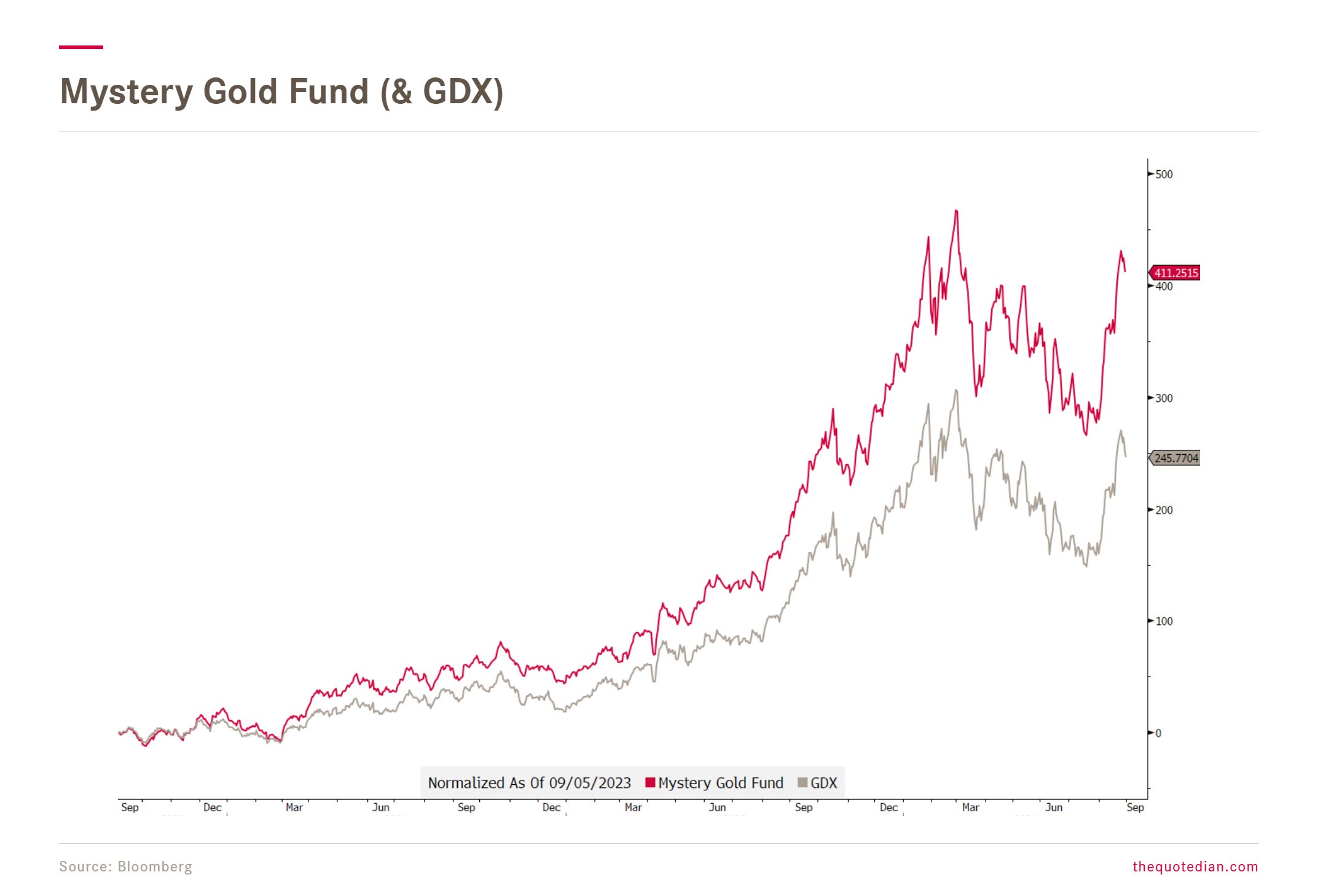
And if you want even more bang for your buck, become a client at NPB and enjoy being invested in our Mystery Gold Miners fund (red line):
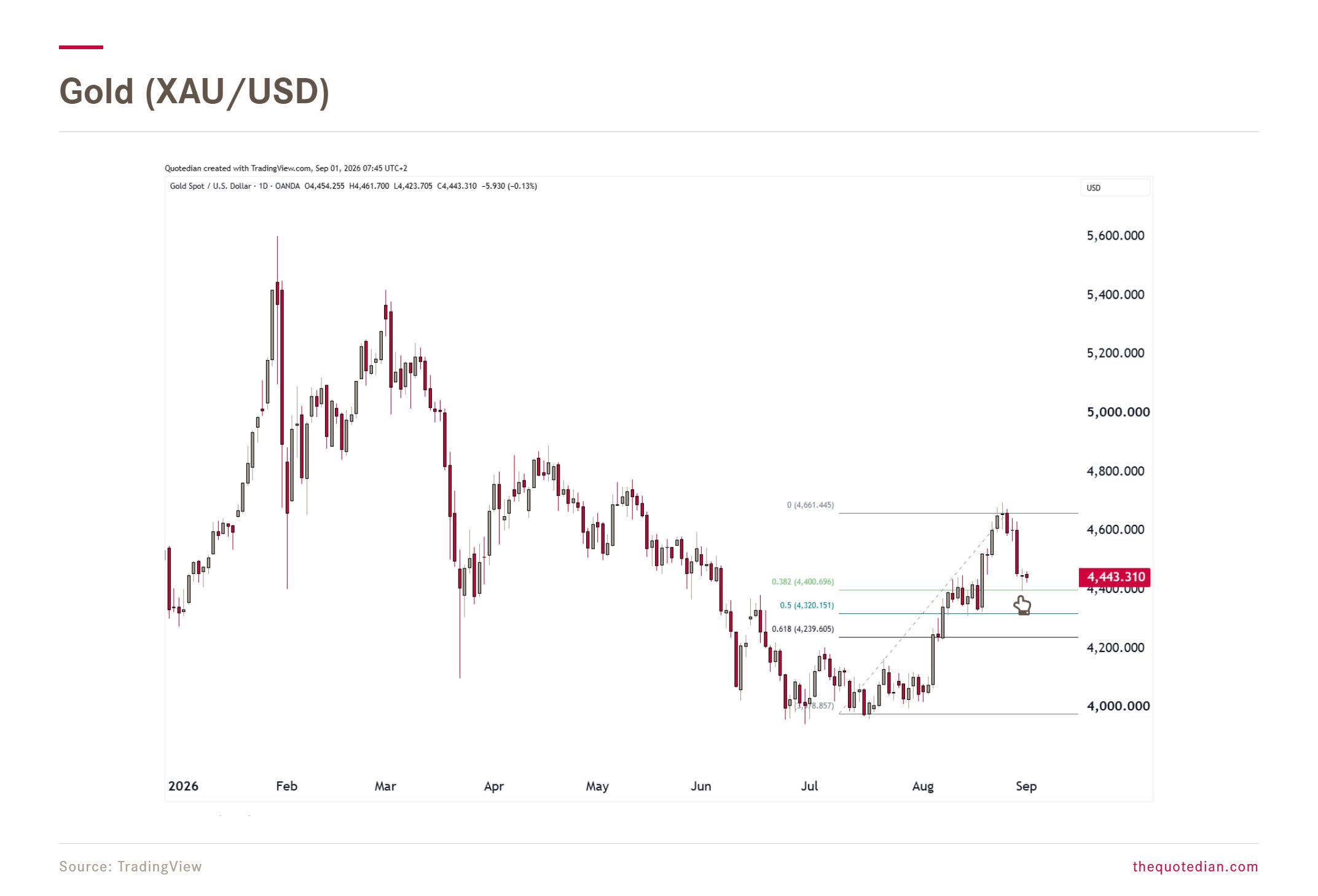
Gold itself had a small correction over the past 2-3 sessions, post the HARSH WARSH™ hawkish tone last Friday. From a voodoo technical analysis point-of-view, the shiny metal quite precisely retraced 38.2% of its August up move and could be ready to move higher again from here:
With Gold having corrected post the hawkish Jackson Hole speech it is probably safe to assume that the Dollar has performed relatively well:
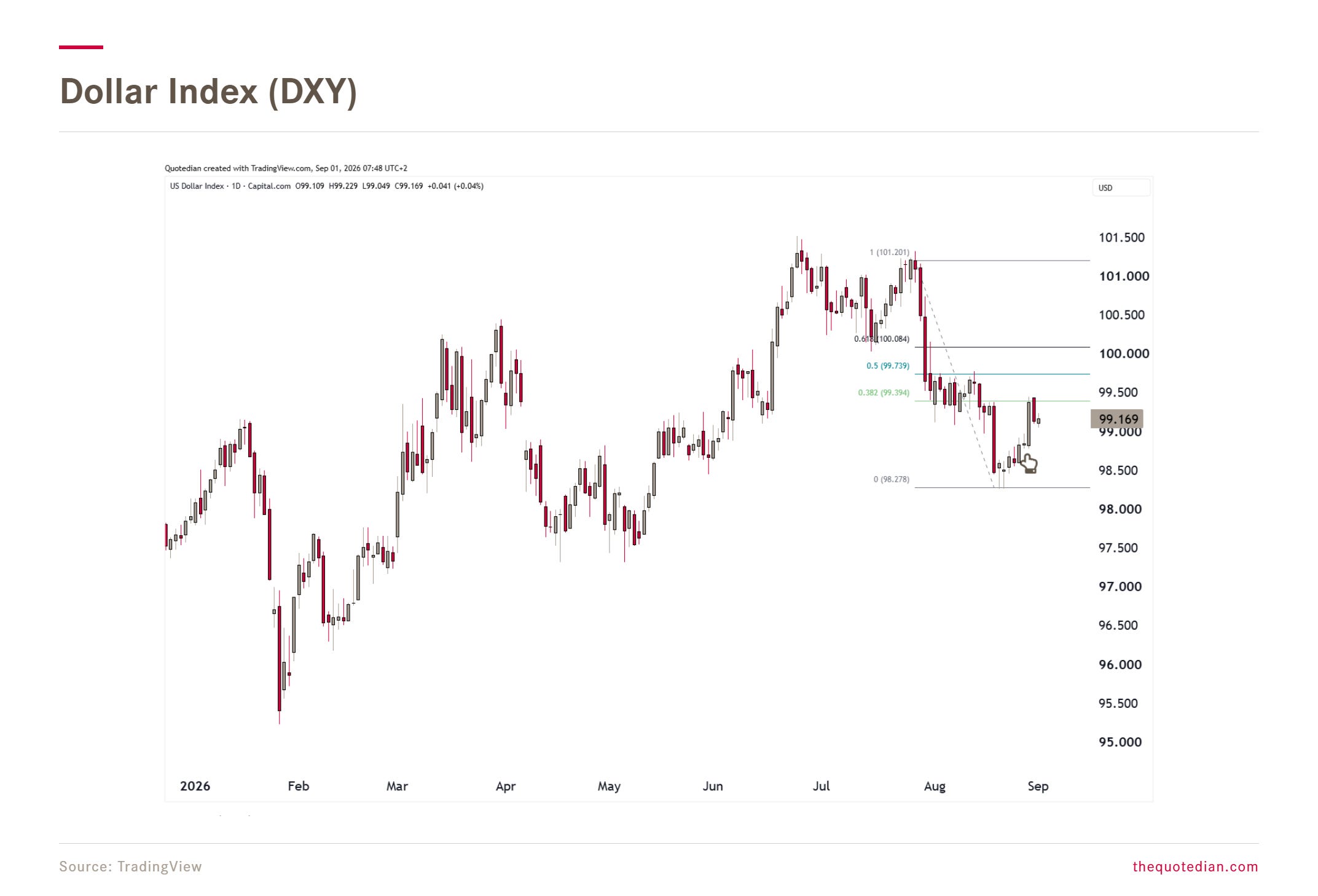
Indeed! However, here too we may assume that the Dollar corrected a part of its downtrend, which could soon resume.
Finally, let’s finish with a weekly chart on Bitcoin, which when adding a simple 42-week moving average, may just have produced a longer-term buy signal:
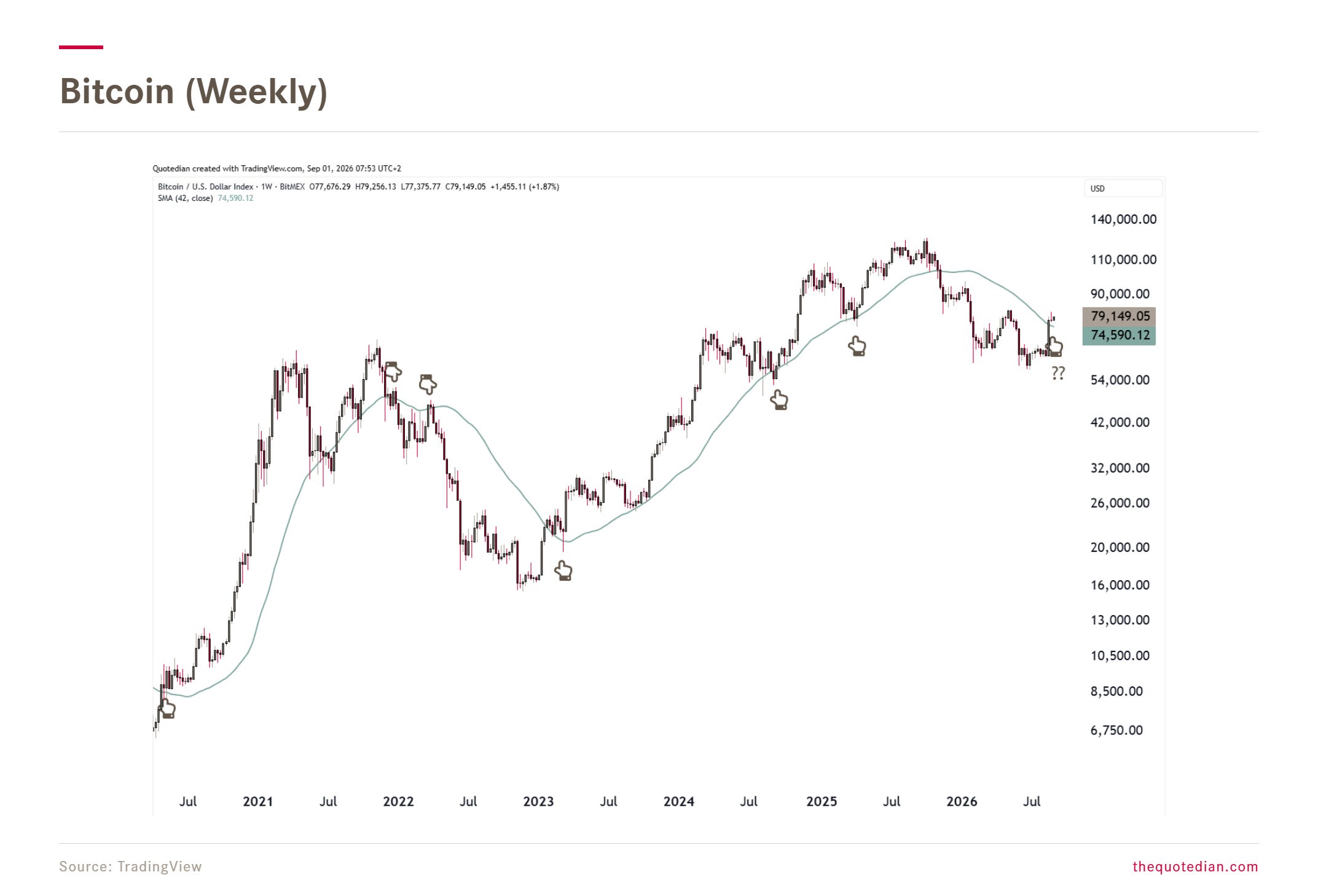

The two major actors in the US Treasury market are trying to influence opposite ends of the yield curve — and arguably have opposing objectives. Benign payrolls this week and CPI next week would reduce the pressure on Warsh to hike just yet.
We have strong views across asset classes. This is probably not the moment to write large tickets on them.
Stay adaptive and …. May the Trend be with You!
André

Everything in this document is for educational purposes only (FEPO)
Nothing in this document should be considered investment advice
Investing real money can be costly; don’t do stupid shit
Leave politics at the door—markets don’t care.
Past performance is hopefully no indication of future performance
The views expressed in this document may differ from the views published by NPB Neue Privat Bank AG