

“Paper money eventually returns to its intrinsic value — zero.”
— Voltaire
“The dollar is our currency, but it’s your problem.”
— John Connally

Mark last week in your calendar. You are living financial history
The long end has failed (for now) to meaningfully react to the US Treasuries plan to shorten their duration profile
However, the US Dollar, Gold and Bitcoin DID NOT fail to react
Stocks are currently the sideshow, but sector performance deviation shows opportunity abound
Commodities are on the move again, with Ags now joining the party

First things first …. congratulations to the current and all previous U.S. governments for cracking the $40-mark.
$40 TRILLION that is!

Is it then sheer coincidence that last week, at least in my mind, was one of those weeks we (we as in financial market observers) will look back on as a defining moment in financial history.
Whilst many are downplaying Treasury Bessent’s decision to at least double Treasury buybacks at the long-end (10 to 30 year bonds) on Wednesday (read about it here: click), which he then followed up with a verbal tantrum (read about it here: click) the next day.
Should we call it Yield Curve Control (YCC)? Or Fiscal Dominance (FD)? Or even Financial Repression (FR)?
Maybe Probably all of the above.
But for now, let’s call this: Operation Twist and Shout 🤣.
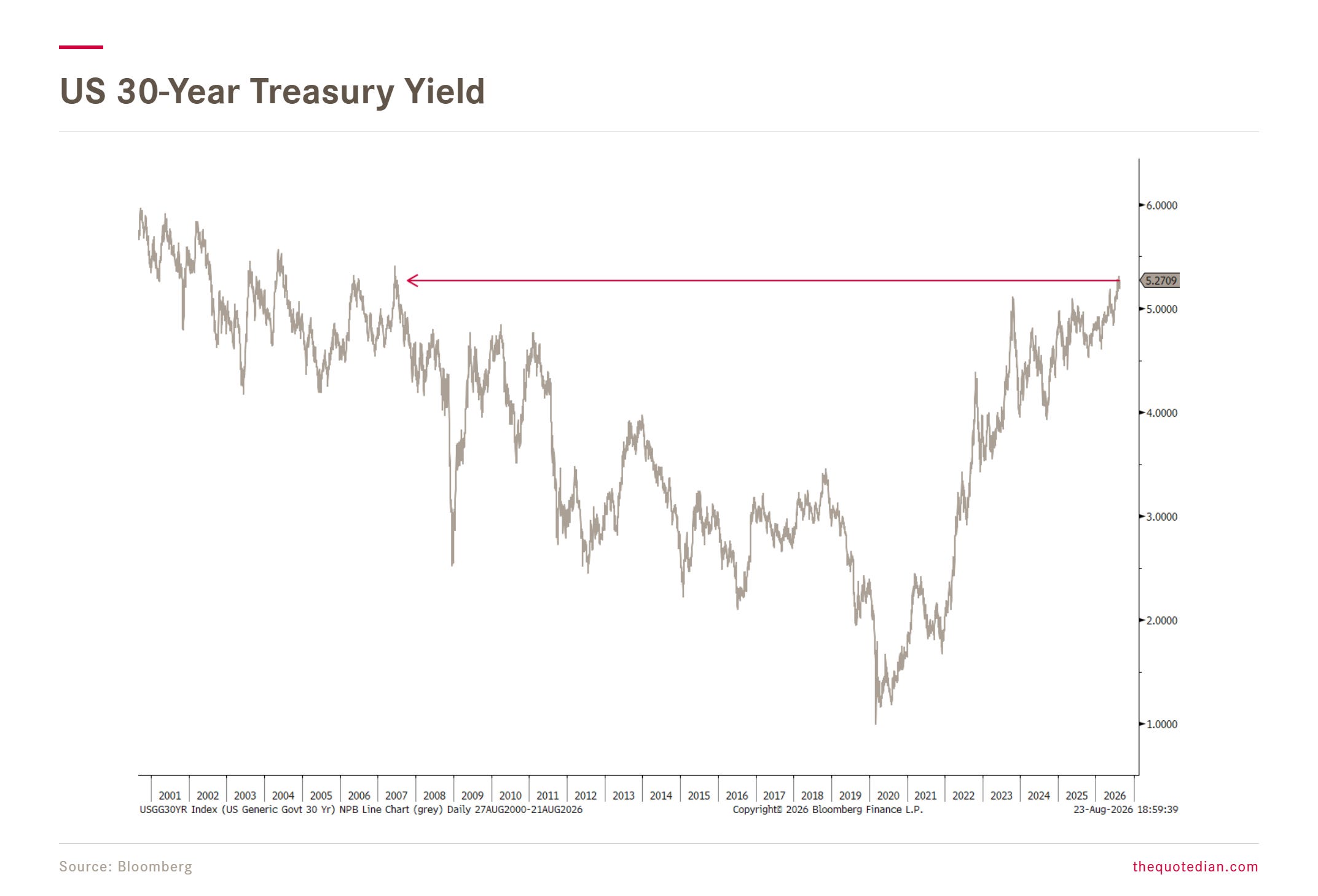
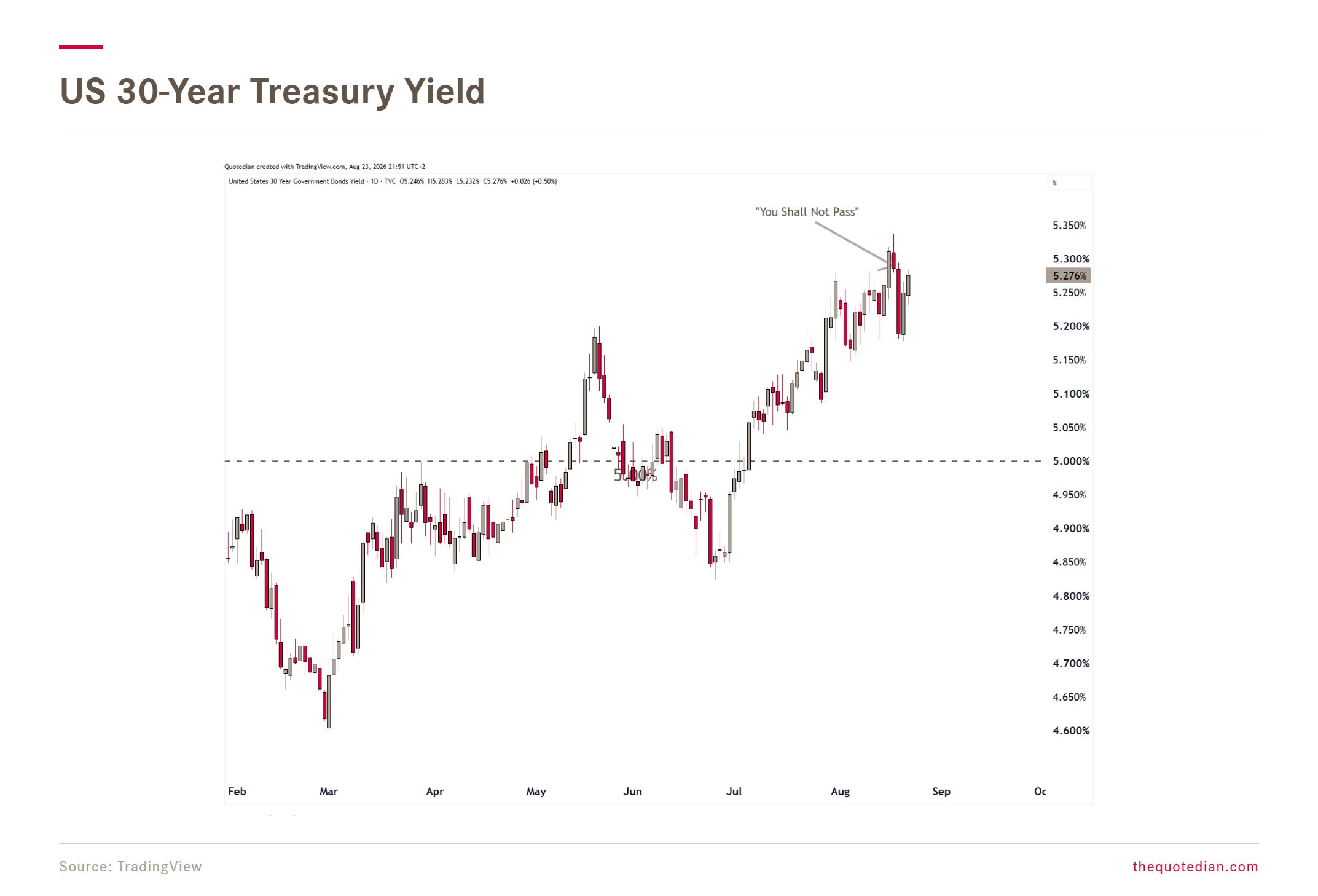
In any case, for those living under a rock too busy to follow financial market happenings, US Treasury secretary Bessent panicked last week, as bond yields at the long-end of the curve, hit their highest levels in decades. Here’s the 30-year Treasury bond yield for example:
Again, maybe I am over-judging the importance of the interaction by Scottie …
… but…
probably not. This was a panic and “you shall not pass”, or even better, “whatever it takes” moment.
It is well above my pay-grade to analyse, let alone understand, what the meaning of all this is.
Was it to allow Fed Chair Kevin Warsh to be more dovish at this week’s Jackson Hole meeting of central bankers?
Perhaps.
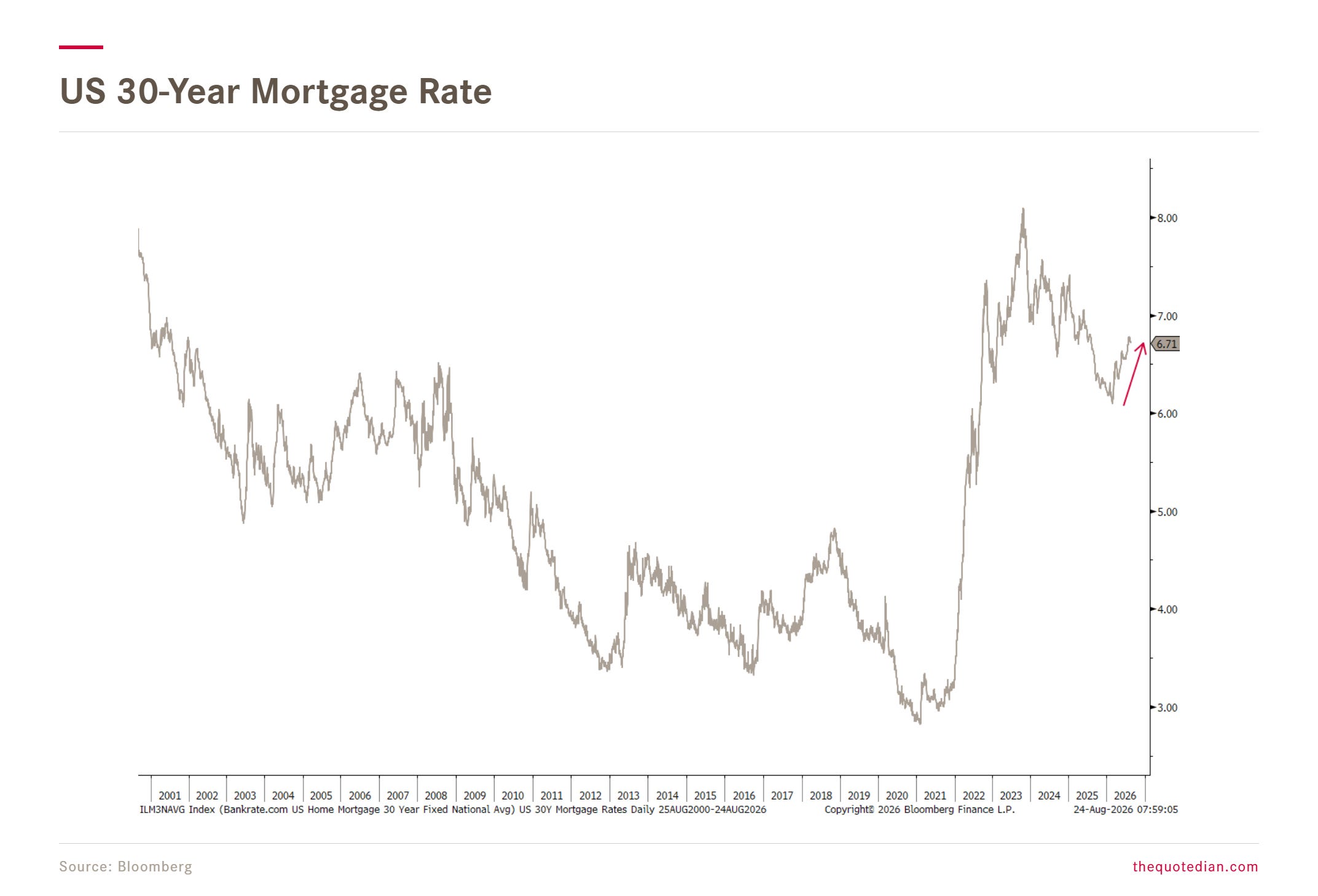
Was it to please the Commander-in-Chief, especially ahead of US mid-term elections as 30-mortgage rates are pushing towards new cycle highs?
Also, perhaps.
In any case, what we as good Quotedians do exceptionally well is to listen to the markets, when they speak.
Currently, they are not speaking.
They are YELLING!!!!!!!!
So, let’s start our tour of weekly listening.
Exhibit 1 - the idea to put a top on longer-term yields is failing so far, at least on the 10-year yield, where it took only one day to unwind the yield drop (and then some):
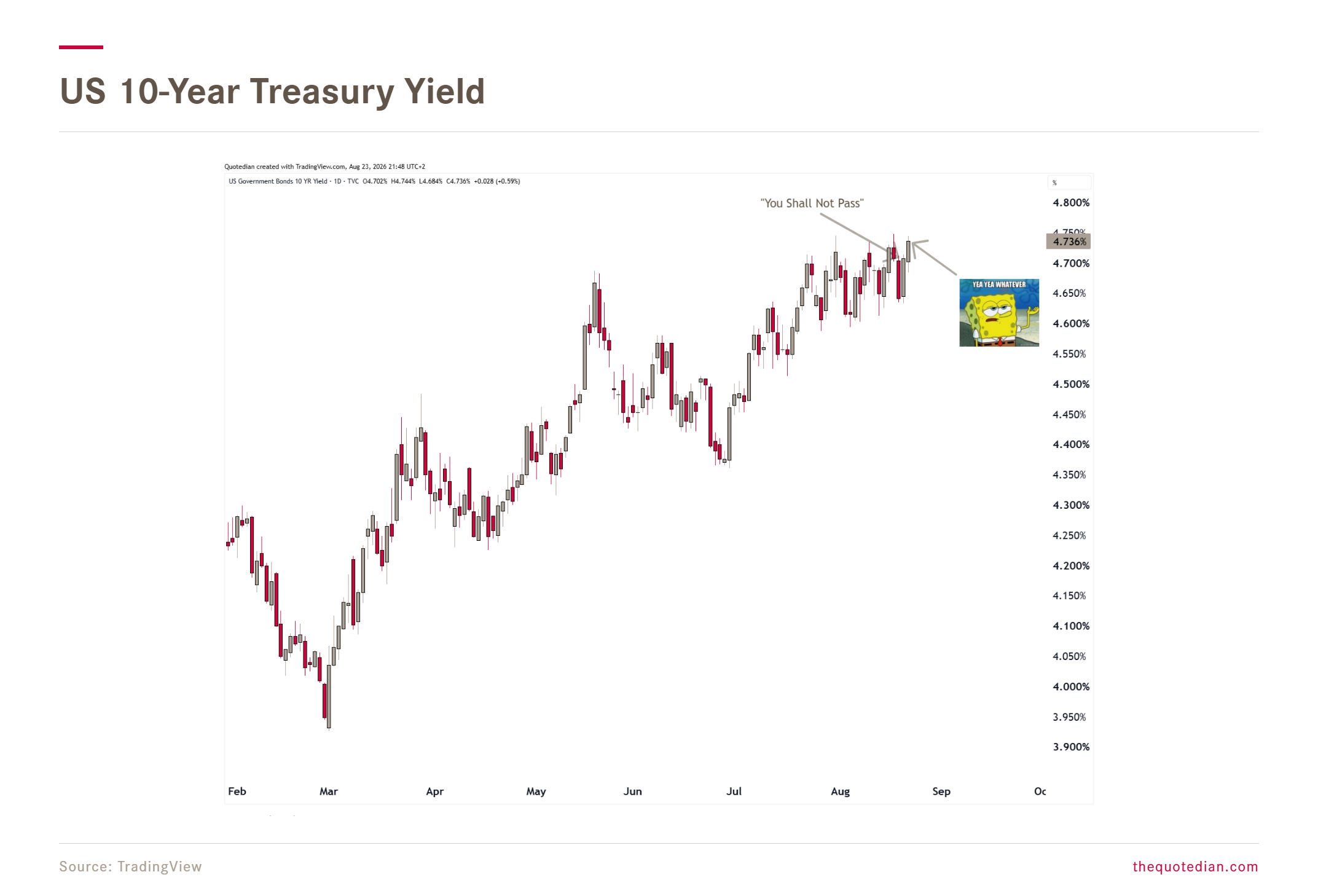
Maybe, just maybe, Scottie’s magic worked on the 30-year??
Meh.
But, what is endlessly more interesting, and telling, is the reaction of other asset classes.
IMHO, and being this week’s subtitle to the Quotedian, i.e. “In Search of the Cleanest Dirty Shirt”, the US Dollar was taken out in the backyard court and shot in the head last Wednesday. Or a bit less dramatic, the debasement trade is fully back on.
So, what could replace the Dollar dominance?
The Renminbi? - Probably not.
The Euro - ya’ kidding?
The Swiss Franc? - Cool, but too small a market
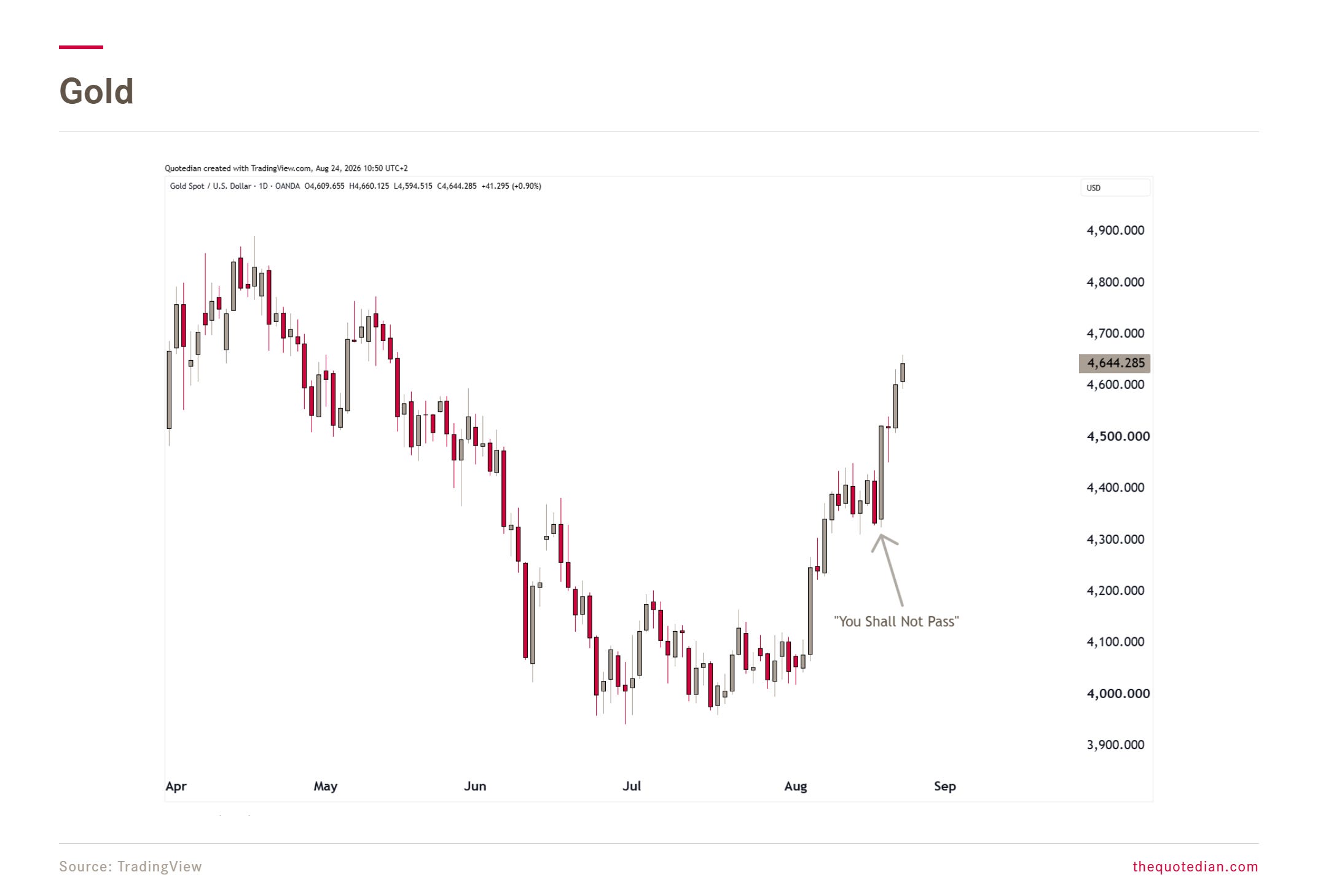
Gold - Ah!
Exhibit 2 - Gold
Or maybe even a cryptocurrency, such as Bitcoin?
Exhibit 3 - Bitcoin
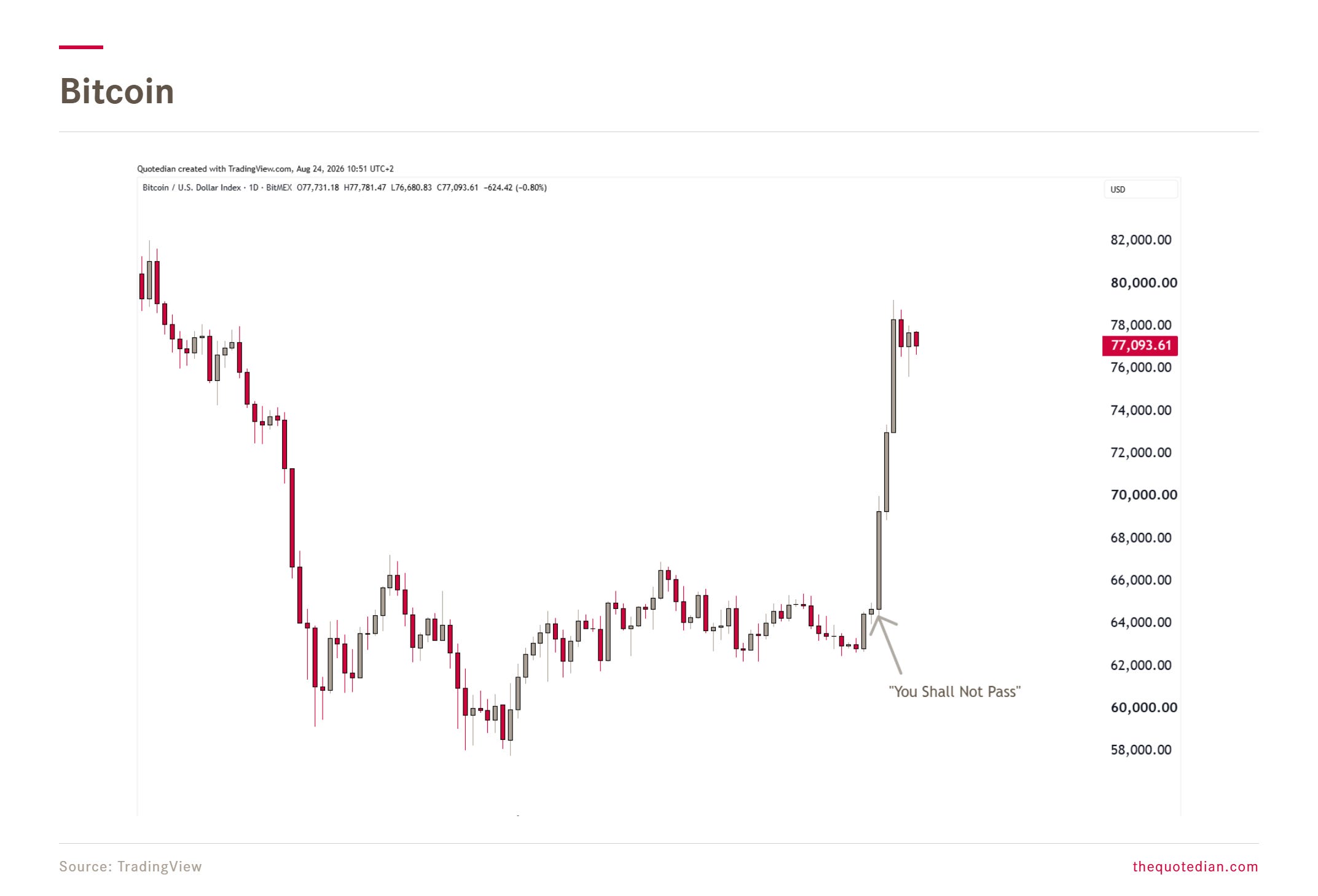
Oh, wow! 20% in three sessions. Definitely something going on there.
And then of course, there is the US Dollar itself.
Exhibit 4 - Dollar Index (DXY)
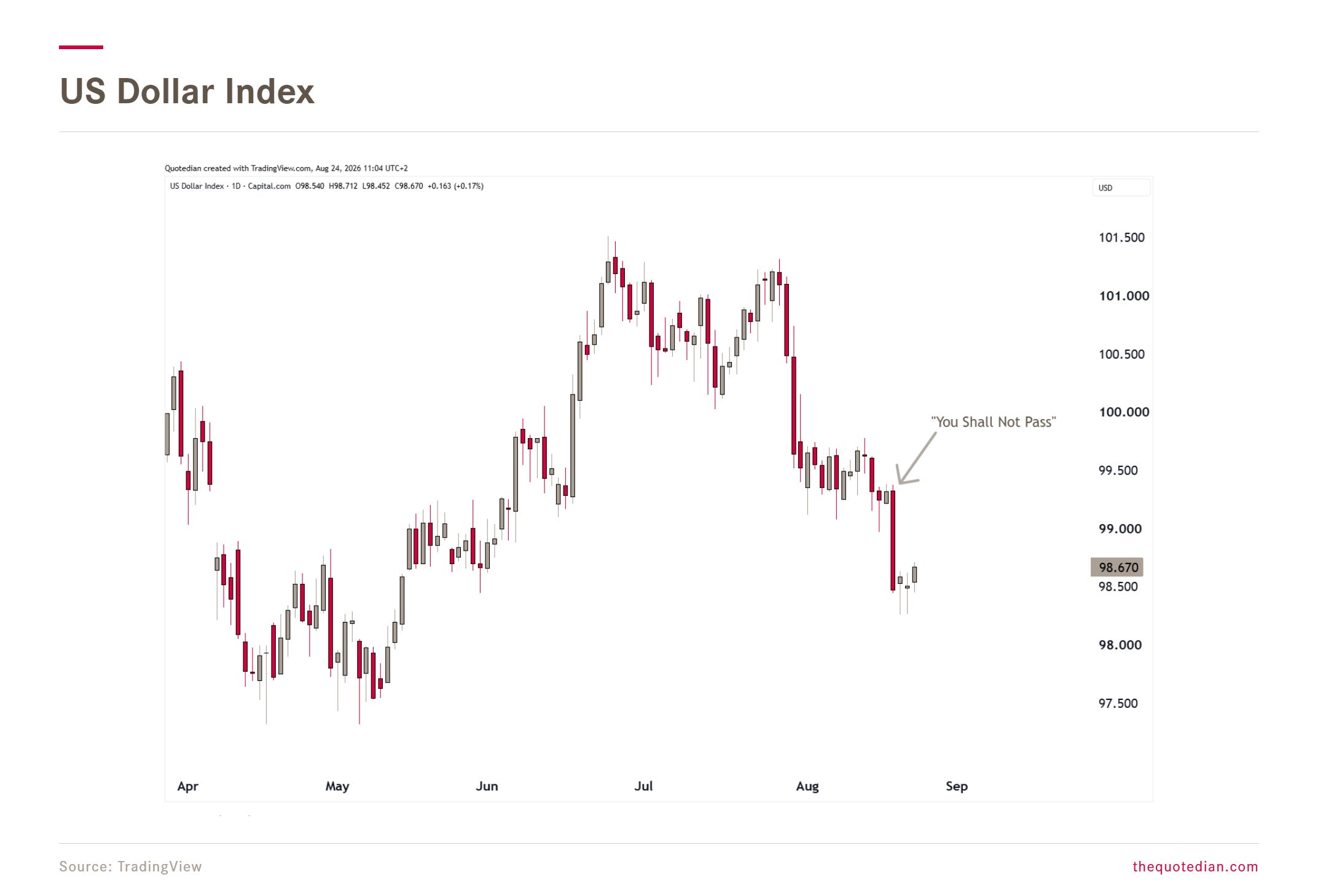
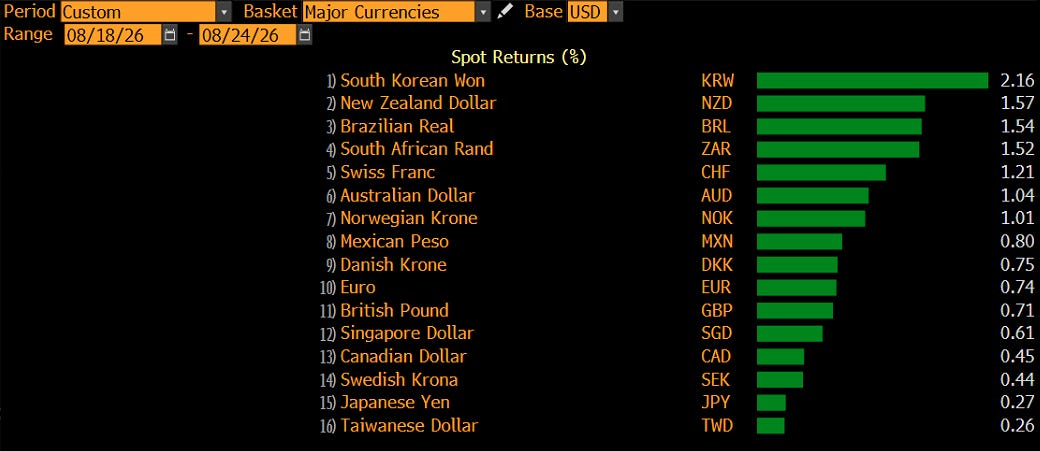
That Dollar weakness, aka debasement, has been across the entire major currencies board:
I found the following summary from Rabobank to be useful:
The dollar’s negative reaction is therefore revealing. Normally, lower Treasury yields weaken the currency through the interest-rate channel. This time, gold and crypto also rallied, suggesting concern about fiscal credibility and the perceived management of borrowing costs. Yesterday’s price action reinforced that message: both the dollar index and gold have extended Thursday’s moves. Could the end-result soon be unchanged long-term yields, but a weaker dollar?
Of course, the dollar still benefits from deep capital markets, strong nominal growth and reserve-currency status. But those advantages are less reassuring if foreign investors believe they are being asked to finance widening deficits while the authorities lean against the resulting rise in term premia.
This week’s geopolitical backdrop sharpens the dilemma. Higher oil prices and uncertainty around Iran and the Strait of Hormuz add an inflation premium; the 5y5y US inflation swap forward is now close to its May peak even though headline inflation has fallen by almost a percentage point since then. This comes just as fiscal supply tests investors’ appetite for duration. The Treasury can address market plumbing, but it cannot buy back geopolitical risk, inflation risk or fiscal arithmetic.
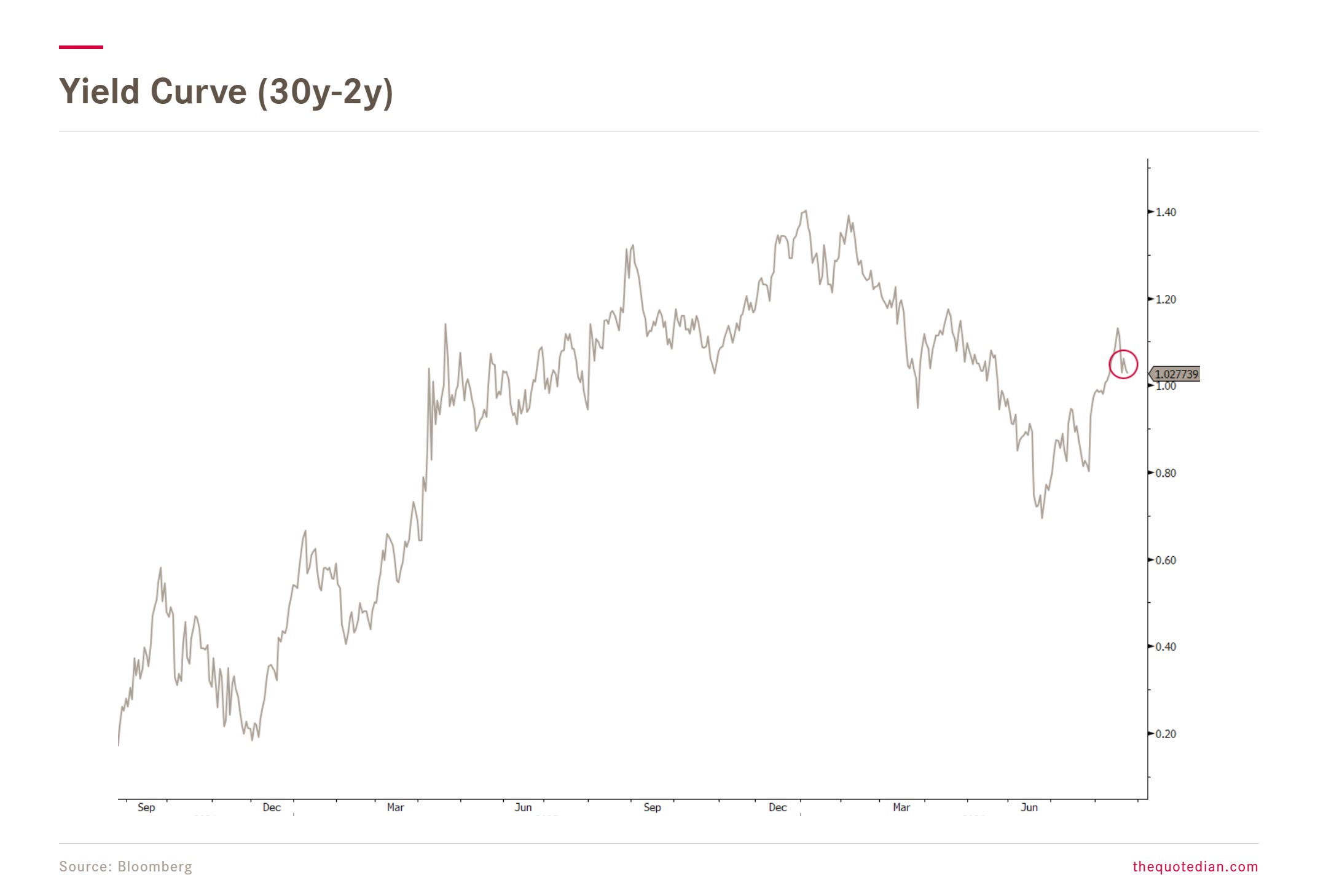
If Bessent’s intention was to flatten the yield curve,
and/or take pressure of the Fed to hike rates,
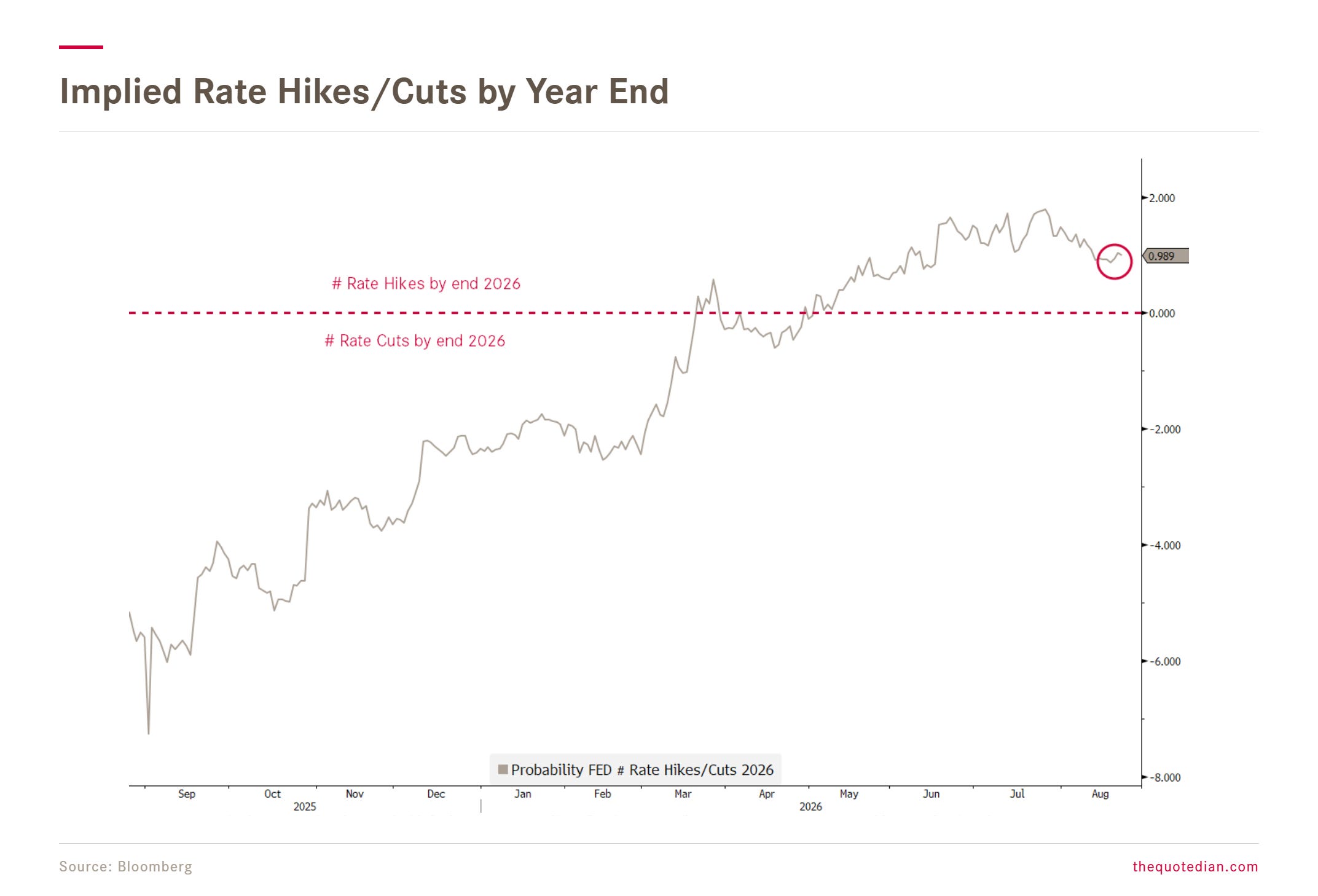
the move was pretty much useless unfruitful.
So, all in all, we have yields that are back to where they were before Bessent’s signalling, but Gold and Bitcoin which are 8% and 20% higher respectively, and the Greenback that trades a percent lower.
In German there’s a saying for such a situation: “Operation gelungen, Patient tot”, which literally translates to “The operation was a success. The patient died.”
We are already way half into this week’s Quotedian and have not spoken about equities yet … shame on me! Or maybe equities were really only the sideshow last week?
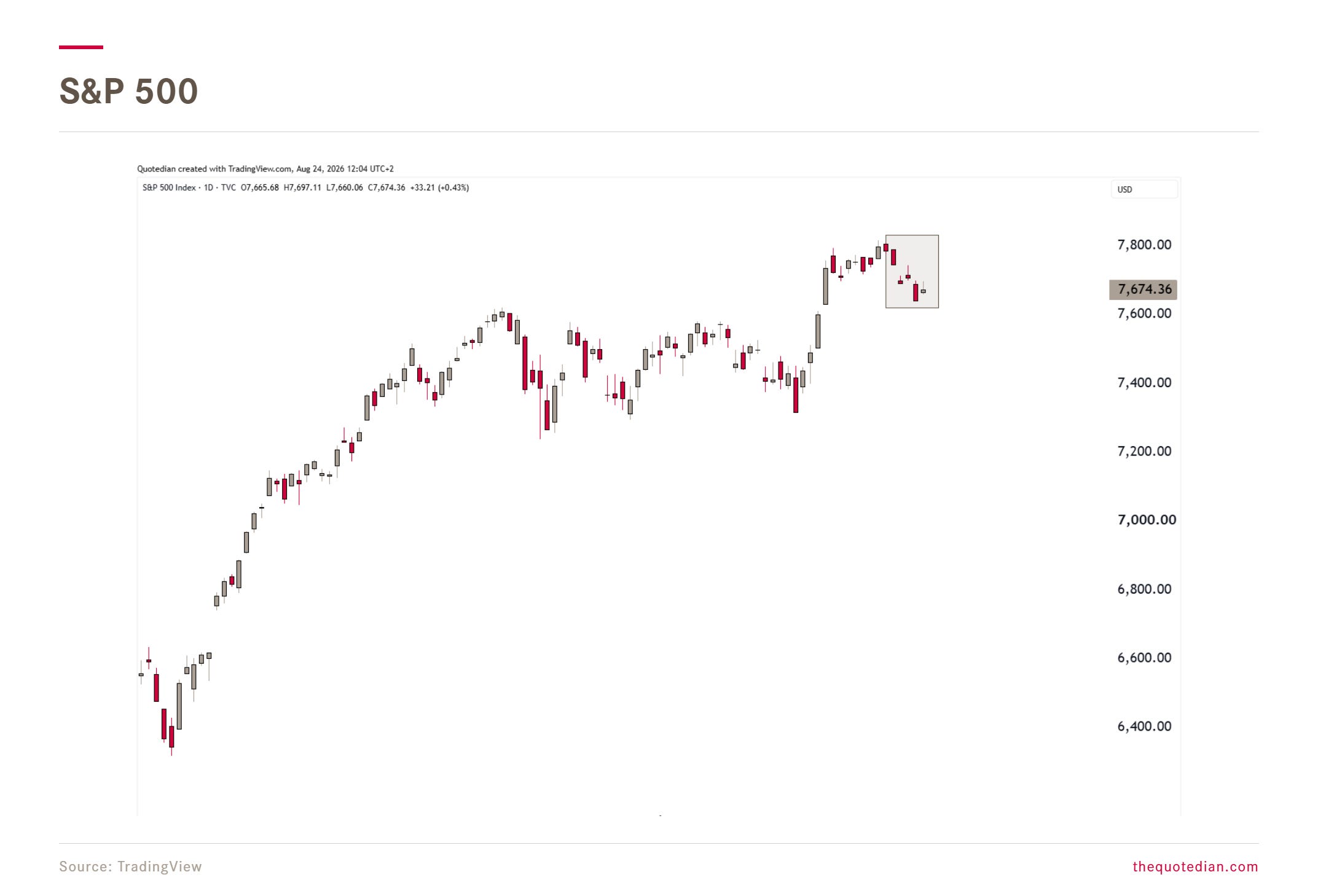
Indeed!
Overall, markets were a bi softer last week, but most of that weakness came pre-Bessent:
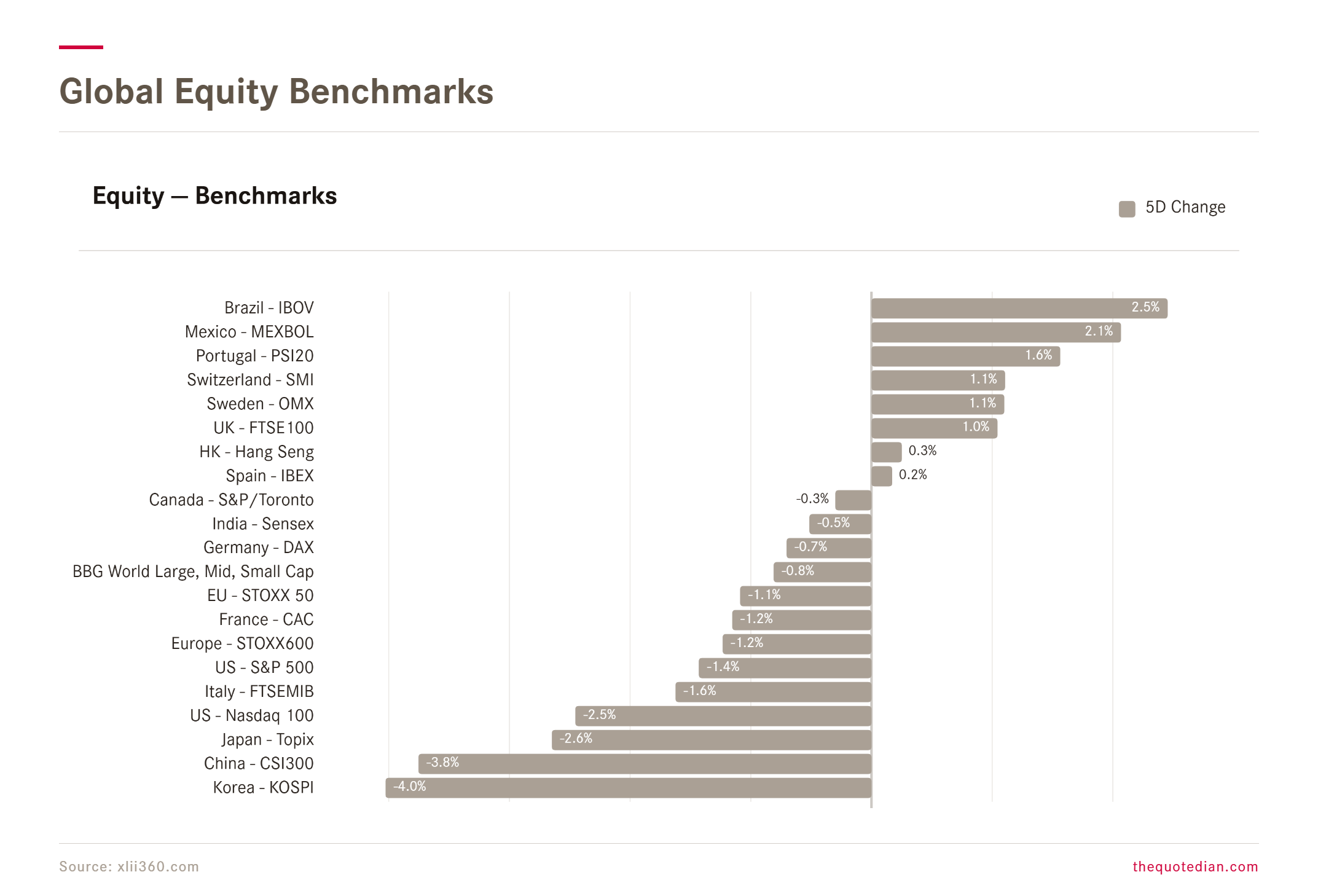
Whilst the S&P 500 gave back about one and a half percentage point over the past week, sector performance over the same time frame reveals that opportunity to make money on the long-side was at hand:
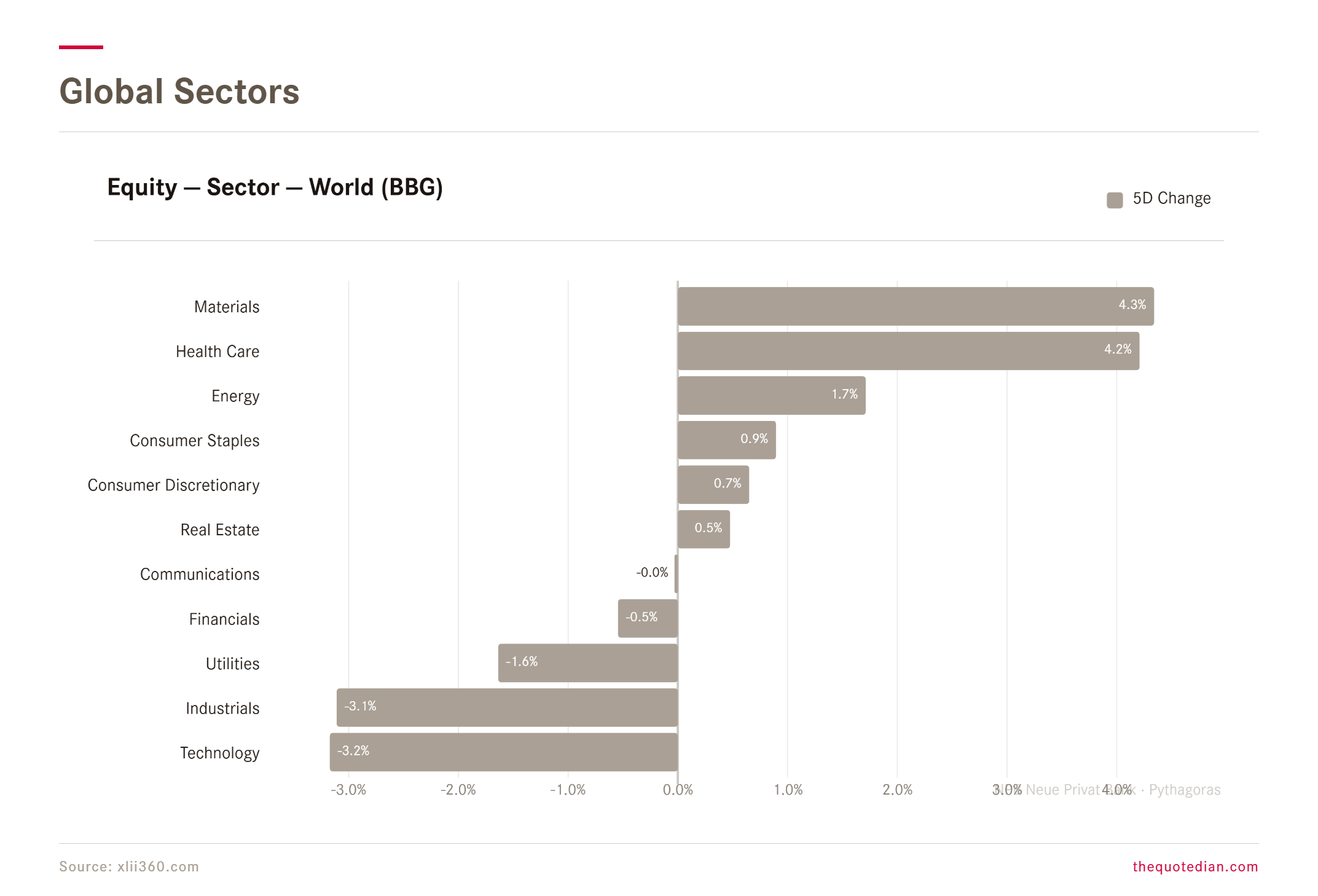
That’s a >7% delta between best and worst in just one week.
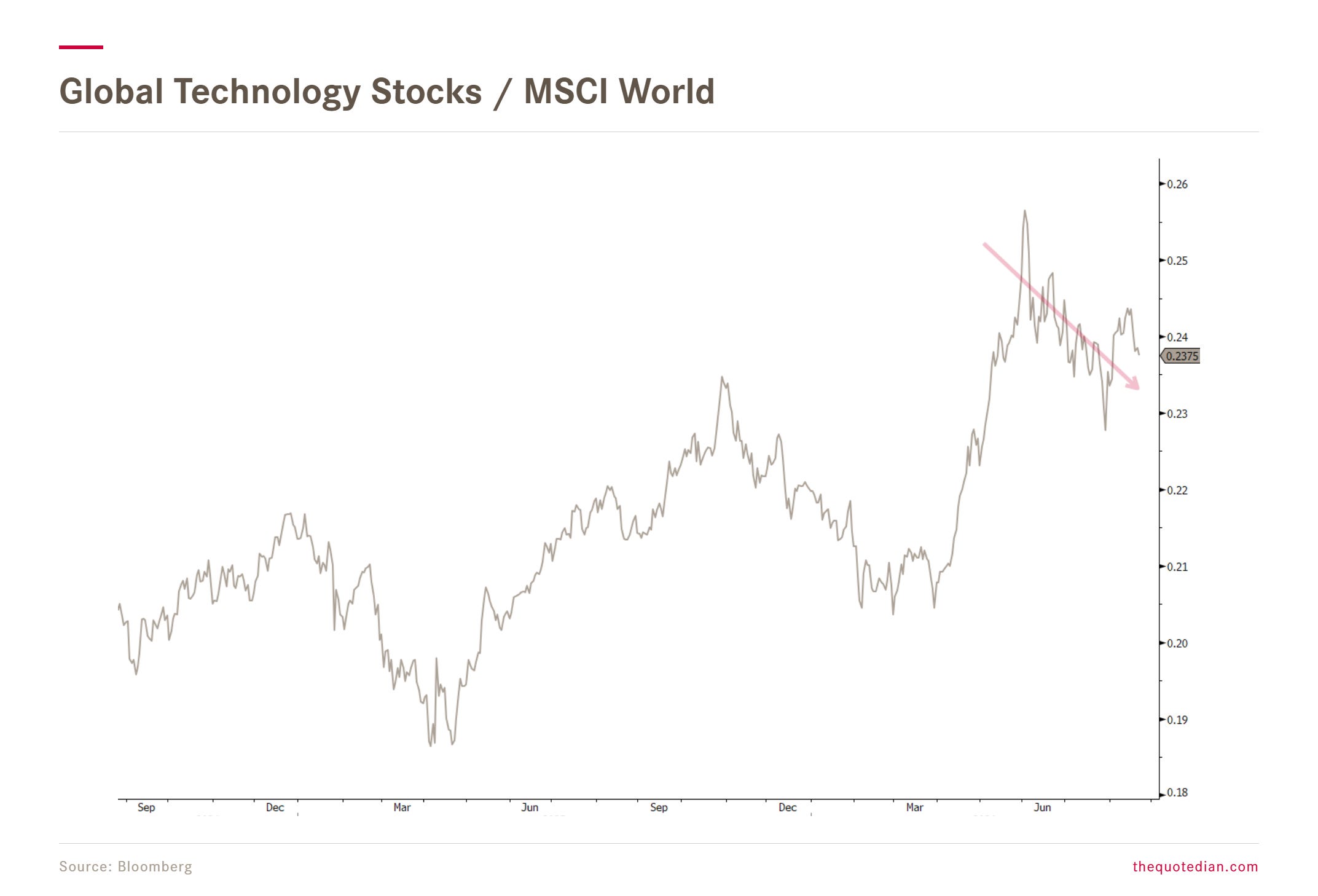
Our rotation theme from tech stocks to everything else, highlighted in our quarterly outlook (click) and again last week (click), continues to work well.
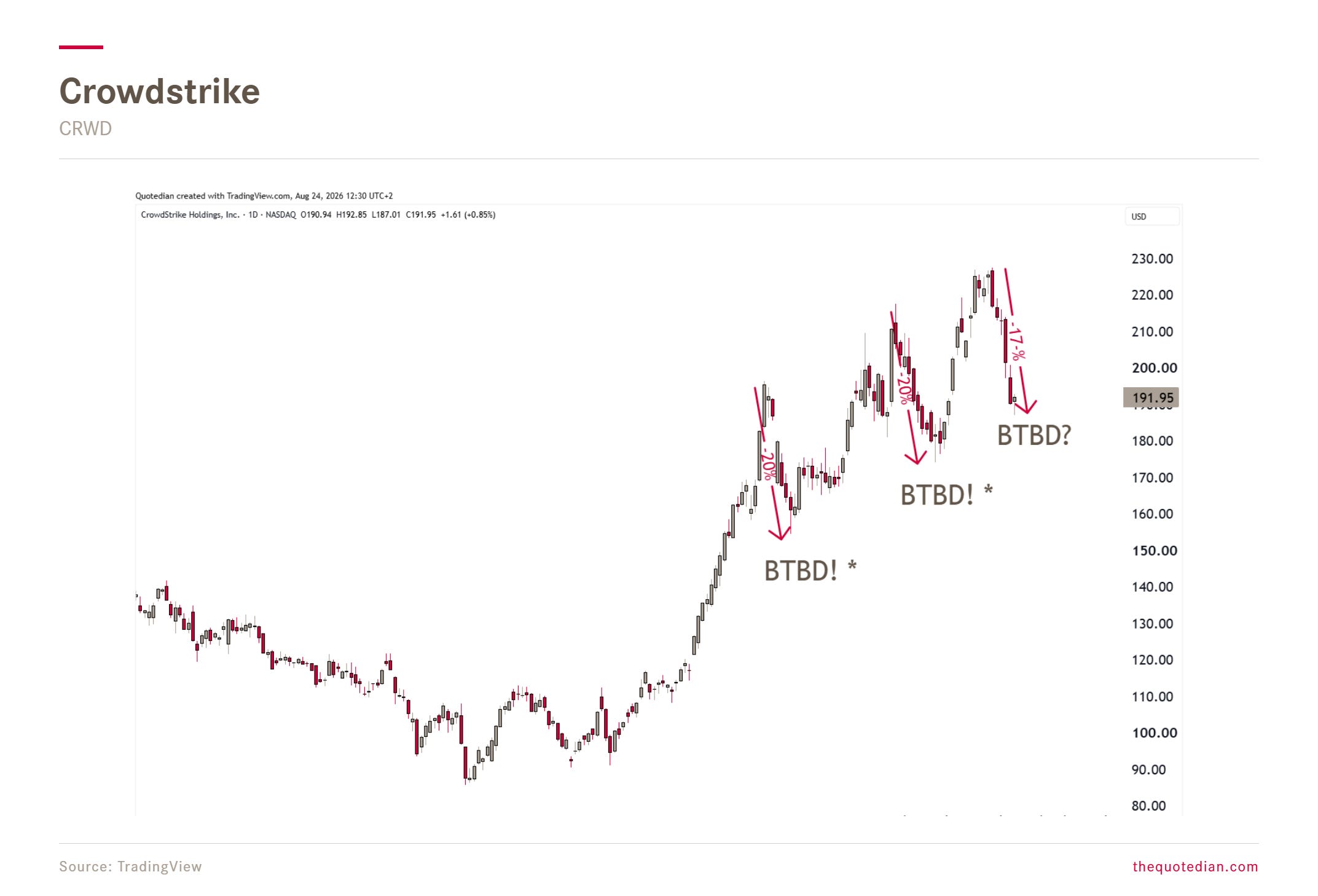
However, we did also highlight last week that we do like the cybersecurity stocks within the tech sector, which hasn’t worked for past five days:
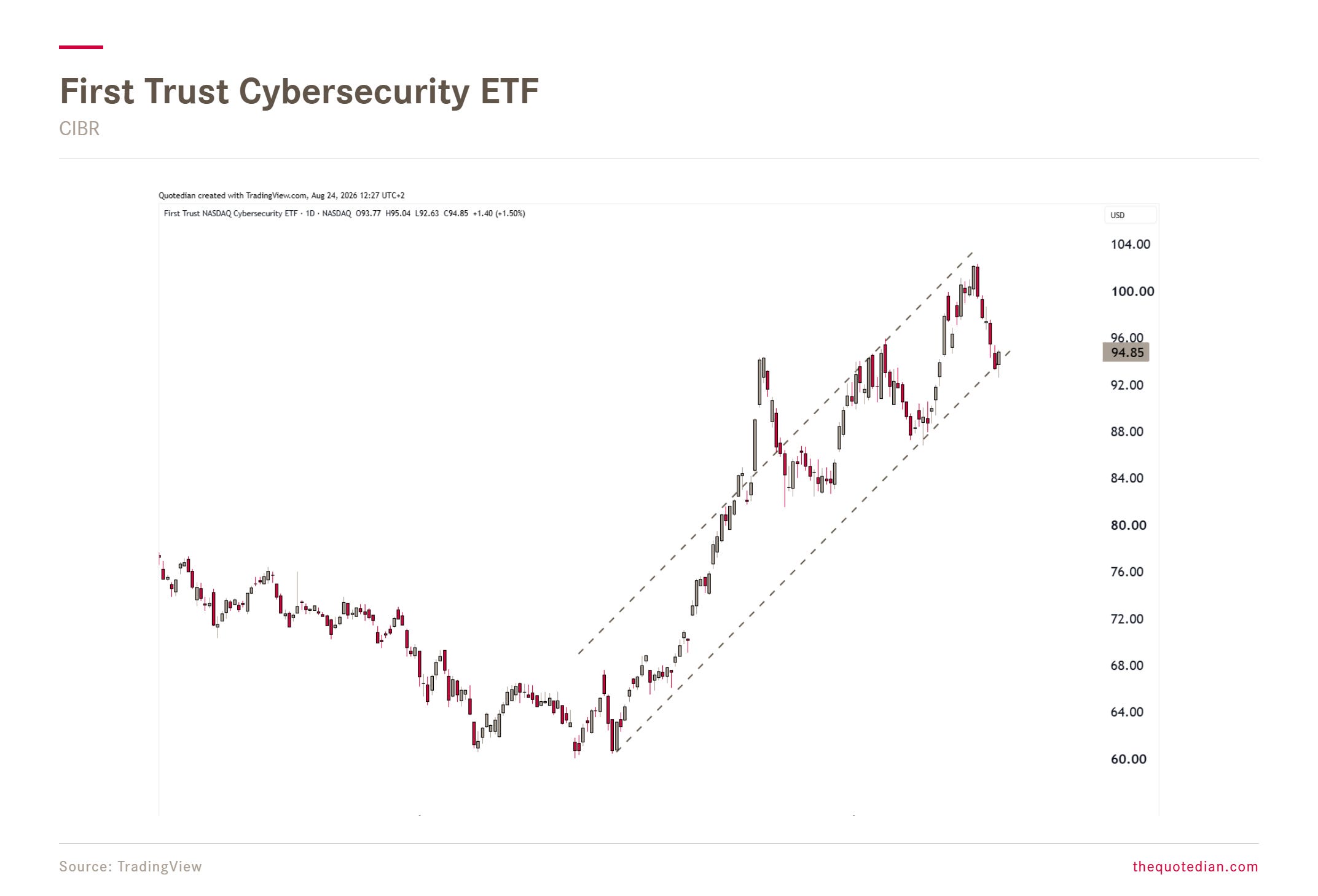
Put differently, and as mentioned in Friday’s QuiCQ (click), Mr. Market has given us another chance to load up on such wonderful stocks as Crowdstrike (CRWD):
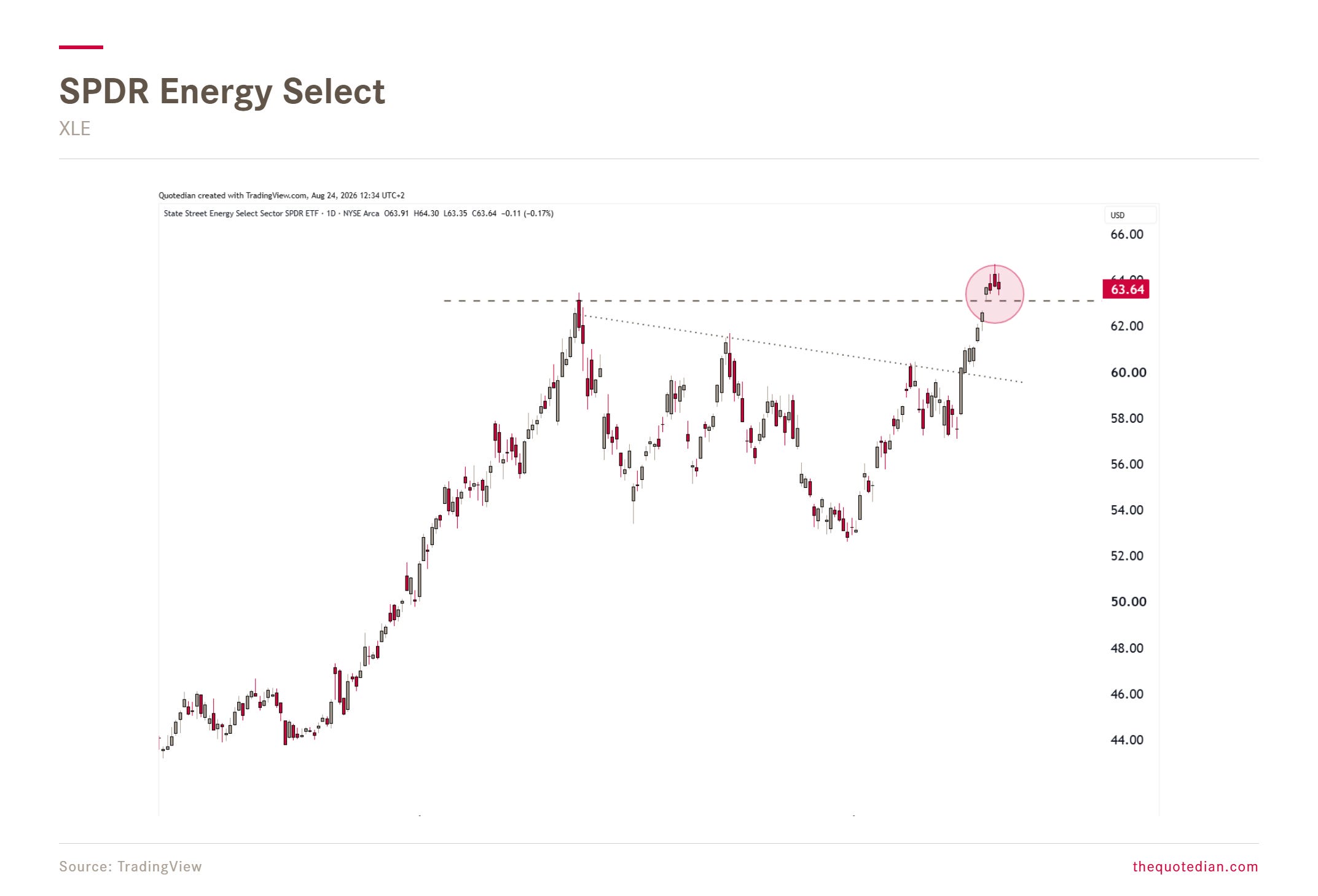
What worked well was our call for higher energy stocks, where the SPDR Energy Select ETF hit a new all-time high £(ATH) early last week:
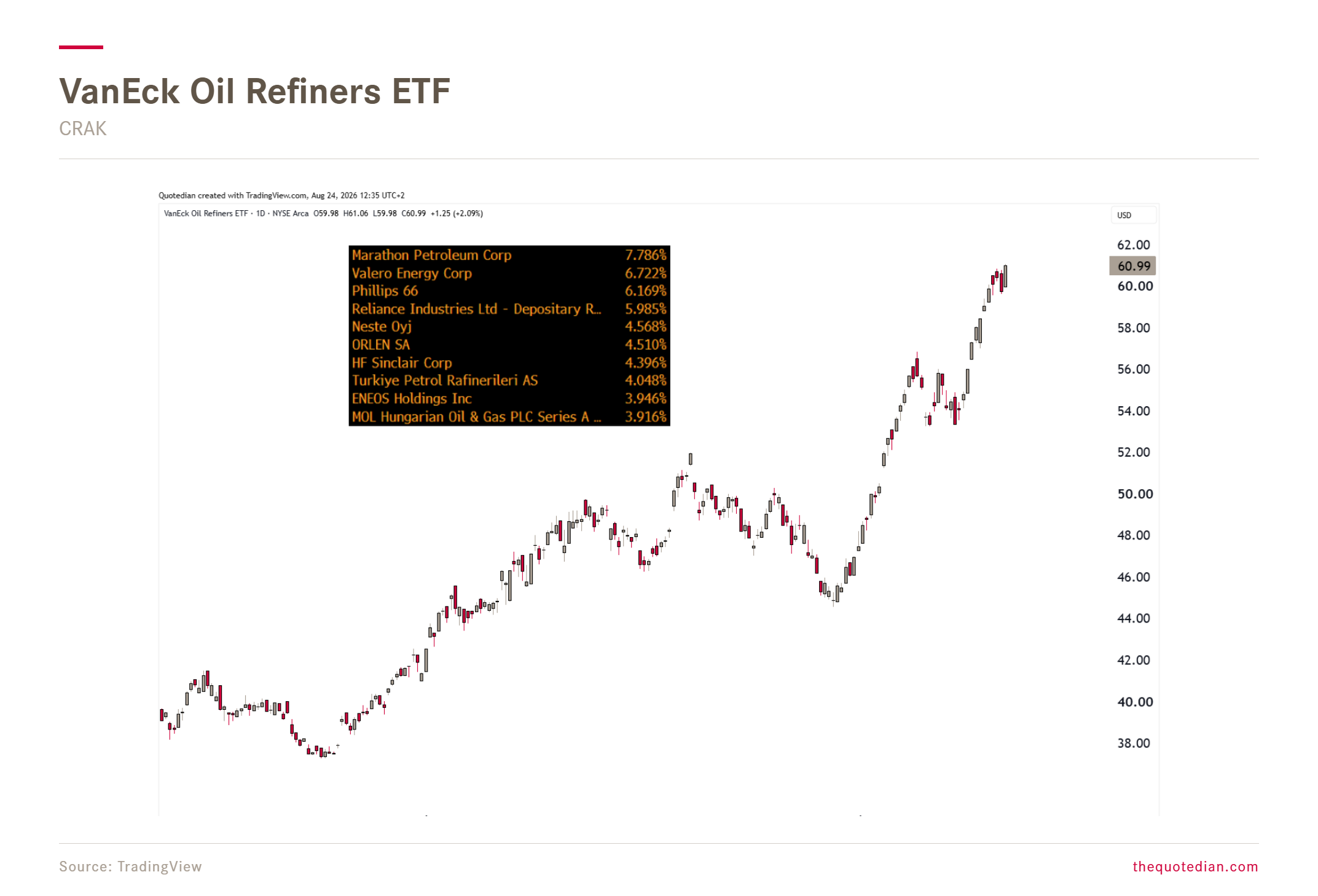
Especially refiners continue to fly:
Are we too late to buy CRAK then? I think as long as the Diesel Crack Spread (grey line) continues to widen, it is not too late:
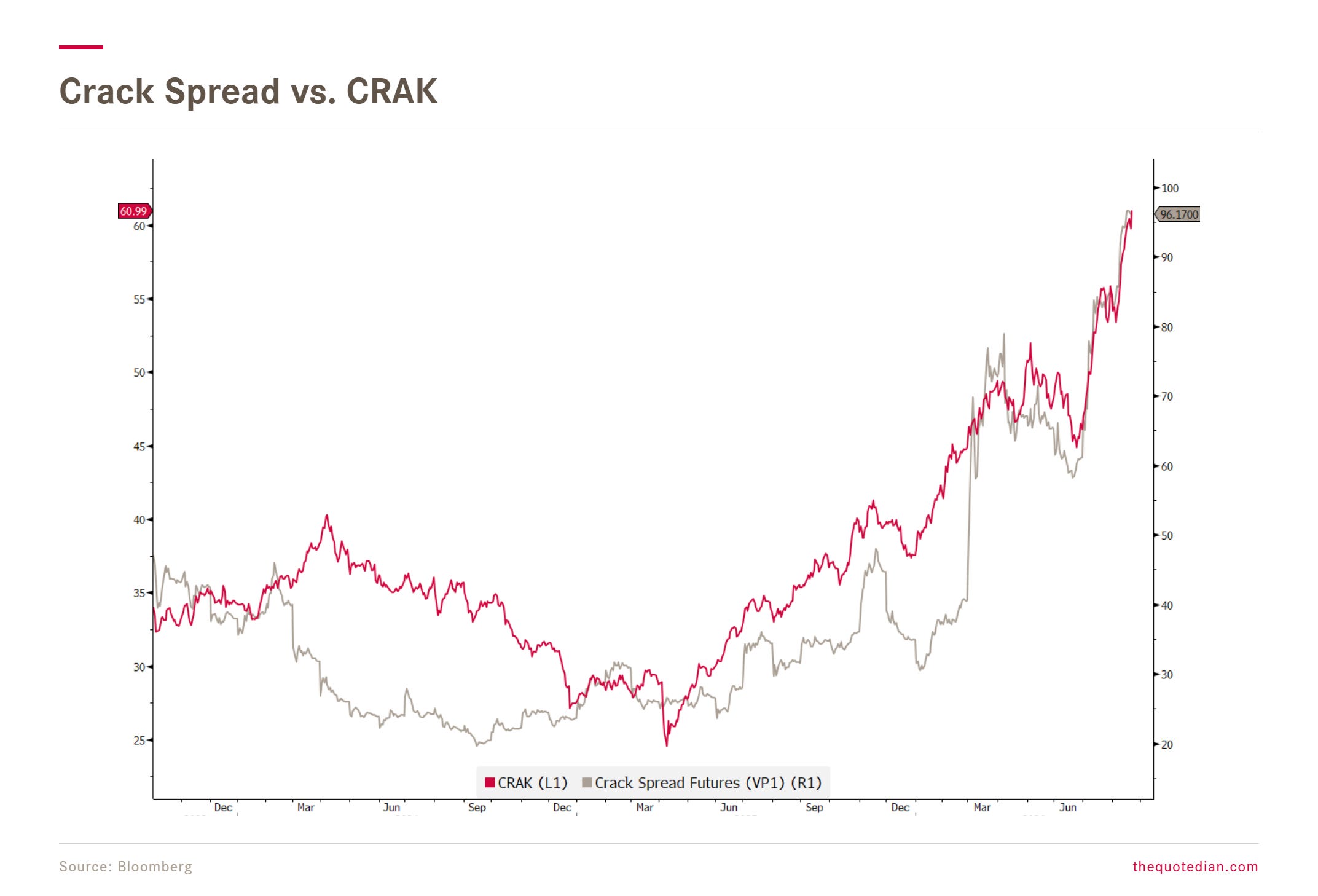
Is the crack spread about to tighten then and we are too late to buy CRAK?
I do not think so either:
Refining capacity has been knocked out/disrupted. Ukrainian attacks have hit Russian refineries, Russia has suspended diesel/gasoline exports, and the Iran/Hormuz conflict has reduced Middle Eastern refinery output and product exports.
Diesel inventories are extremely low. U.S. distillate stocks are around their lowest seasonal level in roughly 30 years, while Europe and Asia are competing for increasingly scarce barrels.
Demand isn’t disappearing. Diesel demand from trucking, agriculture, industry and construction is relatively inelastic. So even though crude has eased, diesel prices haven’t.
The remaining refineries are already running flat-out. U.S. refineries have been above 95% utilization for 11+ weeks, the longest such stretch in more than 25 years. There simply isn’t much spare refining capacity available to arbitrage the spread away.
As we are nearly talking commodities anyway now, let’s steer into that asset class, but not before highlighting the healthcare sector first.
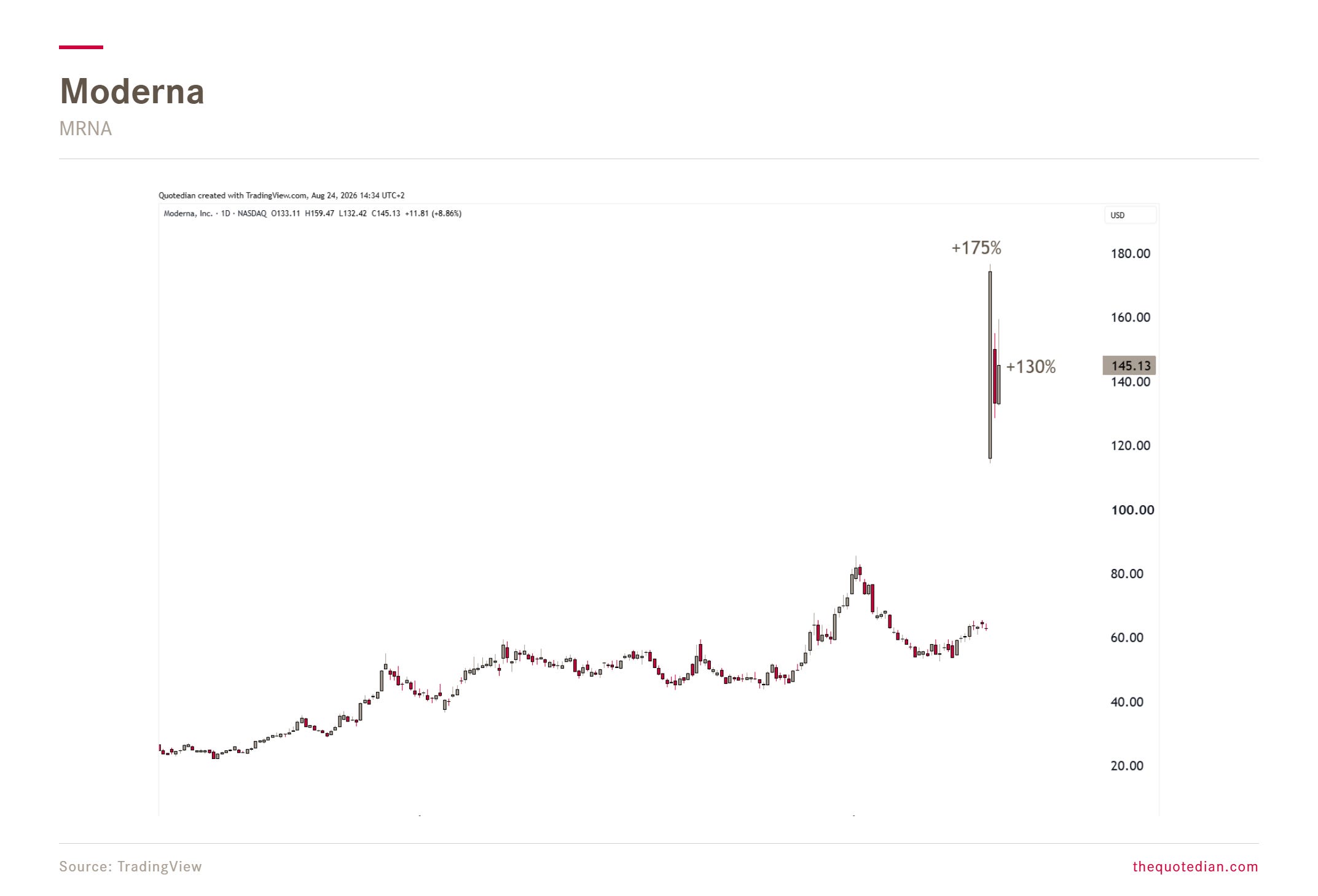
The sector was on the (up) move already pre-last week’s mega-announcement by Moderna (MRNA - see chart below) and Merck, regarding a skin cancer vaccine:
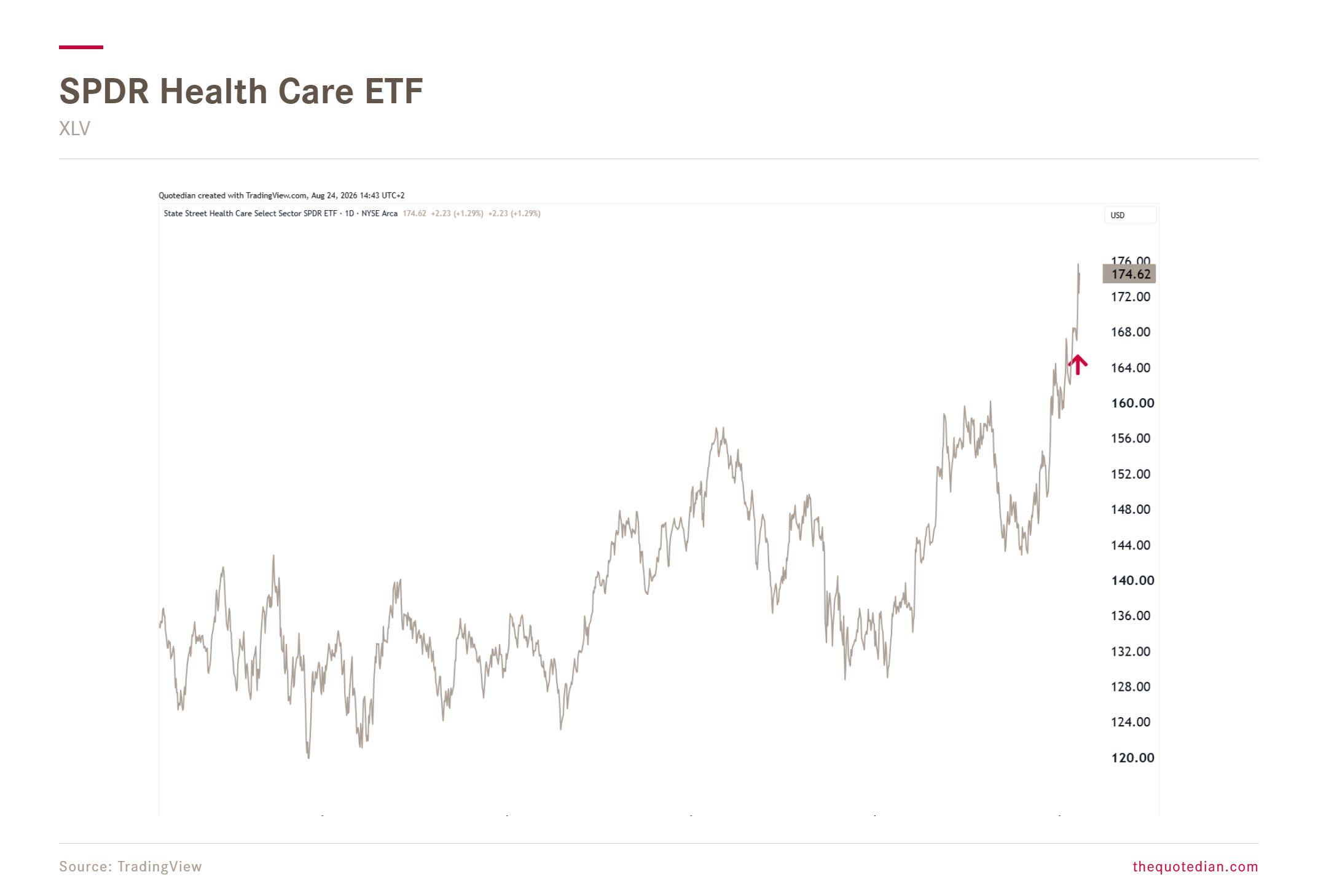
The SPDR Healthcare (see chart below) and the iShares Global Healthcare ETFs were both already clogging in new ATHs and have since the announcement accelerated further to the upside:
For those who want to “play” the health care rally with a high octane bet, I continue to like the ARKG:
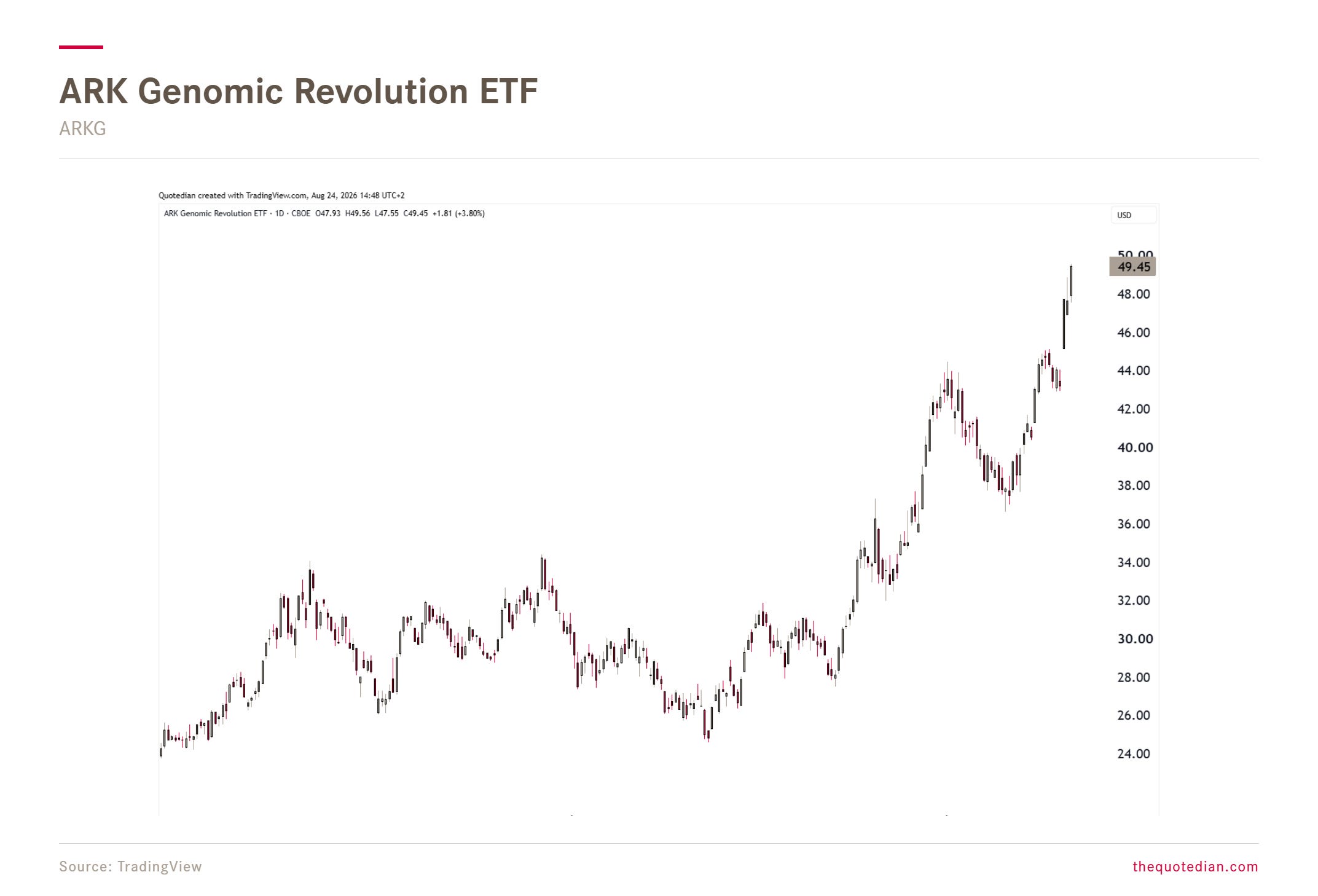
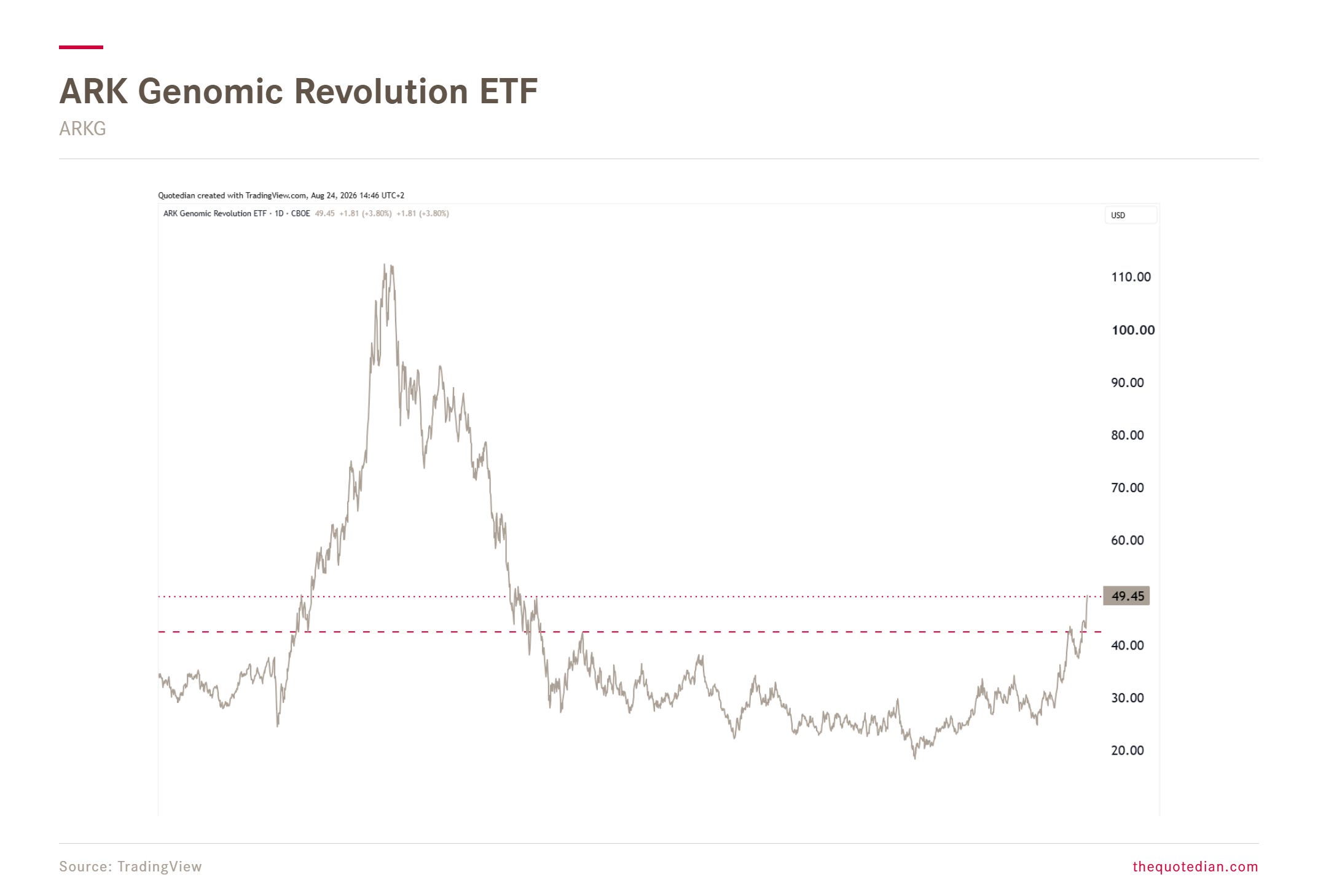
Yes, I know it has doubled since April, but zooming out on the chart provides context:
So, moving into the commodity section, we note that the Bloomberg Commodity index (BCOM) is pushing towards new cycle highs again:
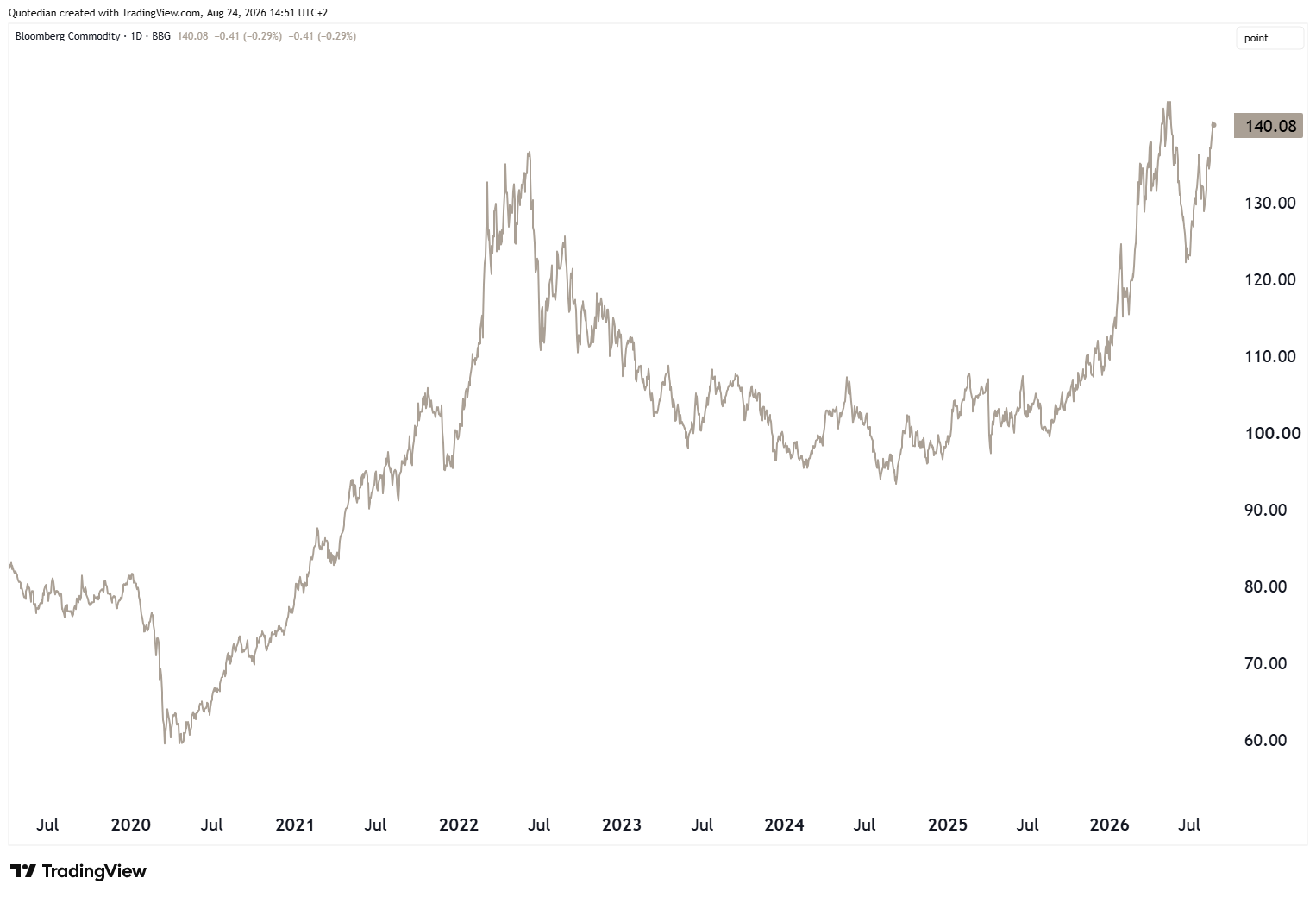
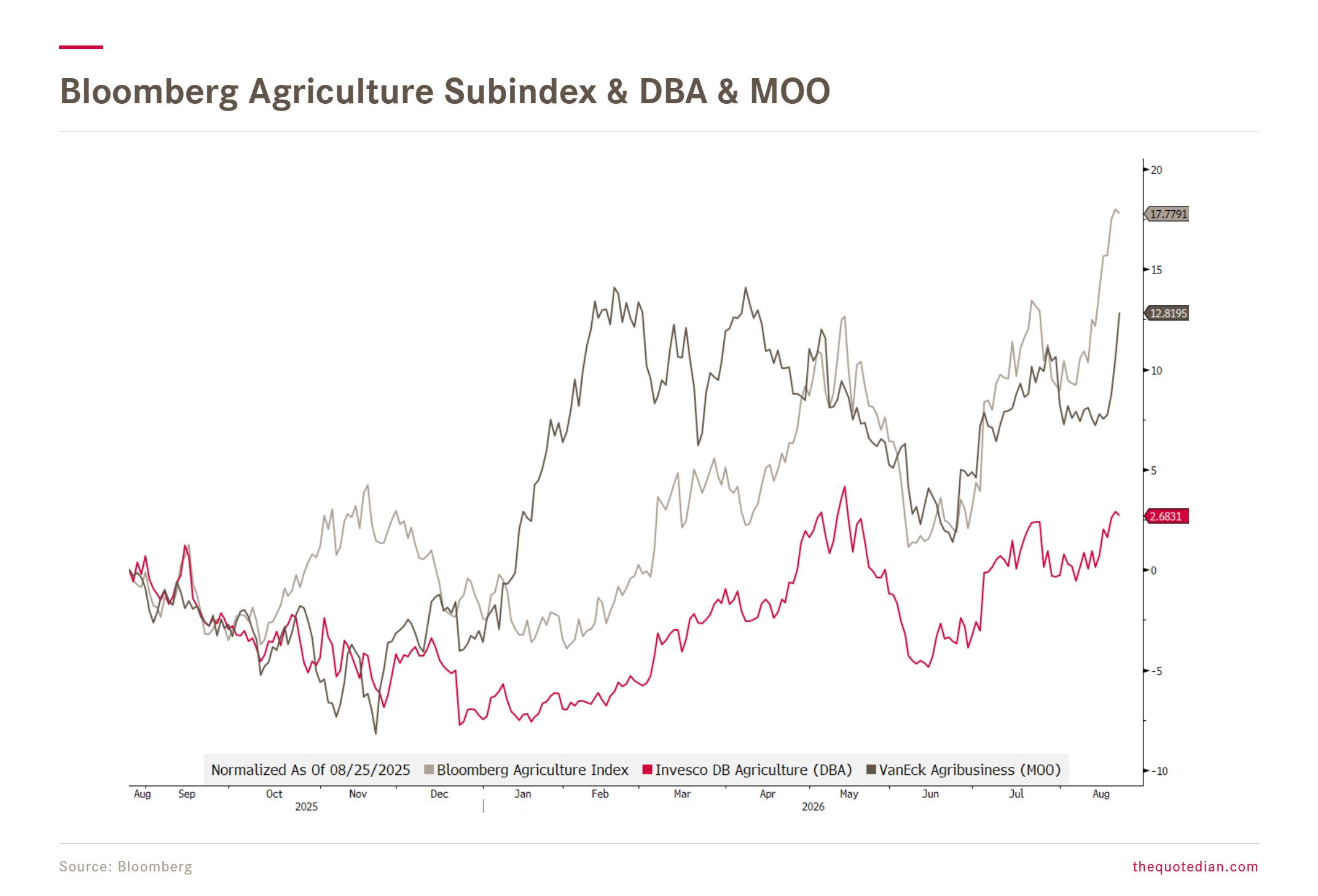
Whilst oil is of course a big part of the index, I find it interesting the agricultural commodities have after long absence now joined the (bull) party too:
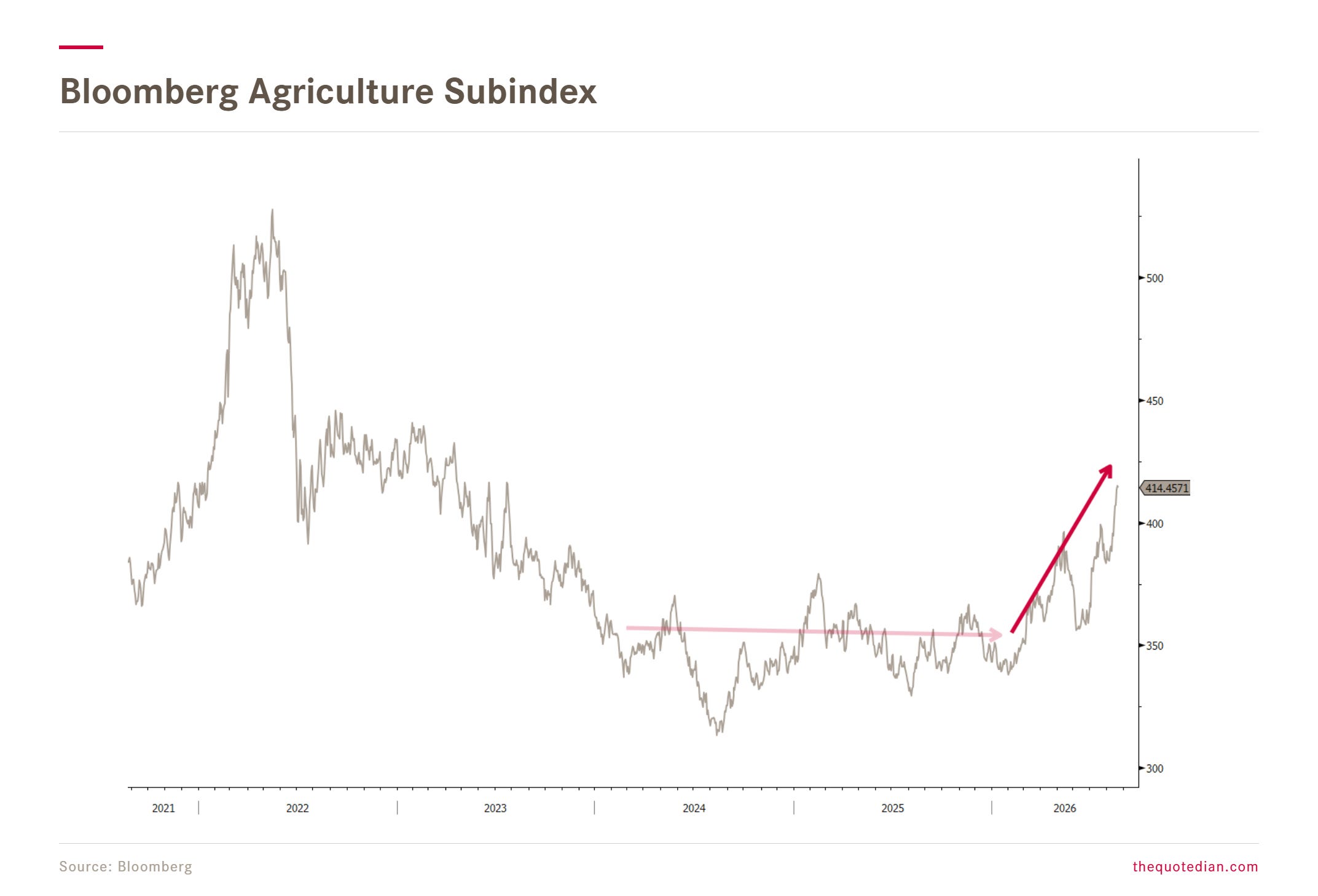
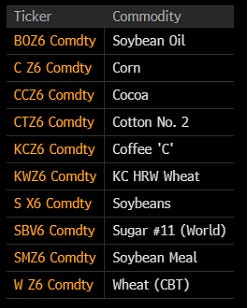
These are the commodities in the ‘Ags’ subindex:
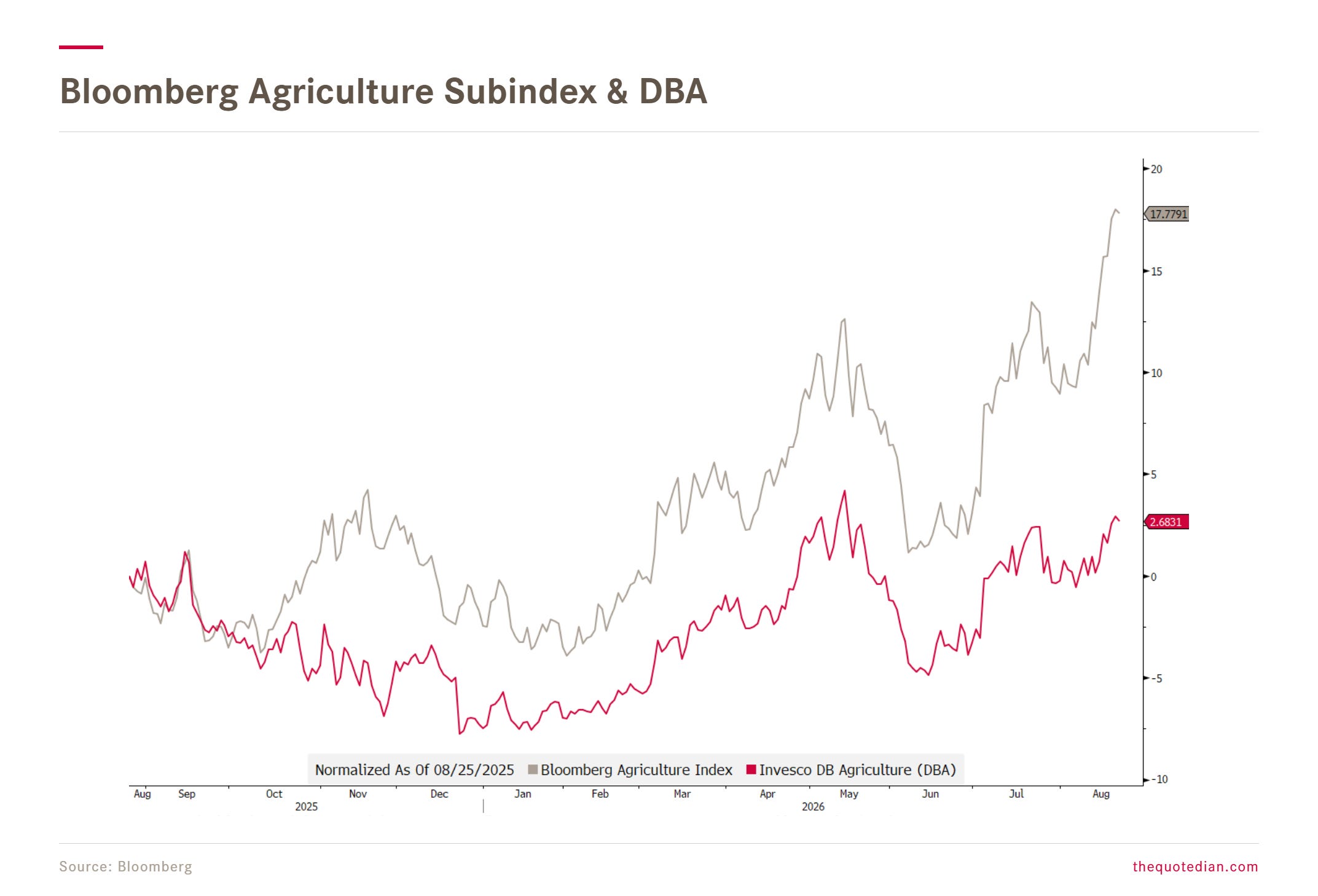
Whilst it is possible to invest into these individually via Futures and/or nearly all of them also via individual commodity ETFs, there is one ETF, the Invesco DB Agriculture ETF, which imperfectly tracks the sub-index:
But, I actually prefer to go via an agriculture business equity ETF, not least, because of its fantastic ticker (MOO):
These are the top positions and their weighting in the fund:

Finally, also commodity-related, our Mystery Fund pick (red line) for the rare earth segment, first presented a few months ago, continues to work very well:
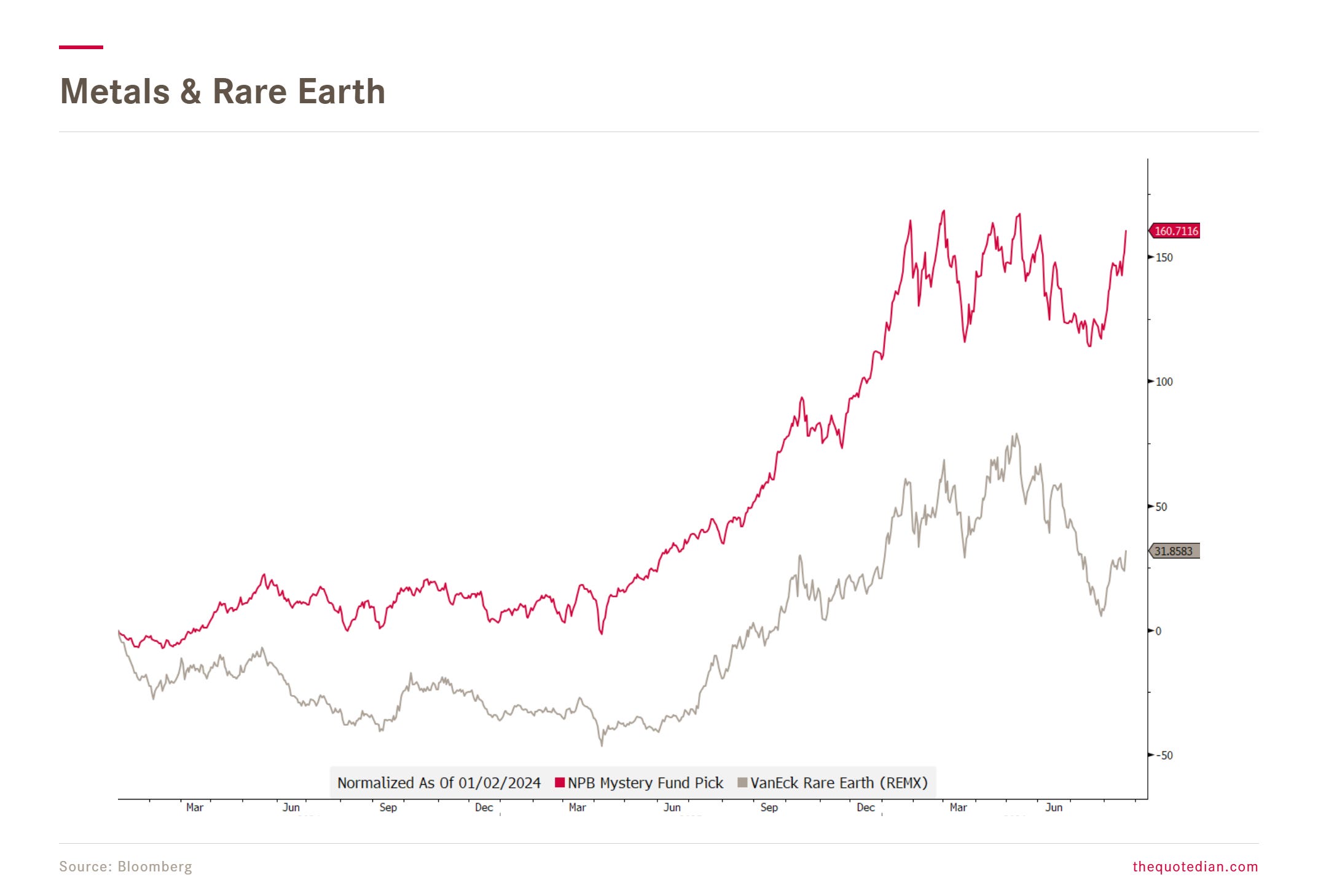
Want to know which fund it is? Easy. Become a client of ours 😉


So, are witnessing a form of yield curve control in the US? Is fiscal dominance taking over? Will it lead eventually to financial repression?
I think the answer to all three questions is a big, fat yes. Or three of them.
For now, however, to remain politically correct polite, let’s call it Operation Twist and Shout, not least as the shouting continues this beautiful Monday:

May the Trend be with You!
André

Everything in this document is for educational purposes only (FEPO)
Nothing in this document should be considered investment advice
Investing real money can be costly; don’t do stupid shit
Leave politics at the door—markets don’t care.
Past performance is hopefully no indication of future performance
The views expressed in this document may differ from the views published by NPB Neue Privat Bank AG